Battery Storage for Commercial & Industrial Use
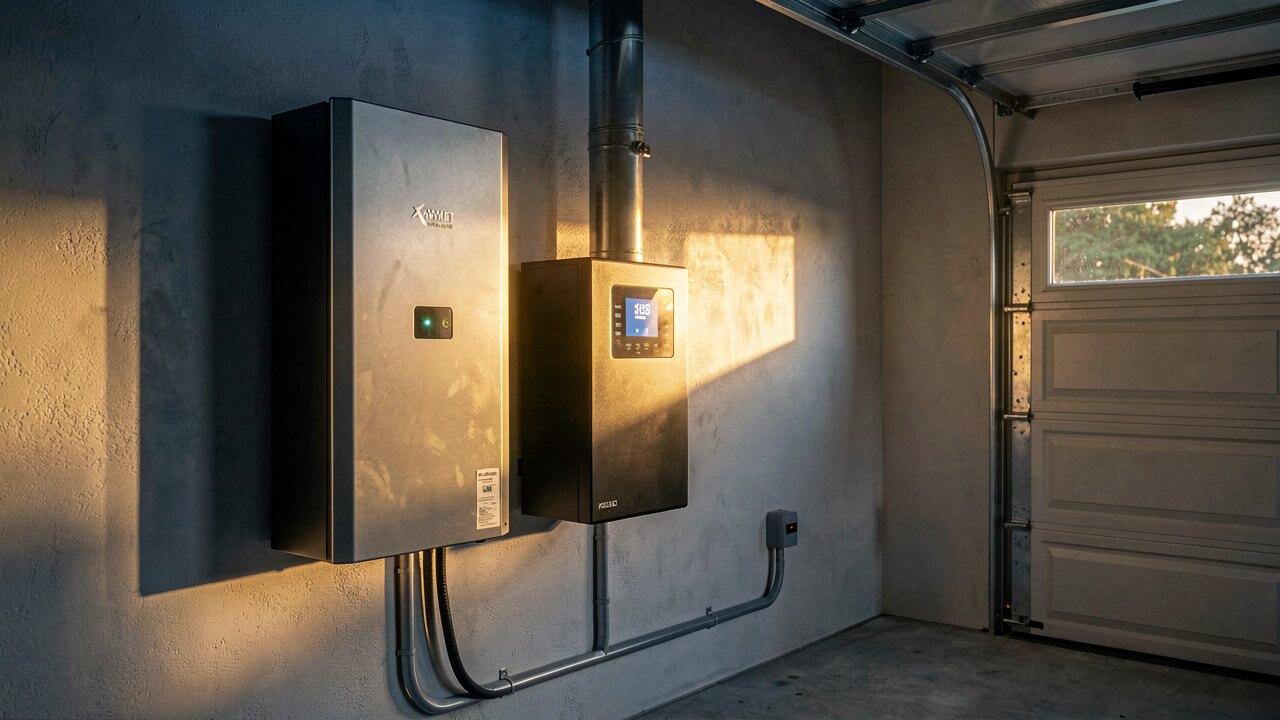
A commercial battery energy storage system (BESS) stores electricity so your business can use or sell it when it is most valuable. This page explains what it does, when it pays off, and how to size one.
A commercial BESS charges when power is cheap or your solar produces a surplus, and discharges when grid power is expensive or demand peaks. The three core jobs are: cutting expensive demand peaks (peak shaving), storing your own solar output for later self-consumption, and shifting energy in time to buy low and use high. Larger systems can also earn by trading against wholesale price swings.
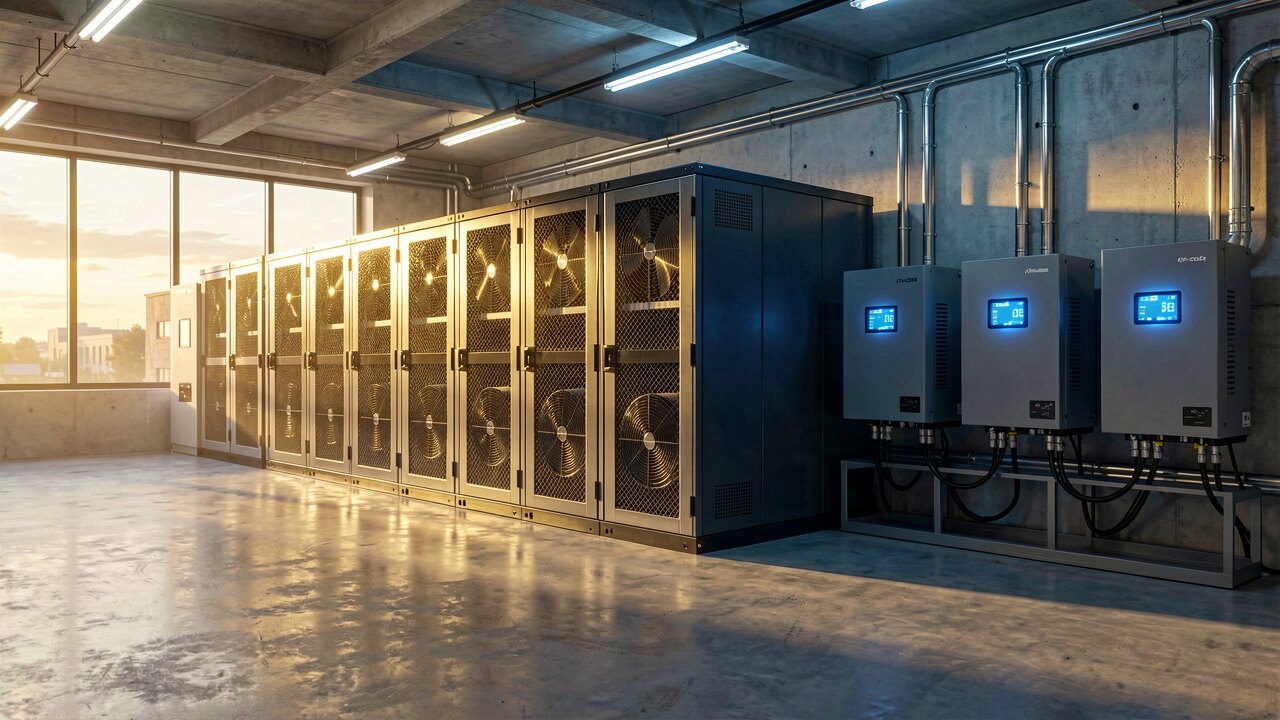
It depends on your load profile, not just your total consumption. A BESS pays off fastest when you have sharp, predictable demand peaks, high electricity prices, an existing or planned solar array with surplus, or processes that run around the clock (industry, cold logistics, hotels, retail). If your load is flat and prices are low, the case is weaker. The honest first step is to compute the realistic revenue and savings from your own metered data — not a generic promise.

Sizing is driven by two figures: your annual consumption (in MWh) and the power/energy you want to cover (in kWh and kW). As a rule of thumb, match usable capacity (kWh) to the energy you shift in a typical cycle, and match power rating (kW) to the size of the peak you want to shave. Oversizing wastes capital; undersizing misses the peaks. A load-profile analysis sets both numbers correctly before any hardware is chosen.
Commercial BESS investment scales with capacity and power, so budgets are planned as ranges rather than a single figure — typical project brackets run from under €50,000 for small systems up to €250,000 and above for larger industrial installations. Alongside hardware, budget for installation, grid connection, and control software. The relevant question is payback: how many years the combined savings and revenues take to return the investment.
For systems from roughly 1 MW upward, the revenue maximum can be estimated from public market data — showing the theoretical ceiling and, more usefully, what actually arrives after real-world losses and constraints. Revenue streams include peak-shaving savings, self-consumption of solar, and price-driven energy shifting. Knowing this maximum before you buy prevents over-optimistic business cases.
Start with your data: annual consumption, load profile, any existing solar, and your target for peak reduction or storage size. From there, a sizing and profitability check tells you whether a BESS fits and how large it should be. Only after that do budget range and timeline (immediate, 3–6 months, 6–12 months, or research phase) come into focus. Requesting a quote without a load analysis usually leads to a wrongly sized system.