Day-Ahead Electricity Price in Germany, Explained
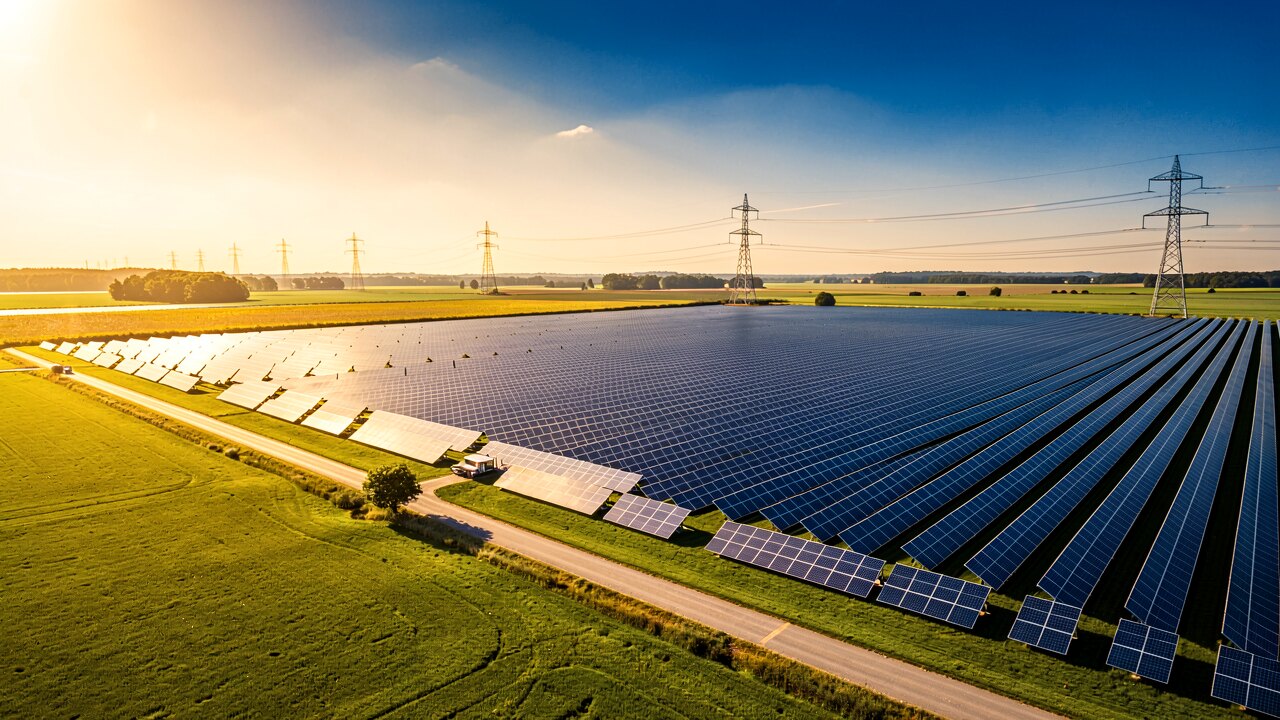
The German day-ahead price is the wholesale power price set one day before delivery in a single daily auction. It is quoted in €/MWh, fixed separately for each hour of the next day, and is the reference that drives battery arbitrage and industrial buying.
It is the price at which electricity for each hour of tomorrow is bought and sold today in the German-Luxembourg bidding zone. Buyers and sellers submit bids, and a single clearing price is set per hour where supply meets demand. Every trade in that hour settles at that one marginal price, expressed in euros per megawatt-hour (€/MWh).
The core auction runs on EPEX SPOT. Bids close around midday (12:00 CET) the day before delivery, and the hourly prices for the next day are published shortly after. Germany is also moving toward 15-minute settlement periods, so the price curve is becoming more granular than a single value per hour.
The price follows the merit order: cheap solar and wind clear first, expensive gas last. Midday hours with heavy solar are cheap — sometimes negative — while the evening peak after sunset is expensive. This daily low-to-high gap is the day-ahead spread, and it widens as more solar is added and as 15-minute settlement sharpens the peaks.

The spread is the direct revenue base for a battery: charge in the cheap trough hours, discharge into the expensive peak. Across neighbouring markets Stromfee tracks, recent 30-day day-ahead spreads have ranged from roughly €96/MWh (Ireland) to about €170/MWh (Slovenia). The same mechanism drives the German case, which Stromfee's optimiser dispatches against live day-ahead and intraday prices.
Look at the whole hourly curve, not one headline number. Note the daily minimum, the daily maximum, and the gap between them. A low average with a wide spread is better for a battery than a high, flat price — arbitrage earns on the gap, not on the level.