Electricity Price Forecast: How Prices Develop

An electricity price forecast estimates future day-ahead spot prices — typically hour by hour — from patterns in demand, weather-driven renewable output, and fuel costs. This page explains how such forecasts are built, what moves prices, and how to read a 7-day forecast to time your consumption or battery storage.
A price forecast projects the wholesale (day-ahead / EPEX Spot) price for each hour over a horizon — Stromfee forecasts the next 7 days at hourly resolution. It shows the expected average, the cheapest and most expensive hours, and the daily spread between them. It does not predict the exact price you will pay to the cent; it estimates the shape and level so you can plan when to charge, run loads, or buy.
Stromfee uses a Prophet machine-learning model trained on historical hourly prices. Prophet decomposes the series into trend plus daily, weekly, and yearly seasonality, then projects it forward. Forecasts are produced per bidding zone (DE, AT, FR, ES, NL, BE, PL, DK1, SE3, NO1), because each market clears at its own price. Accuracy is highest for the near term and degrades further out, so treat day 6-7 as directional rather than exact.
Wholesale prices rise with demand (cold or hot weather, weekday peaks) and with gas and CO2 costs, since the last plant needed to meet demand usually sets the price. Prices fall — and can even go negative — when wind and solar produce a surplus at low demand. Because renewables are weather-dependent, day-to-day price development follows the weather forecast closely.
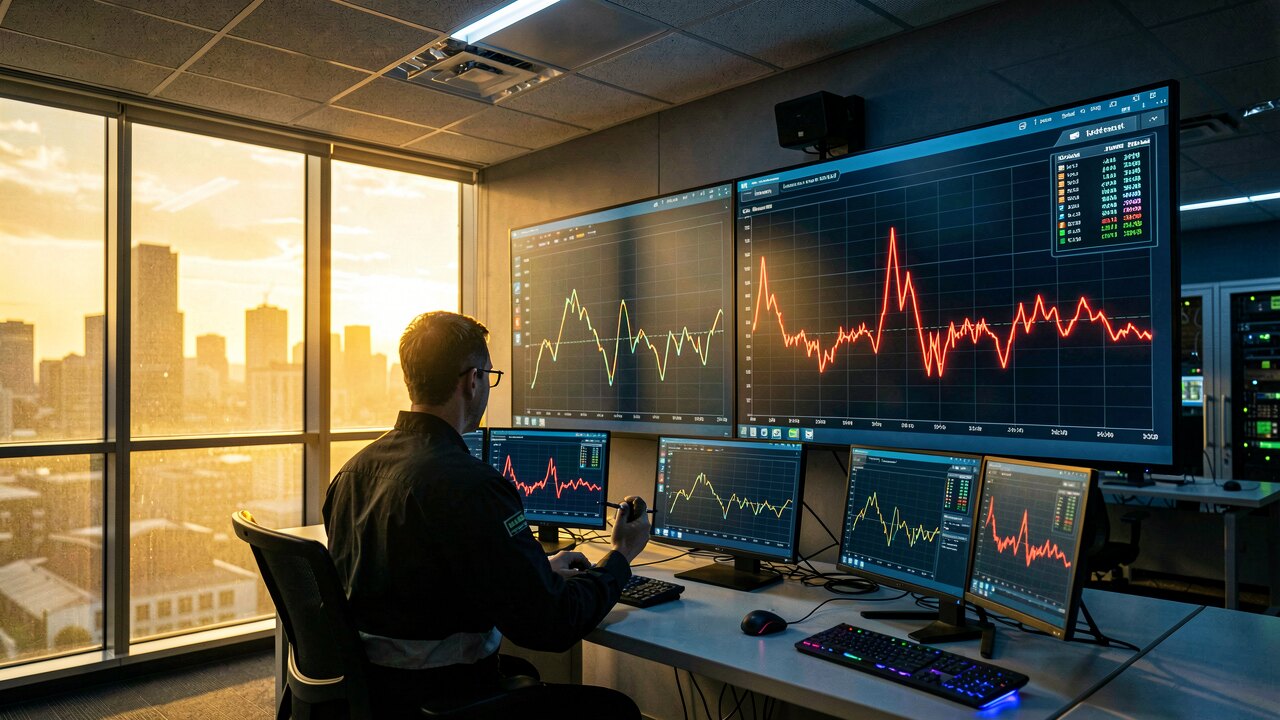
The spread is the gap between the cheapest and most expensive hour of a day. A wide spread means it pays to shift flexible loads or use a battery: charge in the cheap hours, discharge or consume in the expensive ones. Stromfee highlights the cheapest hour, the most expensive hour, and the spread for each forecast day so you can see where the arbitrage opportunity is largest.
For a battery (BESS), the forecast turns into a charge/discharge schedule. Stromfee's arbitrage view models a reference 10 MWh store at 90% round-trip efficiency, marking charge and discharge windows and the estimated profit per day. Whether real arbitrage is worthwhile depends on your storage size, efficiency, and the actual spread — a forecast is a planning input, not a guaranteed return.
With a dynamic tariff your price follows the hourly spot market, so a forecast lets you plan consumption around cheap hours. In Germany, since January 2025 electricity suppliers with more than 100,000 customers are required under the Energy Industry Act (EnWG) to offer a dynamic tariff; smaller suppliers may offer one voluntarily. Check your own contract, as the price components and how they track the spot market vary by provider.