Fronius Storage & Dynamic Electricity Tariffs: Can It Charge the Battery When Power Is Cheap?
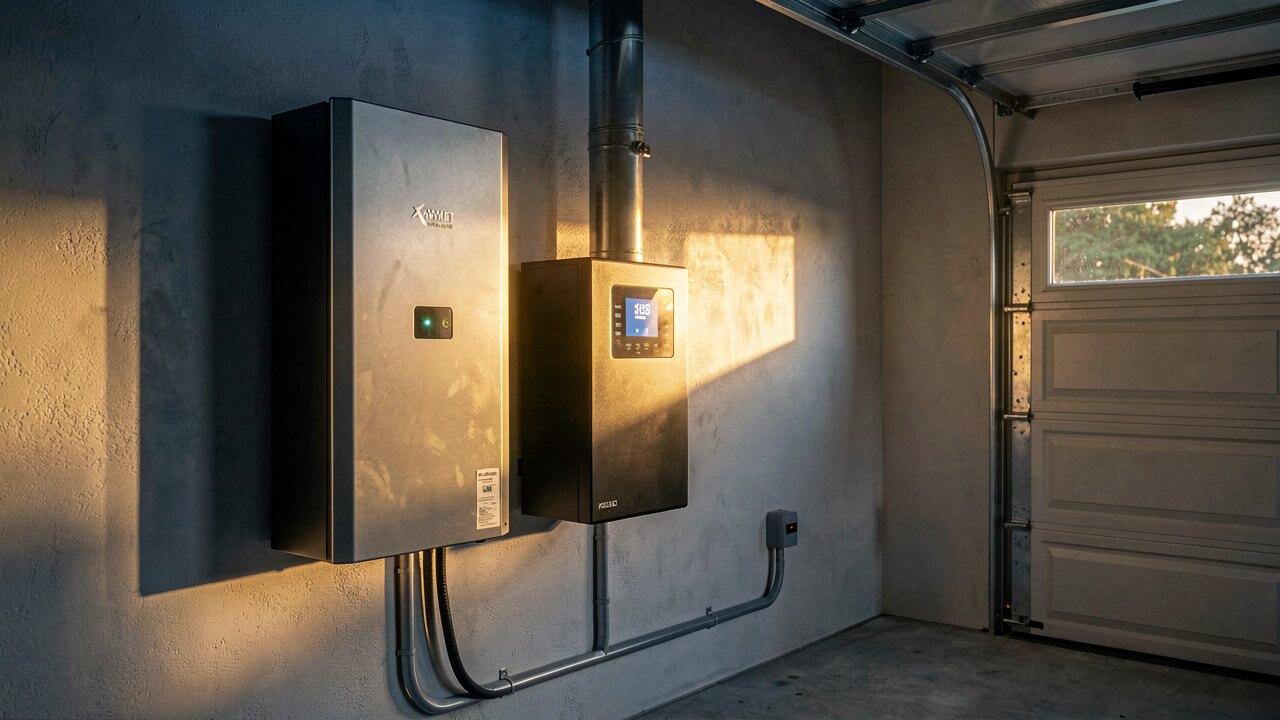
Short answer: yes — a Fronius hybrid system can charge its battery from the grid during cheap hours, but the inverter alone follows fixed time windows, not live exchange prices. To truly track a dynamic tariff you add a home energy management system (HEMS) that reads the prices and steers the Fronius via Modbus.
A Fronius GEN24 Plus hybrid inverter with an attached battery supports grid charging with time-based rules you configure yourself. So you can tell it "charge the battery between 02:00 and 05:00" — useful if your dynamic tariff is reliably cheapest at night. What the inverter does NOT do on its own is fetch live spot prices (e.g. day-ahead / hourly rates) and automatically shift charging to the cheapest window each day. That price-following logic lives in an external controller, not in the inverter.
In Fronius Solar.web / the inverter's settings you can enable battery grid charging and define fixed charge and discharge windows plus power and state-of-charge limits. This is the simplest route: look at your provider's typical daily price curve, pick the cheap block, and set a recurring window. The limitation is that it is static — if the cheapest hour moves day to day (as spot prices do), a fixed window will sometimes miss it. It works best when your tariff has a stable cheap period.

To make the Fronius battery charge exactly when the exchange price is lowest, you pair it with a home energy management system that (a) pulls the hourly/day-ahead prices from your dynamic-tariff provider and (b) commands the inverter over Modbus TCP (SunSpec) on your local network. Open-source and commercial HEMS solutions do this. The HEMS decides each day which hours are cheapest, then sets the Fronius charge command accordingly — turning a static window into automatic, price-optimized charging.

1) Confirm you have a hybrid setup (Fronius GEN24 Plus + a compatible battery). 2) In Solar.web / inverter settings, enable grid charging of the battery. 3) For fixed savings: create a charge window over your tariff's cheapest hours. 4) For full optimization: enable Modbus TCP (SunSpec) on the inverter, connect a HEMS on the same network, and link it to your dynamic-tariff price feed. 5) Set guardrails: a maximum charge power and a state-of-charge cap so the battery still keeps room for your own solar surplus by midday.

The economics come down to one comparison: the price spread between cheap and expensive hours versus the wear-and-cost of one charge/discharge cycle. If the daily spread is large enough to cover the round-trip losses and cycle cost and still leave a margin, grid-charging pays. If your battery is already filled by your own PV most days, the extra benefit from buying cheap grid power is smaller — prioritize storing your own solar first, then use dynamic-tariff charging for the remaining capacity, especially in low-sun months.
Grid charging and battery management are features of the Fronius hybrid inverter line (GEN24 Plus, e.g. Primo/Symo GEN24 Plus) combined with a compatible battery. A grid-tied string inverter without battery support cannot store or shift energy at all. Before planning any dynamic-tariff strategy, verify your inverter is a hybrid/GEN24 Plus model and that the battery is on Fronius's approved list — otherwise grid charging simply won't be available.