Why Does One AI Need Power Plants in Three States?
AWS Rainier Mississippi · Canton, MS, USA · 300 MW · Operational 2025
- 300 MW dedicated AI compute in Canton, Mississippi
- Operator: Amazon Web Services
- Hardware: Hundreds of thousands of Amazon Trainium 2 ASICs (no Nvidia)
- Status: Operational since 2025
- Purpose: Second Rainier campus — together with Indiana and Ohio, forms a tri-state Trainium 2 cluster serving Anthropic's Claude
The Hook: One AI, Three States
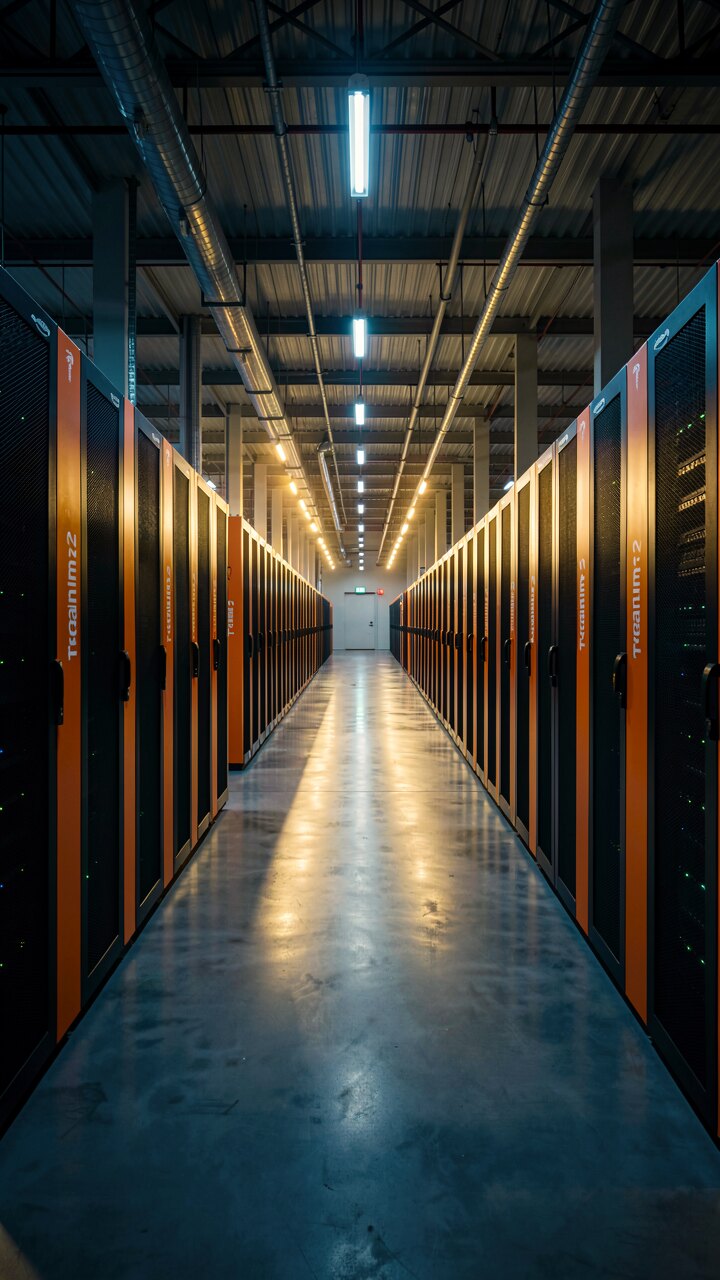
Most people picture an AI datacenter as one enormous building humming somewhere in the desert. Amazon thought differently. To train Anthropic's Claude — one of the most powerful AI systems on Earth — AWS built not one, not two, but a distributed cluster spanning three US states. The Mississippi campus in Canton is the second piece of that puzzle.
Why scatter the infrastructure? The answer reveals how seriously Amazon is betting on AI — and how fragile single-site dependence can be when you're consuming power at this scale.
The Reveal: What 300 MW Actually Means
At 300 MW of continuous load, the Canton facility draws more electricity than a city of roughly 250,000 people. But unlike a city — which has hospitals, traffic lights, and households that can tolerate brief outages — an AI training cluster running at this scale cannot stop mid-run. The model weights being computed represent weeks of accumulated gradient calculations. A grid hiccup can mean starting over.
That's why Amazon chose a distributed architecture. The Mississippi campus complements the Indiana Rainier site, spreading risk across utility territories and states. If one grid region faces a weather emergency or maintenance outage, the tri-state cluster can adapt. It is resilience by geography.
The Silicon: Trainium 2, Not Nvidia
Unlike nearly every other top-25 datacenter in this series, Rainier Mississippi runs zero Nvidia GPUs. Instead, Amazon has filled the halls with hundreds of thousands of its own Trainium 2 ASICs — custom silicon designed from the ground up for large language model training. This is Amazon's answer to Nvidia's H100 and H200, and it's a bet that vertical integration pays off at sufficient scale.
The trade-off is real: Trainium 2 is optimized for Amazon's workloads. Flexibility is lower than with general-purpose GPUs. But at 300 MW and counting, Amazon is clearly willing to commit. The entire Rainier multi-site cluster — Indiana plus Mississippi, with a third site believed to be in Ohio — represents one of the largest purpose-built AI training networks ever assembled outside a national government program.
Comparison: Where Does Rank 11 Stand?
At 300 MW, Rainier Mississippi is roughly equal to the Apto Milan campus (#18) and nearly double the VIRTUS Wustermark Berlin site (#17). But it operates in a fundamentally different mode: unlike European sites that often share capacity across commercial customers, Mississippi is 100% dedicated to a single workload — training Claude.
The closest structural parallel in this series is Google's Ohio AI Cluster (#6), which is similarly single-purpose and runs Google's own TPU chips rather than Nvidia hardware. Both Amazon and Google have concluded that owning the silicon stack from chip to datacenter is a necessary competitive moat.
The Grid Images: Neighboring Ranks
Concept illustration (AI, FLUX·2)
Concept illustration (AI, FLUX·2)

Concept illustration (AI, FLUX·2)
The Invisible Cost: HVAC at 300 MW Scale
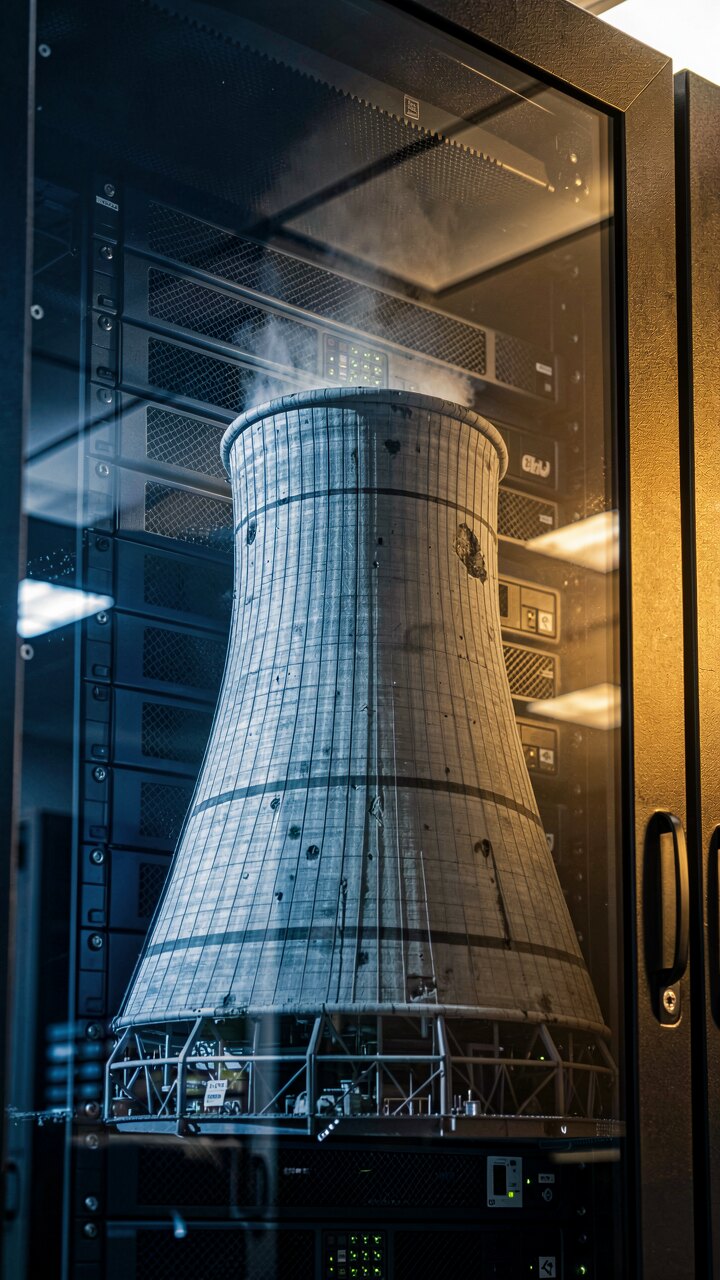
Here's what the press releases never mention: of those 300 MW, roughly 90–150 MW goes to cooling alone. Trainium 2 ASICs are dense, hot, and unforgiving. The HVAC systems that keep them at operating temperature are themselves industrial-scale machines — chiller plants, cooling towers, precision air handlers — all running 24/7, all consuming energy that never touches a single computation.
This is the hidden cost of AI at scale. And it is exactly the problem that Stromfee AI addresses. Our Glass HVAC transparency layer gives energy managers a real-time view of exactly how much power flows to compute versus cooling — down to the individual system level. BESS (battery energy storage) systems buffer the notorious peak loads that occur when cooling demand spikes, reducing stress on grid connections and smoothing energy costs.
For industrial operators watching their own energy bills climb — whether running a BHKW plant, a manufacturing facility, or a commercial complex — the Stromfee approach translates directly: transparent measurement first, then optimization. The same principles Amazon is applying at 300 MW work at 3 MW.
Optimize Your Energy Costs Like a Datacenter Pro
AI datacenters spend 30–50% of their power budget on HVAC and cooling. Stromfee AI brings the same transparency to industrial and commercial energy management — real-time BESS optimization, Glass HVAC monitoring, and clear cost analytics. Try it free at stromfee.app.
Open EN App at en.stromfee.app →