What Takes 5,000 Workers, 1.5 Eiffel Towers of Steel, and 1 GW to Build?
Stargate UAE – Abu Dhabi · Abu Dhabi, UAE · 1,000 MW · Under construction (Phase 1 completing Q3 2026)
- 1,000 MW planned total capacity — the largest AI campus outside the US
- Operator: G42 / Khazna Data Centers, backed by OpenAI, Oracle, Nvidia, SoftBank
- Location: Abu Dhabi desert, UAE
- Status: Under construction — Phase 1 (200 MW) completing Q3 2026
- Power sources: Nuclear, solar, and natural gas
- Scale markers: 5,000+ workers on site, steel volume = 1.5× Eiffel Tower
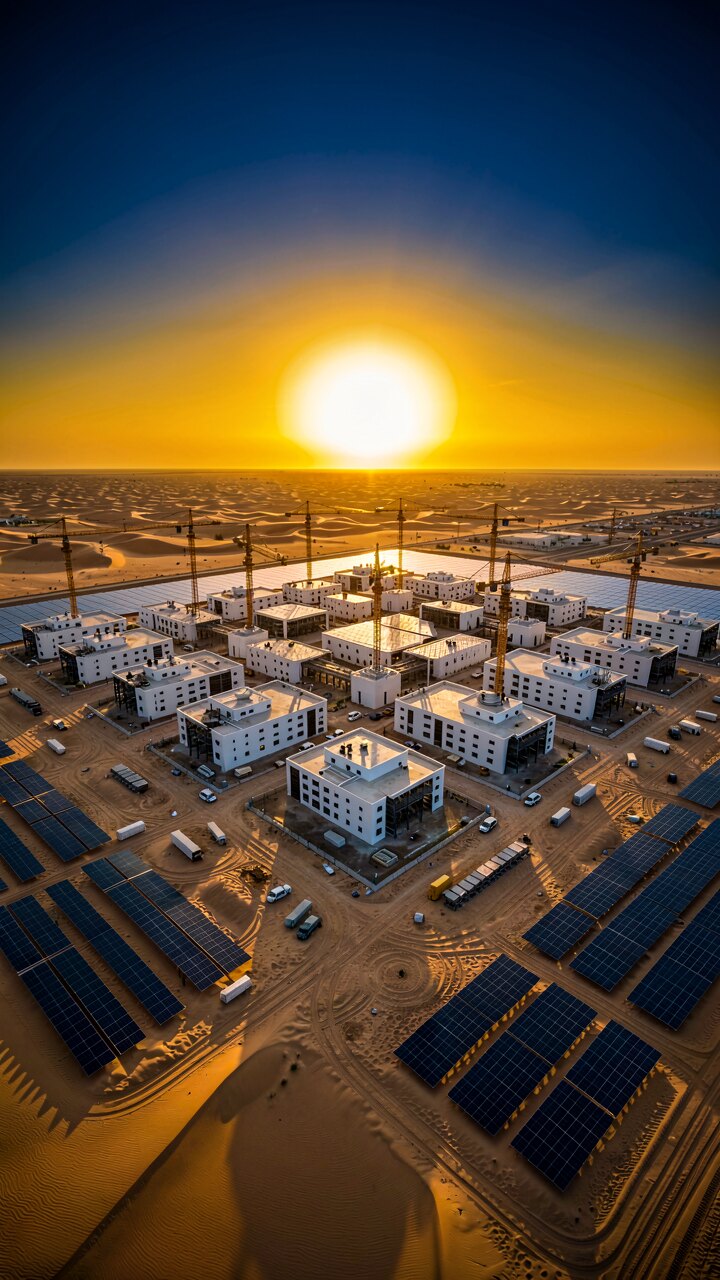
The Hook: The Biggest AI Building Site on Earth — Outside America
Somewhere in the Abu Dhabi desert, 5,000 construction workers are raising steel for a structure that will consume as much electricity as a medium-sized European country's entire data infrastructure. The Stargate UAE campus is not just large — it is a geopolitical signal, a diplomatic bet, and an engineering project unlike anything the Middle East has attempted in the field of computing.
The question everyone should be asking: why Abu Dhabi? And what does it mean for the global AI power race when the largest planned campus outside the United States is being built in a desert nation with summer temperatures above 45°C?
The Tease: A Diplomatic Deal Dressed as a Datacenter
Stargate UAE did not emerge from a straightforward real estate decision. It grew from a Trump-era US-UAE AI partnership — a diplomatic framework that gave American AI companies access to Gulf capital and geographic reach, in exchange for technology transfer and strategic commitments. The consortium backing the Abu Dhabi campus reads like a who's-who of the AI industry: OpenAI, Oracle, Nvidia, and SoftBank are all involved alongside the Abu Dhabi sovereign-linked entities G42 and Khazna Data Centers.
This is AI infrastructure as statecraft. The UAE has made a calculated wager that whoever controls the compute controls the future — and they are willing to deploy sovereign wealth to be on the right side of that bet.
The Reveal: What 1,000 MW in the Desert Actually Requires
The sheer engineering challenge of Stargate UAE is staggering. The campus will require:
5,000+ workers on site simultaneously during peak construction — comparable to a major dam or airport project.
Steel equivalent to 1.5 Eiffel Towers in structural material alone, before counting the server racks, power distribution, and cooling infrastructure inside.
Phase 1 at 200 MW completing Q3 2026, with subsequent phases expanding toward the full gigawatt target.
Power generation is the most politically interesting part. The UAE has committed to a mix of nuclear (from its Barakah plant, the Arab world's first operational nuclear power station), solar, and natural gas. For a campus at this latitude, solar is abundant — but it disappears at night, exactly when cooling loads remain high. The nuclear baseload provides the 24/7 continuity that AI training demands.
Comparison: How Rank 12 Fits the Global Picture
At 1,000 MW planned, Stargate UAE would outpower almost everything else in this Top 25 series outside the United States — including all European and Asian-Pacific entries. The Sines Portugal campus (#14) plans 1,200 MW but on a longer timeline. Stockholm's Brookfield site (#15) targets 750 MW with Nordic cooling advantages. Stargate UAE is attempting 1,000 MW with no natural cooling advantage whatsoever — every joule of heat produced by the servers must be mechanically removed against an ambient temperature that is itself hostile.
That is the engineering paradox at the heart of this project. The world's largest AI campus outside America is being built in one of the world's worst climates for cooling efficiency. The answer is money, nuclear power, and the geopolitical imperative to make it work regardless.
The Hidden Problem: Cooling in 45°C Heat
Every datacenter in this series faces the same structural energy problem: 30–50% of total power consumption goes not to computation but to keeping the hardware cool. For most sites in the northern US or northern Europe, ambient air provides significant free cooling for large parts of the year, and chiller systems can operate at favorable coefficients of performance.
Abu Dhabi eliminates that advantage entirely. With summer ambient temperatures regularly exceeding 45°C, every kilowatt of cooling must be produced mechanically, around the clock, against a thermodynamic gradient that is fundamentally adverse. At 1,000 MW of IT load, that means roughly 300–500 MW of additional cooling power — potentially more during peak summer heat — just to keep servers within operating temperature range.
This is where Stromfee AI's Glass HVAC approach becomes most relevant. At Stargate UAE's scale, even a 2% improvement in cooling efficiency translates to 6–10 MW of recovered capacity — equivalent to powering a small German industrial district. Transparent, real-time monitoring of exactly where energy flows — compute vs. cooling vs. power distribution losses — is not a nice-to-have at this scale; it's the difference between viable and unviable economics.
BESS systems play a critical role here too. Nuclear baseload does not ramp. Solar generation does not align with cooling peaks. Battery energy storage buffers the mismatch, reducing the need for expensive spinning reserve capacity and smoothing grid draw during the hottest hours of the day when cooling loads spike most aggressively.
The Geopolitical Payoff
For the UAE, Stargate is about more than compute capacity. It is a sovereign capability statement: Abu Dhabi will not be merely a consumer of AI — it will be an infrastructure provider for the global AI economy. G42, the Abu Dhabi-based AI and cloud company that is the primary UAE partner, has positioned itself as the bridge between Gulf capital and American AI technology, with Stargate UAE as its flagship proof point.
Whether this bet pays off depends heavily on whether Phase 1 delivers on schedule (Q3 2026), how quickly tenants fill the remaining capacity, and whether the US-UAE diplomatic framework that enabled it survives political transitions in both countries. For now, in the Abu Dhabi desert, 5,000 workers are making sure the steel goes up on time.
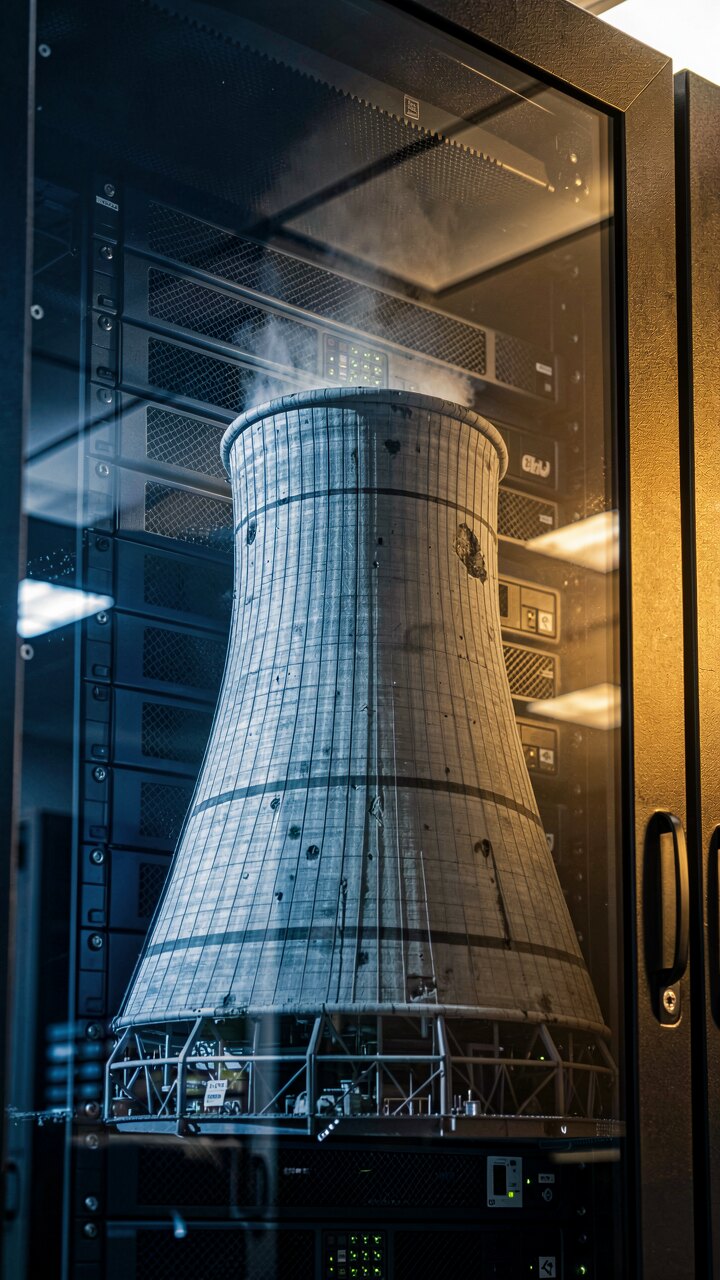
Concept illustration (AI, FLUX·2)
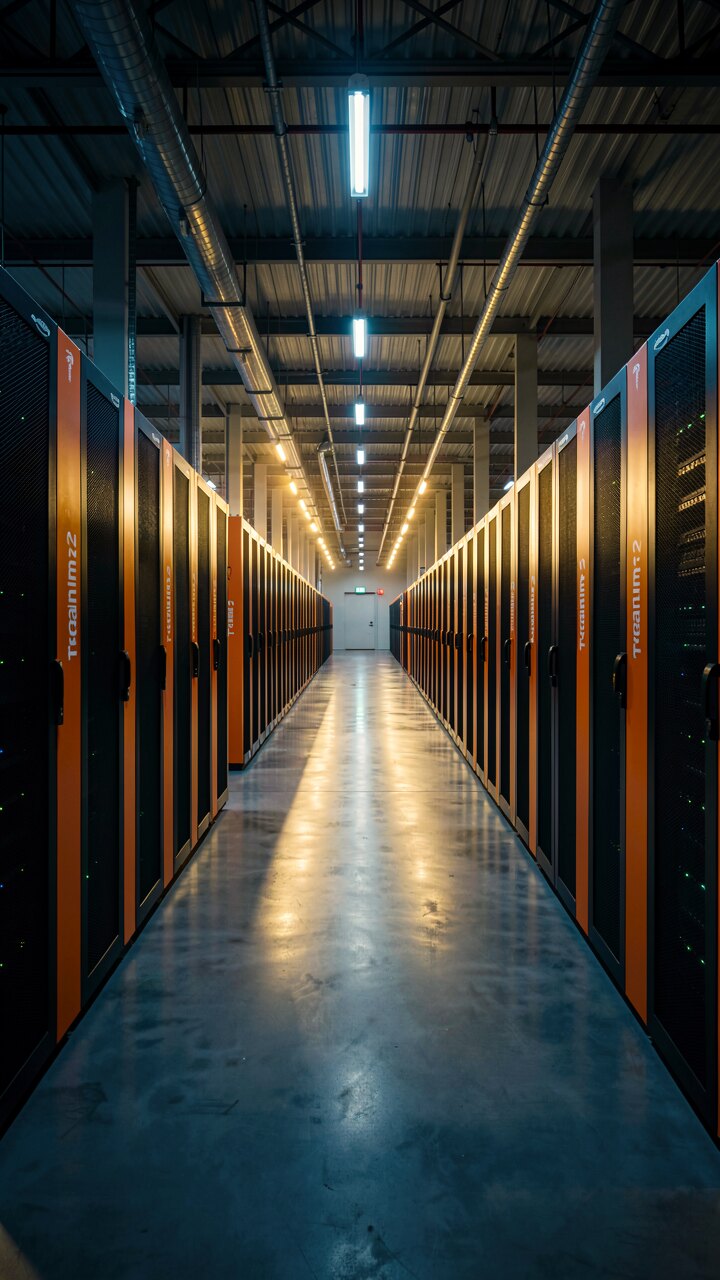
Concept illustration (AI, FLUX·2)
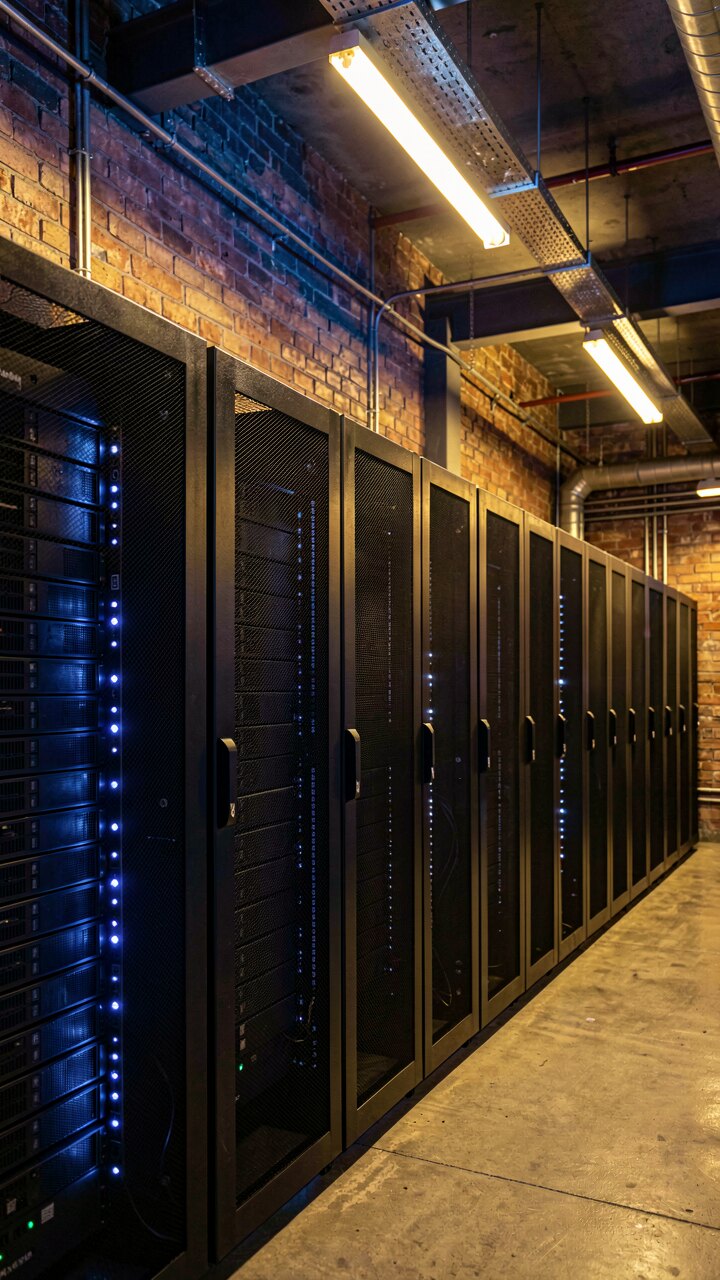
Concept illustration (AI, FLUX·2)
HVAC is the Hidden Cost of AI — Make It Visible
From Abu Dhabi to Bünde: every facility that runs high-density compute faces the same cooling challenge. Stromfee AI's Glass HVAC monitoring and BESS optimization tools give energy managers transparent, real-time control over exactly this problem. Whether you're managing megawatts or kilowatts, the principle is the same. Try it free at stromfee.app.
Open EN App at en.stromfee.app →