750 MW in Sweden — Where the Cold Air Does the Job of a Billion-Dollar HVAC System
Stockholm, Sweden · Brookfield Asset Management · Announced / early development · Online 2027+
- 750 MW planned capacity — Scandinavia's largest AI compute hub
- Up to $10 billion total investment from Brookfield Asset Management
- Stockholm's sub-10°C average winter temperatures enable year-round free cooling
- Sweden's grid is among Europe's cleanest: ~98% fossil-free (hydro + nuclear + wind)
- Currently in announced/early development phase — 2027 and beyond timeline
Hook: The Most Expensive Line Item in Every Datacenter Is Hot Air
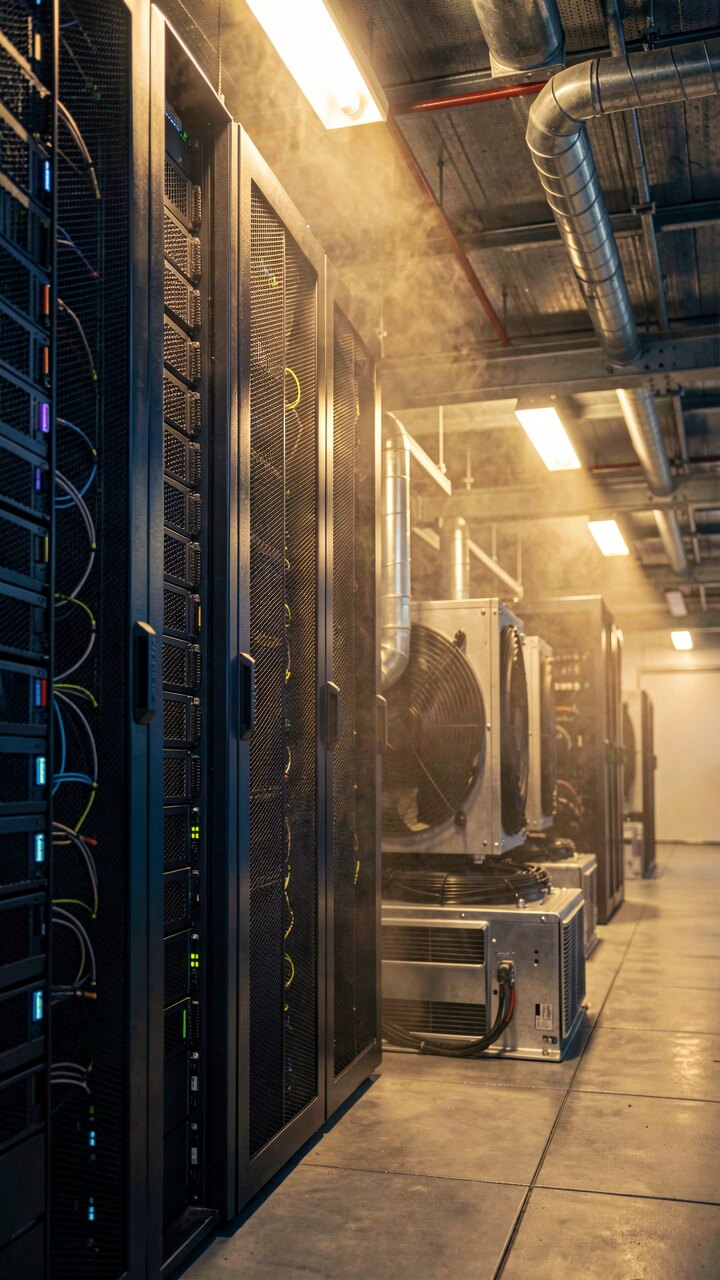
Every GPU rack generates heat. Lots of it. In a modern AI training cluster, the thermal output of a single server can exceed that of a household electric oven — running continuously, 24 hours a day, 365 days a year. Managing that heat is not a footnote in the datacenter business; it is the business. Cooling systems consume 30 to 50 percent of a large facility's total power draw.
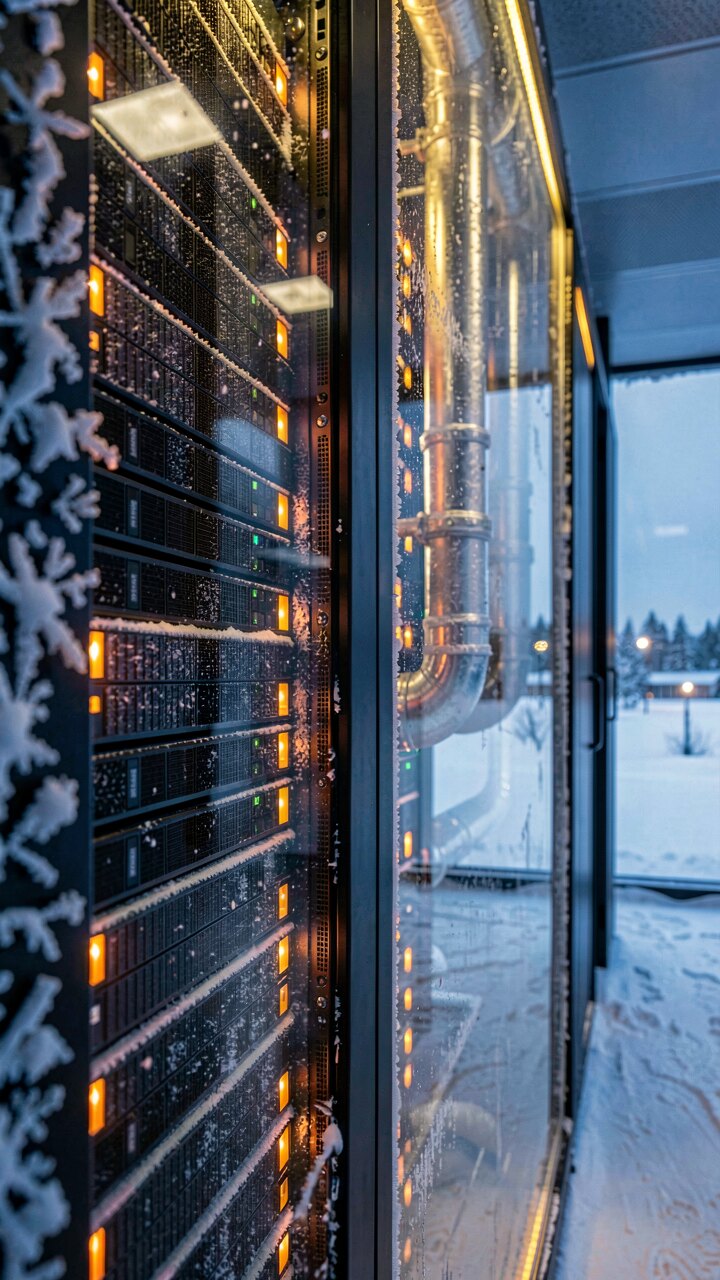
Brookfield Asset Management's decision to put 750 MW of AI compute in Stockholm is fundamentally a decision about thermodynamics. When the ambient outdoor temperature is −5°C, you do not need chillers. You open a vent. The Arctic air does the work that would otherwise cost tens of millions of dollars annually in electricity and mechanical cooling infrastructure. Scandinavia is not just a geographic location for this datacenter — it is the competitive moat.
Tease: What Does $10 Billion Buy in the Nordic Cold?
Brookfield Asset Management manages over $1 trillion in assets. When an institution of that size announces up to $10 billion for a single AI infrastructure project, it is not speculating — it is making a multi-decade infrastructure bet structured around predictable, contracted cash flows. The $10 billion figure for Stockholm places this facility in the same investment tier as national energy infrastructure projects.
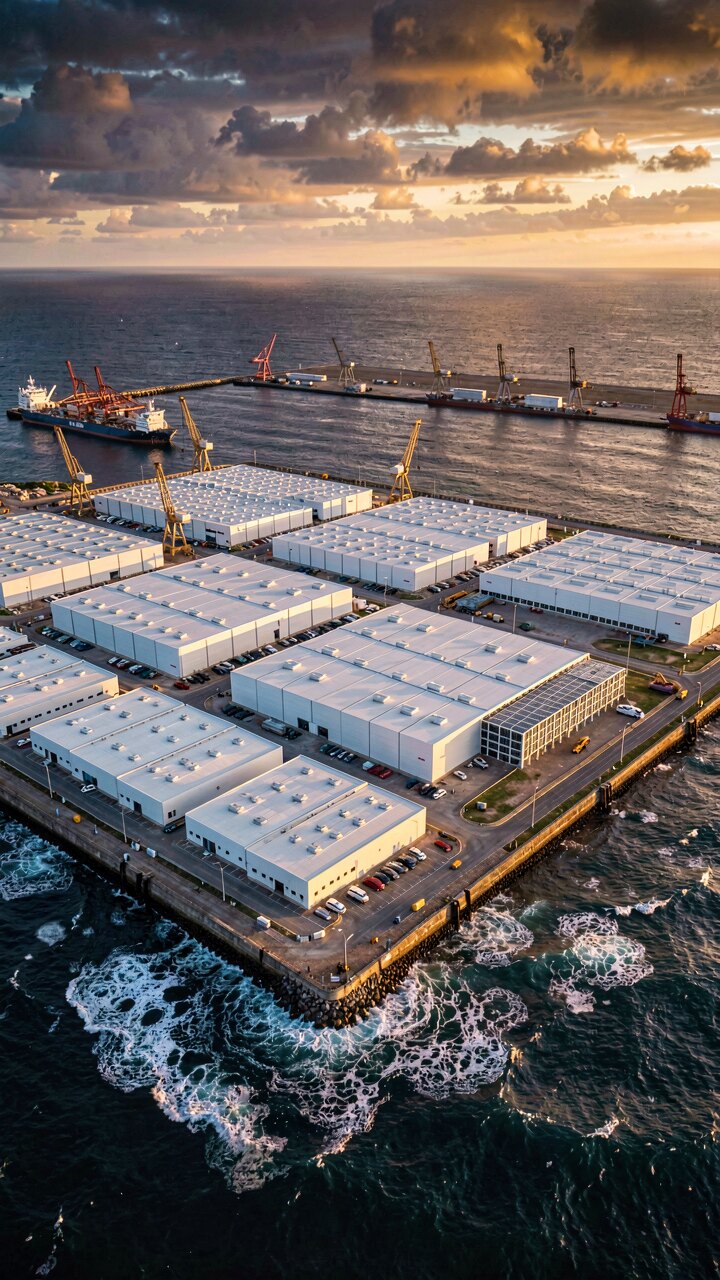
The 750 MW target ranks Brookfield Stockholm above Sines (1.2 GW, Rank 14) in terms of investment per megawatt — at $10 billion for 750 MW, that is roughly $13 million per MW of installed capacity. For comparison, a combined-cycle gas plant runs approximately $1–2 million per MW. Datacenter infrastructure costs more because it is not just power delivery; it is compute density, fiber connectivity, physical security, and operational resilience built into every square meter.
Reveal: The Physics Advantage That No Other Market Can Replicate
The term used in the datacenter industry is "free cooling" — using outdoor air or cold ambient water sources to cool server infrastructure without mechanical refrigeration. Stockholm's climate delivers free cooling conditions for roughly 7 to 8 months of the year. A facility in Phoenix, Arizona might manage free cooling for 3 months. In Singapore or the Gulf states: essentially zero.
When you translate that ambient temperature advantage into power consumption terms, the numbers become significant. A Power Usage Effectiveness (PUE) of 1.05 — meaning only 5% of total power goes to overhead like cooling — is achievable in Nordic conditions. In a hot-climate datacenter without aggressive investment, PUE of 1.4 to 1.6 is common, meaning 40 to 60% overhead. At 750 MW of IT load, the difference between PUE 1.05 and PUE 1.4 is 262 MW of wasted electricity. At European power prices, that waste costs hundreds of millions of euros annually. Brookfield's Arctic moat is real and quantifiable.
Sweden's Grid: The Other Half of the Advantage
Free cooling reduces the cooling power draw. But the server IT load still needs electricity — 750 MW of it, continuously. What Sweden offers is not just cold air but one of Europe's cleanest and most stable electricity grids. Swedish electricity generation is approximately 98% fossil-free: roughly 45% hydropower, 30% nuclear, and a growing share of wind. The grid frequency is exceptionally stable, and Sweden is interconnected with Norway's massive hydro reserves — providing effective seasonal balancing.
For AI hyperscalers with net-zero commitments and ESG reporting requirements, this combination is nearly unbeatable in Europe. Running 750 MW of AI compute on a 98%-clean grid at near-PUE-1.0 cooling efficiency is the closest approximation to zero-carbon AI infrastructure that current technology allows at this scale.
Comparison: Stockholm vs. the Rest of Europe's AI Datacenter Pipeline
Stockholm's 750 MW puts Brookfield solidly in the top tier of European AI infrastructure bets. Start Campus Sines (Rank 14) reaches further at 1.2 GW, but trades Nordic free cooling for Atlantic fiber connectivity and abundant solar. VIRTUS Wustermark Berlin (Rank 17) and Apto Milan (Rank 18) are smaller — 204 MW and 300 MW respectively — and face more constrained renewable energy grids.
The Nordic region as a whole — Sweden, Finland, Norway, Denmark — is arguably the most favorable zone in Europe for AI datacenter infrastructure when you combine grid cleanliness, climate cooling advantage, political stability, and existing fiber backbone. Microsoft, Google, and Meta all operate significant Scandinavian datacenter capacity. Brookfield's Stockholm project is joining an established ecosystem rather than pioneering one — which reduces execution risk considerably.
The HVAC Insight That Will Shape Stockholm's Economics
Even with the Nordic free cooling advantage, 750 MW of AI compute will generate thermal management challenges that require precise engineering and ongoing operational intelligence. The moments when outdoor temperatures rise above the free cooling threshold — Stockholm's summer highs can reach 25–30°C — are precisely when mechanical cooling must activate, often coinciding with peak electricity prices. Managing that transition seamlessly is worth significant money.
Stromfee AI's Glass HVAC methodology provides the operational layer that answers this question in real time: at what outdoor temperature does free cooling become insufficient, what is the cost per megawatt-hour of activating mechanical backup, and how does that compare to the marginal revenue from the compute load being served? For a 750 MW campus in Sweden, that optimization runs continuously — and the savings from getting it right versus getting it wrong can be tens of millions of euros over a full year of operations.
Battery energy storage (BESS) adds another strategic tool in the Swedish market context. Sweden participates in the Nordic electricity market (Nord Pool), where hydropower availability creates predictable patterns of price volatility — low prices when snowmelt fills reservoirs in spring, higher prices during cold winter peaks. A BESS configured to arbitrage those patterns can systematically lower the effective electricity cost for a 750 MW AI campus. At Brookfield's investment scale, even marginal cost reduction per megawatt-hour compounds to substantial annual savings. Visit en.stromfee.app to model BESS arbitrage for your own facility.
What Comes Next for Brookfield Stockholm
The project is currently in the announced and early development phase. Key milestones ahead: site selection finalization within the Stockholm region, grid connection agreements with Svenska kraftnät (Sweden's transmission operator), planning permission from Stockholm municipality, and tenant contracts that will define the revenue base for $10 billion in infrastructure investment.
The "2027 and beyond" timeline is honest. At 750 MW, permitting, grid connection, and construction will take multiple years. The fact that Brookfield is announcing this now — several years before first power — signals confidence in the regulatory environment and the demand signal from AI compute customers looking for European capacity that is both clean and efficient.
Scandinavia's AI compute infrastructure buildout is accelerating. Stockholm already hosts Microsoft and Meta datacenter capacity. When Brookfield's 750 MW campus comes online, the Swedish capital will rank among Europe's most powerful AI compute regions — with the physics of the climate working for it every hour of every winter day.
Model the Energy Economics of Your Facility
Whether you operate in a Nordic free-cooling climate or a warm-weather market where HVAC is your biggest cost — Stromfee's energy analysis tools give you transparent, real-time insight into what your thermal management really costs and where BESS can create value.
Open Energy Analyzer →