What Is an Electricity Price Forecast?

An electricity price forecast is a data-driven prediction of what wholesale power will cost per hour over the coming days, based on demand, weather and renewable output. It tells you in advance when power is likely to be cheap and when it will be expensive, so you can plan buying, charging or production around the lowest prices.
A forecast estimates the wholesale day-ahead spot price (EPEX Spot), usually in €/MWh, for each hour ahead. Prices swing because supply and demand change hour by hour: they fall when solar and wind flood the grid or demand drops, and rise in the evening peak when renewables fade and demand climbs. Knowing the shape of the next days lets you shift flexible loads into the cheap hours.
Look at four numbers per day: the average price, the cheapest hour, the most expensive hour, and the spread (most expensive minus cheapest). The spread is the key figure — a wide spread means big savings potential from shifting consumption. Stromfee's forecast runs at hourly resolution for seven days across markets including DE, AT, FR, ES, NL, BE, PL, DK1, SE3 and NO1, so you can compare price patterns bidding zone by bidding zone.
Stromfee's forecast is generated with Prophet, a machine-learning time-series model (Prophet v1). It learns recurring daily and weekly price patterns from historical EPEX Spot day-ahead data and projects them forward at hourly resolution. Because it is model-based rather than a fixed schedule, it adapts to seasonal shifts in demand and renewable generation — but, like any forecast, it is a probability-weighted estimate, not a guaranteed price.
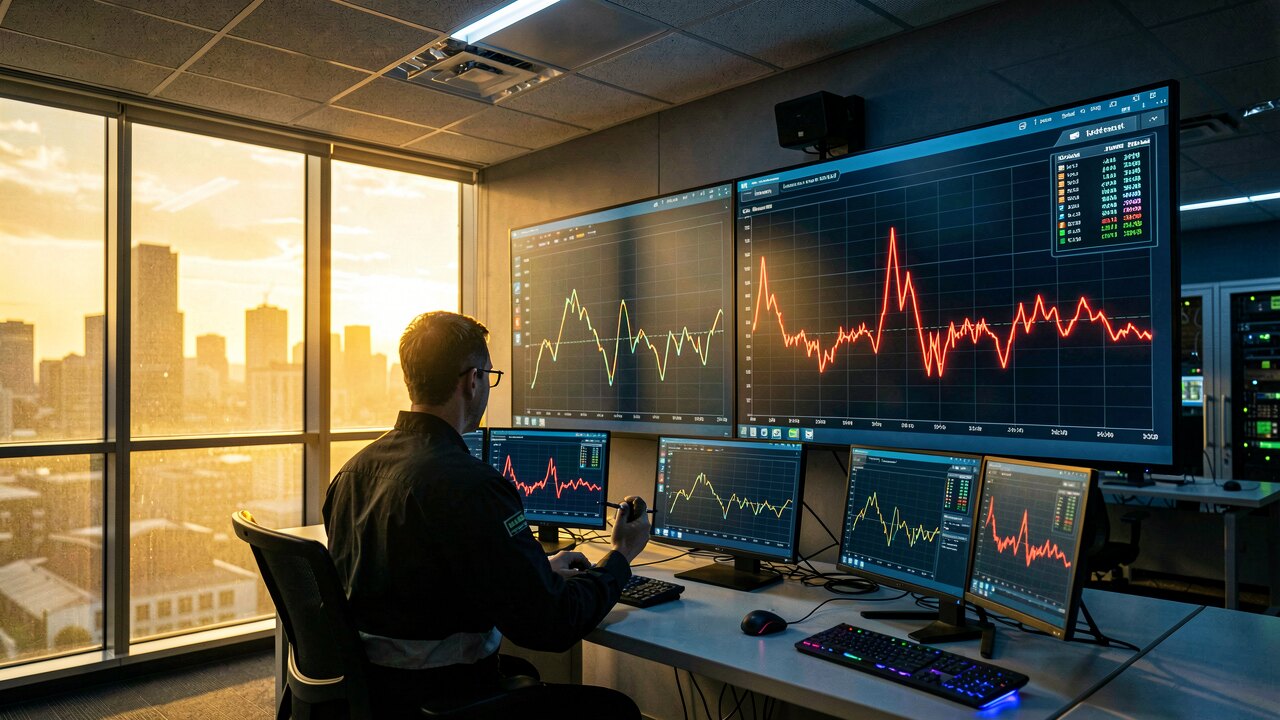
Once you know the cheap and expensive windows, you act on them: run flexible processes, heat pumps or EV charging during the cheapest hours and avoid the evening peak. If you have a battery, you charge when prices are low and discharge when they are high — that price gap is where the value sits. Stromfee shows this directly as a daily charge/discharge recommendation with the resulting spread and profit signal.
For storage operators the forecast doubles as an arbitrage planner. Stromfee models a 10 MWh reference storage at 90% round-trip efficiency and estimates the 7-day profit potential from buying low and selling high. Each day it flags the best charge and discharge hours and the expected spread, so you can see whether the price swings are large enough to make cycling the battery worthwhile.
Two views work together: the live spot price shows the current market situation right now (e.g. the DE_LU day-ahead price and its 24-hour high and low), while the forecast projects the next seven days. Use the live view to react to today's peaks and the forecast to plan ahead — for example to schedule procurement or a discharge window before an expensive evening arrives.