Why Did Blackstone Pay A$24 Billion for a Single Datacenter?
A price tag that demands an explanation
A$24 billion. That's not a number you write into a press release without drawing questions. When Blackstone acquired Australian datacenter operator AirTrunk in 2024, it became the largest single infrastructure transaction in Australian history. What justifies that price? The answer lies not in servers and fiber cable alone. It lies in what those servers require to operate: reliable capacity in a region that is only beginning to grasp just how hungry AI workloads have become.
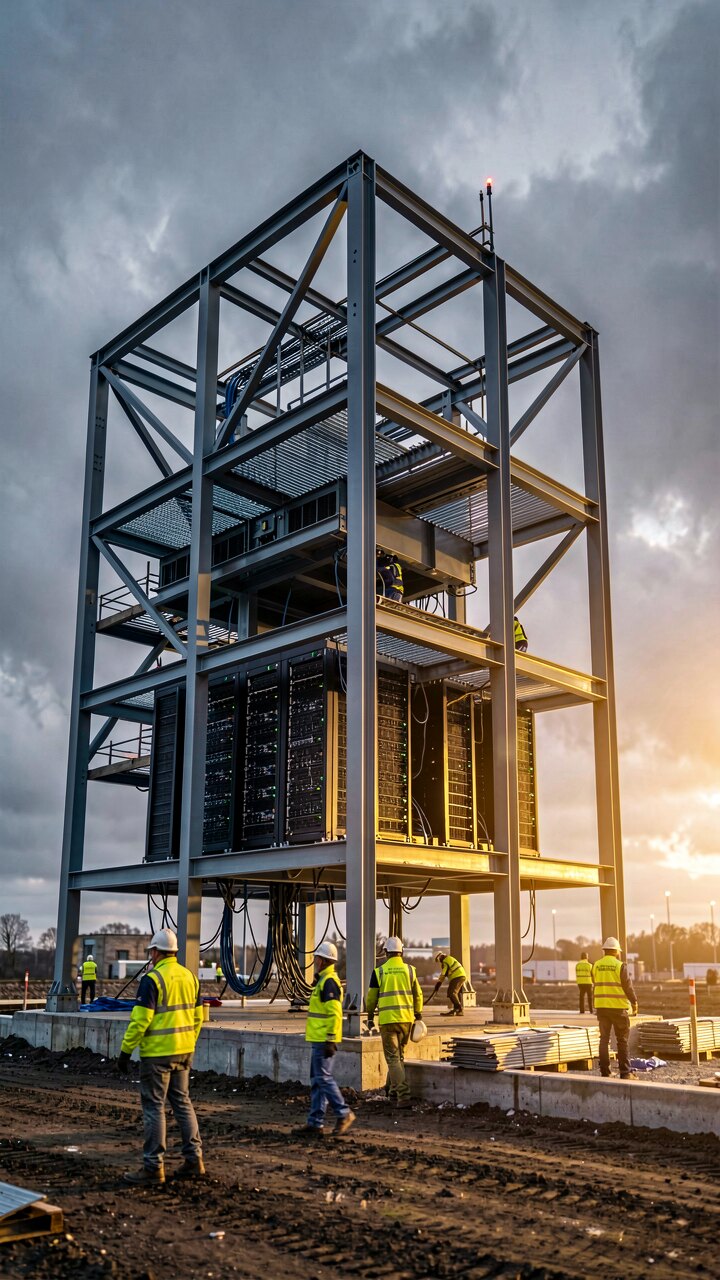
The AirTrunk Asia-Pacific Mega-Campus is being built with a power capacity of 320 MW – equivalent to the electricity consumption of a medium-sized European city. Spread across sites in Australia, Singapore, and Japan, the facility targets the major hyperscalers: cloud providers and AI laboratories that want to run their training jobs and inference workloads in the APAC region with low latency and local data residency.
What 320 MW actually means
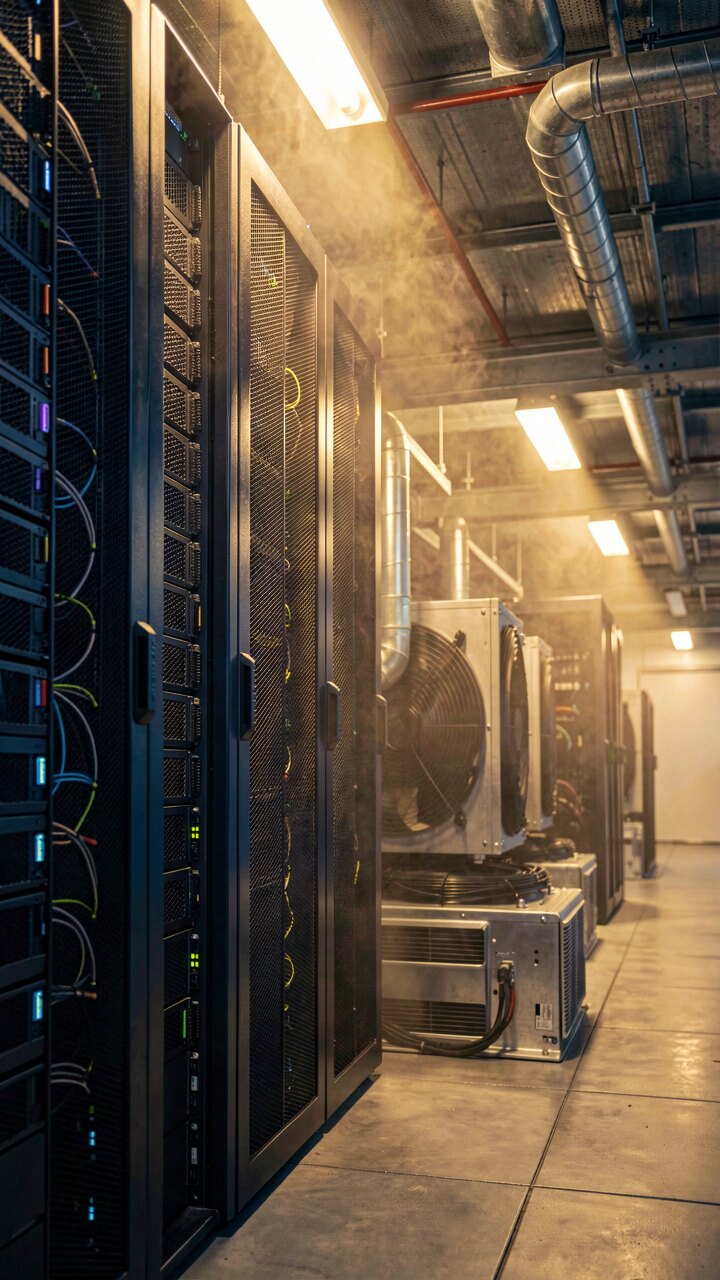
320 megawatts sounds abstract. In concrete terms: when this campus runs at full load, 320,000 kilowatt-hours flow through its connections every hour. In a single day, that's 7.68 million kWh – enough to power over 700,000 average households for 24 hours. Yet few people realize where this electricity actually goes: only about 60 to 70 percent lands in the GPUs and CPUs that do the actual computation. The rest – often more than 30 percent of total load – goes into climate control and cooling.
Modern AI accelerators like NVIDIA H100 or H200 generate around 700 watts of thermal dissipation per chip under load. Multiply that by tens of thousands of units and you get a heat load that pushes conventional datacenter HVAC systems to their limits. AirTrunk addresses this with a mix of direct liquid cooling for dense GPU racks and high-powered mechanical chillers for residual heat – all managed by intelligent energy management systems that must detect and compensate for load spikes in real time.
APAC: the underestimated continent
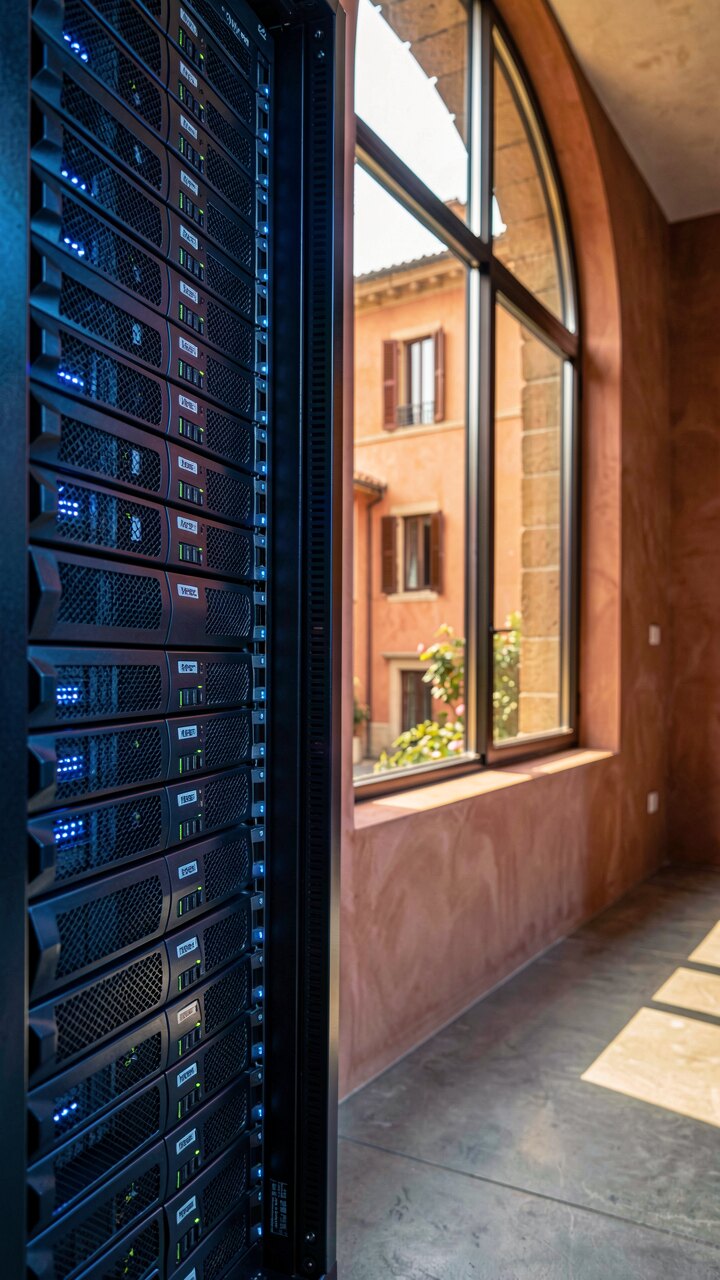
Blackstone's choice of Australia and Singapore is strategic. Singapore has long been the hub for Asian cloud infrastructure – with top-tier fiber connections to all of Southeast Asia. Australia, meanwhile, is one of the fastest-growing AI markets outside the US, driven by financial services, mining conglomerates, and government digitization initiatives. Japan rounds out the trio with a deep pool of industrial customers who want AI processing to happen locally.
For all these hyperscaler clients, AirTrunk offers a single promise: reliable capacity on demand, scalable, with local support and without the regulatory risks that accompany cloud hosting in certain emerging markets. Blackstone is buying not just concrete and power – it's buying a strategic lever in a region that will demand dramatically more AI compute over the next decade.
The hidden problem: HVAC blindness
What operators like AirTrunk know internally and rarely communicate publicly: the biggest operational challenge of a mega-datacenter is not GPU utilization. It's HVAC control. Cooling systems of this scale consist of hundreds of chillers, cooling tower clusters, pumps, distribution loops, and valve groups. Each of these components has its own consumption profile, each responds differently to outside temperature, load pattern, and maintenance condition.
Without a digital twin of these systems – a "Transparent HVAC" – operators make optimization decisions in the dark. When does pre-cooling make sense? Which chiller group is thermally most efficient? When should a battery energy storage system (BESS) feed stored energy into the HVAC to smooth grid load peaks? Answering these questions today is often still manual work – or simply impossible because the measurement data doesn't exist.
Stromfee: Transparent HVAC for energy-intensive facilities
This is exactly where Stromfee's HVAC Optimizer comes in. The AI-powered platform at apps.stromfee.ai makes cooling systems visible: per-unit consumption in real time, automatic anomaly detection, automatic load forecasts, and direct coupling with the BESS Optimizer for peak shaving and energy arbitrage.
What is possible for a 320 MW campus like AirTrunk APAC already applies today to energy-intensive industrial facilities everywhere: if you don't know what your HVAC consumes, you can't control it. If you can't control it, you pay unnecessarily high energy costs – and miss the opportunity to reduce grid fees and peak-demand charges through intelligent load shifting.
The AirTrunk APAC Mega-Campus is a signal: AI infrastructure is no longer growing linearly. It grows in leaps – and with it the demands on energy management, cooling optimization, and grid integration. Understanding the physics of these datacenters means understanding why Blackstone paid that price. And why HVAC transparency is becoming more relevant for every operator of energy-intensive facilities than ever before.
Sources
- BlackRidge Research: Largest & Latest Data Centers in Asia-Pacific
- Blackstone press release on AirTrunk acquisition, 2024