300 MW in the Po Valley – Why Northern Italy Is Becoming Europe's AI Hotspot
A quiet revolution in the Po Valley
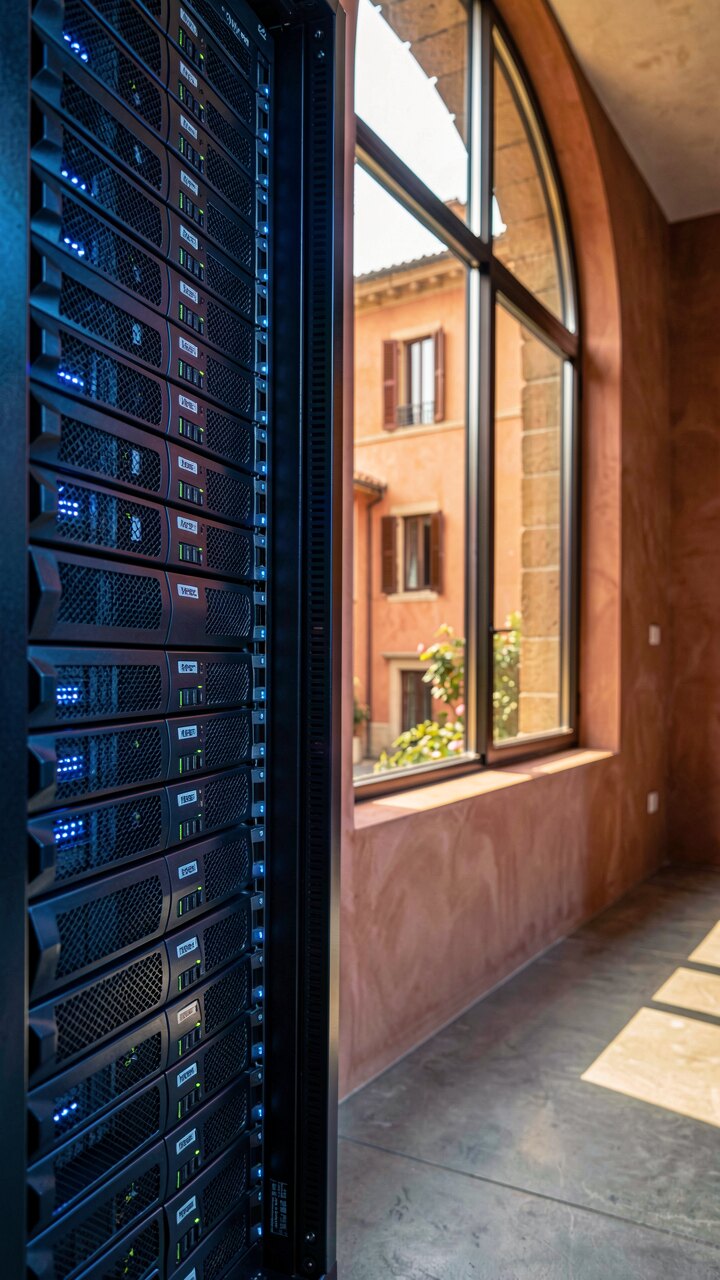
Lacchiarella is a municipality of around 8,000 residents south of Milan, known for agriculture and its proximity to the Milanese urban fringe. What is being planned there right now does not fit that picture at first glance: a datacenter campus with 300 megawatts of power capacity that will consume more electricity than all the residential buildings in the entire province combined. The operator Apto is positioning itself as the enabler of AI infrastructure in Southern Europe – in a region that has until now trailed behind Northern European hubs.
Why Milan, why now? The answer has several layers. First: Milan is Italy's economic engine. Financial services, fashion, industrial conglomerates – they all need local cloud capacity for AI applications that must remain within the EU for data protection reasons. Second: the Italian government has declared data sovereignty a political goal. Computing infrastructure on domestic soil is no longer a nice-to-have, but a strategic necessity.
Italy's AI ambitions and the gap Apto fills
For a long time, Italy's datacenter landscape was defined by smaller local operators and a handful of international co-location sites in Milan and Rome. The hyperscaler buildout – Amazon, Microsoft, Google – had long focused on Northern European sites: Dublin, Amsterdam, Frankfurt. Southern Europe was seen as more expensive, hotter, and harder to supply with infrastructure.
That is changing. Several factors are driving the shift: Northern European hubs have hit capacity limits. European AI regulations have evolved such that latency and data residency are becoming decisive parameters. Northern Italy, despite higher outdoor temperatures, offers good power connectivity via Alpine transmission lines and sufficient industrially developed land in the Po Valley.
The HVAC dilemma in a Mediterranean climate
Here lies the decisive technical challenge. Datacenters in Scandinavia and Northern Europe benefit from natural cooling through cool outdoor air for many months of the year – free cooling that relieves mechanical refrigeration and dramatically improves energy efficiency. A site in the Po Valley, where summer outdoor temperatures regularly exceed 35 degrees Celsius, cannot count on that relief.
This means: a 300 MW datacenter in Northern Italy must dimension its cooling systems to operate reliably even on hot summer days – without the mechanical cooling capacity collapsing when all of Italy is under a heat wave and grid load is surging from air conditioners. The HVAC systems must therefore be not only powerful but also extremely resilient against outdoor conditions.

This makes this site a case study for energy management: when cooling is not subsidized by the outdoor climate, every kilowatt-hour of cooling energy must be earned through efficiency. Poor HVAC control costs disproportionately more here – both in euros and in CO2.
Stromfee: Transparent HVAC – also for the Mediterranean
For facilities in warmer climates, Stromfee's Transparent HVAC is especially valuable. The AI-powered platform at apps.stromfee.ai analyzes the thermal behavior of each cooling unit, identifies inefficient operating points, and optimizes the cooling load as a function of time of day, outdoor temperature, and electricity price. Particularly in an environment like Northern Italy, where daytime electricity exchange prices fluctuate significantly depending on grid load, coupling HVAC control with the BESS Optimizer creates real savings potential.
Stromfee's BESS Optimizer enables operators to pre-charge cold thermal mass when electricity is cheap – and throttle mechanical cooling when prices spike. This form of energy arbitrage is barely possible with conventional building management systems, but is becoming an increasing competitive advantage for operators in high-temperature regions.
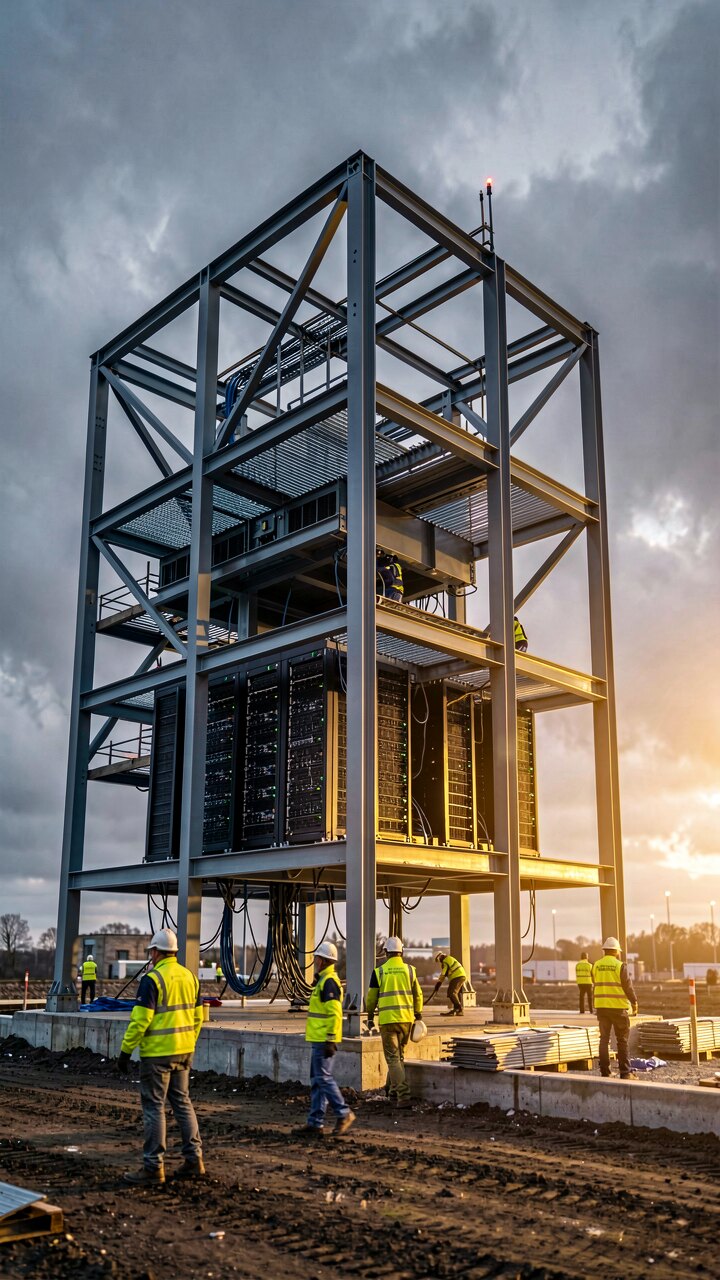
The Apto campus in Lacchiarella is not yet complete. But it signals where the journey is heading: AI infrastructure in Southern Europe is growing – and with it the demand for intelligent energy management systems that deliver peak performance even under difficult climatic conditions.
Sources
- BlackRidge Research: Largest & Latest Data Centers in Europe