What are Harmonics (Oberwellen) in Power Systems?
Harmonic distortion refers to the presence of electrical frequencies that are integer multiples of the fundamental system frequency (50 Hz or 60 Hz). These arise from non-linear loads such as variable frequency drives, rectifiers, and switching power supplies, which draw current in non-sinusoidal patterns. The resulting voltage and current waveforms deviate from pure sine waves, creating distortions that can propagate through the grid.
Each harmonic order (e.g., 3rd, 5th, 7th) corresponds to a specific multiple of the fundamental frequency. For example, a 5th harmonic operates at 250 Hz in a 50 Hz system. These harmonics superimpose on the fundamental waveform, causing voltage and current waveform distortion. The total harmonic distortion (THD) quantifies this deviation as a percentage of the fundamental component.
Impact of Harmonics on Commercial Energy Systems
Harmonic distortion increases copper and iron losses in transformers and motors, leading to elevated temperatures and reduced operational lifespan. Resonance between system impedance and harmonic frequencies can amplify specific orders, causing voltage magnification that damages sensitive equipment. Additionally, harmonics can trip protective devices due to misinterpretation of current waveforms, resulting in unnecessary shutdowns.
In PV systems, harmonics from inverters can interact with grid-connected equipment, causing metering errors and reducing overall system efficiency. For instance, high THD in voltage can lead to incorrect energy metering, affecting billing accuracy. Furthermore, harmonics can cause overheating in neutral conductors due to tripl harmonics (3rd, 9th, etc.), which add up in the neutral wire.
Harmonic Standards and Limitations
IEC 61000-3-2 and IEC 61000-3-12 define harmonic emission limits for equipment connected to low voltage networks. These standards specify maximum allowable THD for voltage (typically ≤ 8% for systems ≤ 69kV) and current harmonic injection levels based on load size. Commercial operators must comply with these limits to avoid penalties from grid operators.
Grid operators enforce harmonic limits through regular measurements and may require mitigation if TH exceeds thresholds. For example, a THD voltage above 5% in a 400V system could trigger corrective actions. Compliance ensures stable operation of shared infrastructure and prevents casc failures due to harmonic-induced resonances.
PV Systems as Sources and Solutions for Harmonics
PV inverters generate harmonics due to switching operations during DC-AC conversion. Even high-quality inverters produce some harmonic content, though modern designs typically meet IEC 61000-3-2 Class A limits (THD ≤ 5% for current). However, when multiple inverters operate in parallel or under varying loads, harmonic interactions can occur.
Conversely, PV systems can actively mitigate harmonics through advanced inverter control. By injecting current components opposite to detected harmonics, inverters function as active harmonic filters. This requires real-time measurement of system harmonics and precise control algorithms to generate counteracting currents without affecting fundamental power delivery.
Active Harmonic Filtering in PV inverters
Active harmonic filters (AHF) integrated into PV inverters continuously monitor current waveforms using high-speed sensors. The control system decomposes the measured current into fundamental and harmonic components, then generates a counteracting current signal that cancels harmonic frequencies. This process occurs within milliseconds, ensuring real-time suppression.
AHF effectiveness depends on the inverter's power rating relative to harmonic sources. For instance, a 100kVA PV system can typically neutralize harmonics up to 30% of its capacity. However, if harmonic sources exceed this threshold, additional filters or system redesign may be necessary. AHF also requires sufficient reactive power capability to handle both harmonic cancellation and power factor correction.
Passive harmonic filters and their limitations
Passive harmonic filters use LC circuits tuned to specific harmonic frequencies (e.g., 5th or 7th). They absorb harmonic currents by providing a low impedance path at those frequencies. While cost-effective for targeted harmonics, they cannot adapt to changing load profiles or multiple harmonic orders simultaneously.
A critical limitation is resonance risk: if system impedance matches the filter's resonant frequency, it can amplify harmonics instead of reducing them. Additionally, passive filters consume reactive power at fundamental frequencies, which may require additional compensators. They are also less effective for higher-order harmonics (>11th) due to increased losses and size constraints.
Stromfee's integrated harmonic mitigation approach
Stromfee combines active harmonic filtering with reactive power compensation in PV inverters. The system continuously measures harmonic content via current transformers and employs real-time control to inject counteracting currents. This approach suppresses specific harmonic orders while simultaneously managing power factor via reactive power injection.
Implementation begins with a detailed site audit to identify dominant harmonic sources and system impedance characteristics. Based on measurements, Stromfee engineers configure inverters to target the most problematic harmonics while ensuring compliance with local grid codes. The solution is scalable, with inverters capable of handling 5th to 25th harmonic orders depending on system design.
Implementation steps and practical considerations
Conduct harmonic measurements using a power quality analyzer to identify dominant orders and THD levels. Analyze system impedance to avoid resonance with passive components. Select inverter models with sufficient harmonic cancellation capacity (typically 20-30% of inverter rating). Install current sensors and integrate control firmware for real-time harmonic detection. Validate performance post-installation with repeated measurements.
Edge cases include systems with high levels of non-linear loads beyond inverter capacity, where additional dedicated filters may be required. Also, during grid voltage sags or faults, harmonic mitigation may temporarily de prioritize to maintain system stability. Regular firmware updates ensure compatibility with evolving grid standards.
Maintenance and monitoring for sustained performance
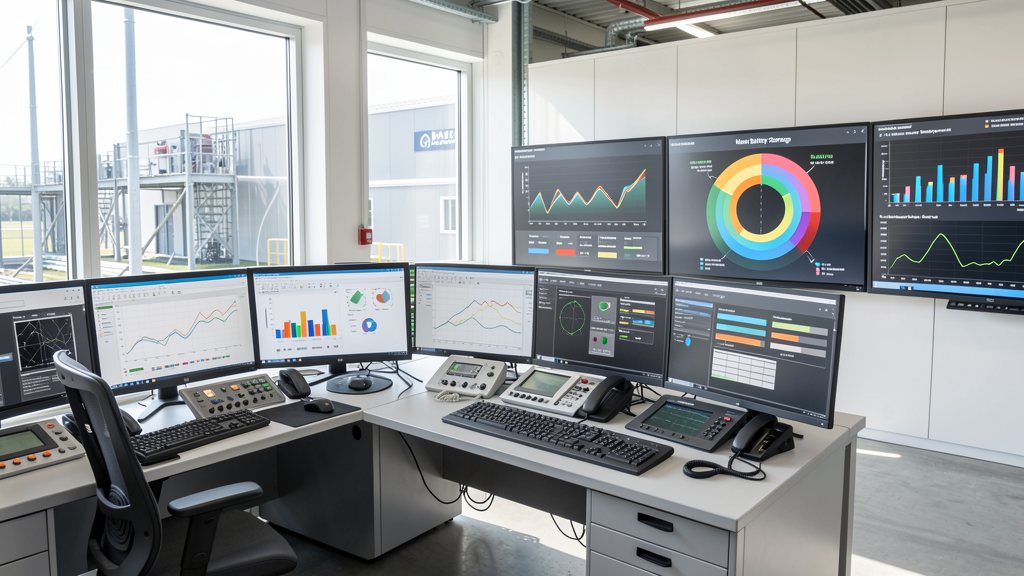
Harmonic mitigation systems require periodic verification of sensor calibration and control algorithms. Stromfee's solutions include remote monitoring dashboards that alert operators to rising THD levels or filter performance degradation. Annual checks of current transformers and control settings ensure continued compliance with IEC standards.
In environments with fluctuating loads (e.g., industrial facilities with variable machinery), the system's adaptive algorithms must be fine-tuned to handle changing harmonic profiles. This involves reconfiguring filter parameters based on new measurement data, which Stromfee engineers can remotely perform via cloud-based interfaces.
Common misconceptions and clarifications
A frequent misunderstanding is that reactive power compensation alone reduces harmonic distortion. In reality, reactive power correction (e.g., capacitor banks) addresses power factor but can exacerbate harmonics if not properly designed. Stromfee's solutions explicitly separate these functions: active harmonic filtering targets waveform distortion while reactive power compensation manages phase angles.
Another misconception is that all inverters inherently suppress harmonics. Only inverters with dedicated AHF capabilities can actively cancel harmonics; standard grid-tied inverters merely meet THD emission limits. Stromfee's PV systems are specifically configured with advanced control firmware to go beyond basic compliance and actively mitigate existing system harmonics.
FAQ
Can standard PV inverters reduce harmonics without additional equipment?
No. Standard PV inverters only limit their own harmonic emissions to meet IEC 61000-3-2. They do not actively cancel harmon generated by other loads. Only inverters with integrated active harmonic filtering (AHF) capabilities can suppress existing system harmonics.
How does active harmonic filtering affect PV system efficiency?
AHF operation consumes a small portion of inverter capacity (typically 5-10%), slightly reducing available power for energy production. However, this trade-off is offset by reduced losses in downstream equipment and avoided penalties from grid operators for high THD.
What happens if harmonic sources exceed the inverter's mitigation capacity?
The inverter will saturate, leading to partial harmonic suppression. In such cases, additional dedicated AHF units or system redesign (e.g., adding passive filters for specific orders) is required. Stromfee engineers assess this during the initial site audit.
Can passive filters alone solve harmonic issues in PV systems?
Passive filters are effective only for specific harmonic orders and require precise tuning. They risk resonance with system impedance and cannot adapt to changing load profiles. Stromfee typically combines passive and active approaches for robust solutions.
How often should harmonic levels be measured post-installation?
Quarterly measurements are recommended for critical systems. Stromfee's remote monitoring continuously tracks THD, with alerts for deviations. Annual in-person verification ensures sensor accuracy and control parameters remain optimal.
Do harmonic mitigation systems work during grid outages?
No. Active harmonic filters require grid voltage reference to operate. During outages, the PV system disconnects per safety standards, and harmonic mitigation ceases. Systems must comply with anti islanding protocols.
Can harmonics cause issues with energy metering in PV systems?
Yes._high THD can cause meters to inaccurately measure energy, especially if they lack proper filtering. Stromfee ensures metering compatibility by keeping THD below 5% per IEC 62053-21, which is standard for commercial installations.
What is the typical lifespan of active harmonic filters in PV inverters?
AHF components have similar lifespans to the inverters themselves (20+ years), but firmware and sensor calibration require periodic updates. Stromfee provides 10-year warranties on filter functionality with remote diagnostics.