Forty Years With Batteries: From a Cold-War Airfield to Global Battery Trading
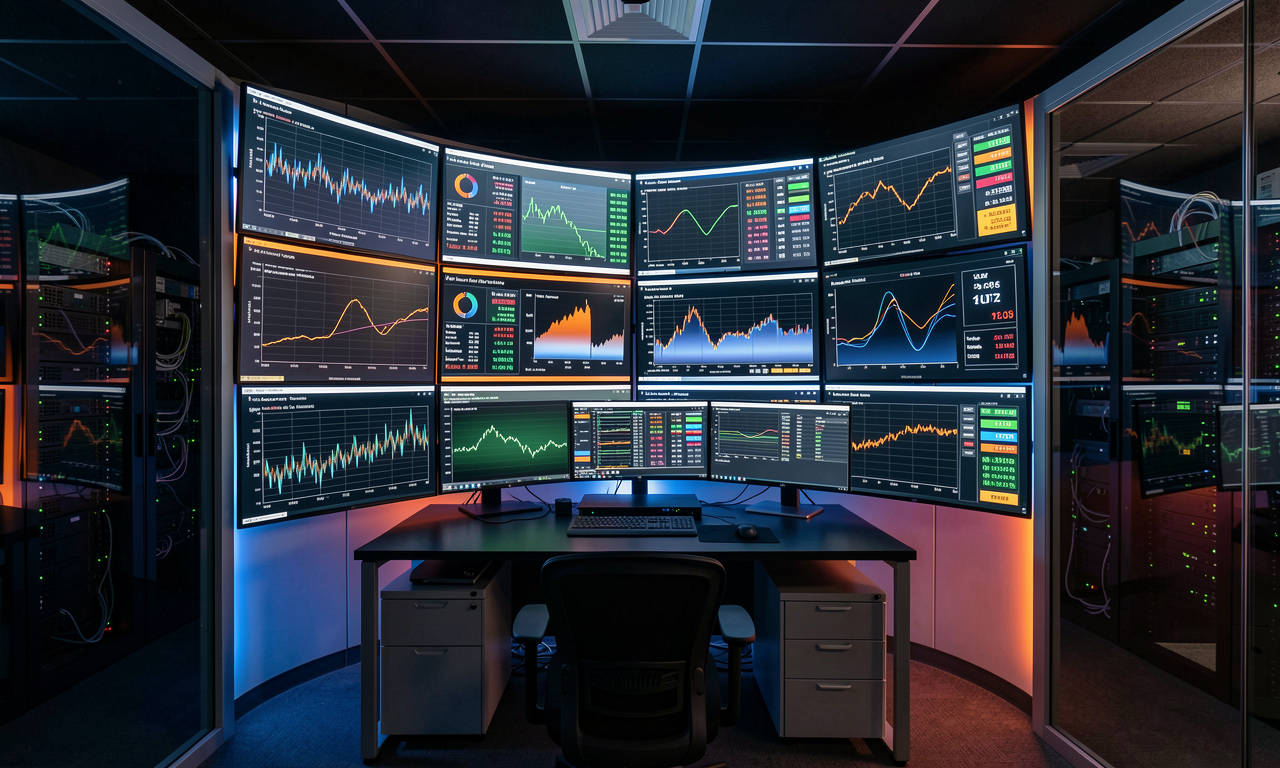
Some people discover batteries. I have lived with them for forty years.
This is the short version of a longer story — an East German one — and of why stromfee.cloud and the BESS Optimizer look the way they do today: independent, register-true, and obsessed with one question — what is your battery really earning, and what is it leaving on the table?
1984–1985: it started with batteries
My career in energy began in October 1984, in military service with the border troops of the former East Germany. Soon after, I became the battery charging warden for a helicopter squadron: responsible for the pilots' aircraft batteries and for the power supply of the airfields themselves. I learned the trade properly — a four-week course at the Akkumulatorenwerk Zwickau, the East German battery works.
It was lead-acid, hand tools and a clipboard. But the discipline was exactly the one that matters today: a battery is only as good as the energy you can reliably get into it and out of it again — at the moment it is needed most.
1992–2008: the engineer, and the audits
The diploma came after the practice, not before it: Dipl.-Ing. from TU Magdeburg in 1992. Then years as a sales engineer, and from 2008 a second craft on top of the first — energy auditing. Over the years that became 130+ DIN EN 16247-1 audits (BAFA-certified) across industry, biogas, food retail, hotels, fitness, airports and municipalities, and roughly 1.2 GW of supervised PV.
A hundred-plus audits teach you one uncomfortable truth: the money is rarely lost in the hardware. It is lost in contracts, metering concepts and settlement. The kilowatt-hours are fine; the euros quietly leak somewhere between the meter and the invoice.
2025–2026: the glass battery
That lesson became a platform. In 2025, Stromfee.ai turned audit-grade forensics on PV cash flows — making losses visible per asset, from open market data. In 2026 it became the thing the whole journey was pointing at: batteries trading the power markets, made fully transparent.
We call it the BESS Optimizer — the glass battery. Instead of a black box that "earns something," you see the two numbers that matter side by side: what your storage actually earned, and what the market allowed. That ceiling — the most a battery could have earned trading the day-ahead curve with perfect foresight — is a neutral reference. On a single calm June day in Austria, for a 1 MW / 2 h battery, it was €178 per MW. On volatile days it is multiples of that.
Put the two numbers together and bankability stops being a brochure promise. It becomes a measurement.
Why independent, why register-true
I sell no hardware and run no trading book of my own. That is the whole point: a neutral, register-true number you can take to your bank, your board or your investor — computed from public data, the same way for 35 markets across Europe and worldwide.
Forty years on, the job is unchanged from that airfield in 1985: get the energy where it is worth the most — and now, prove it.
See the live market radar at stromfee.cloud, or the full advisory at BESS project development.