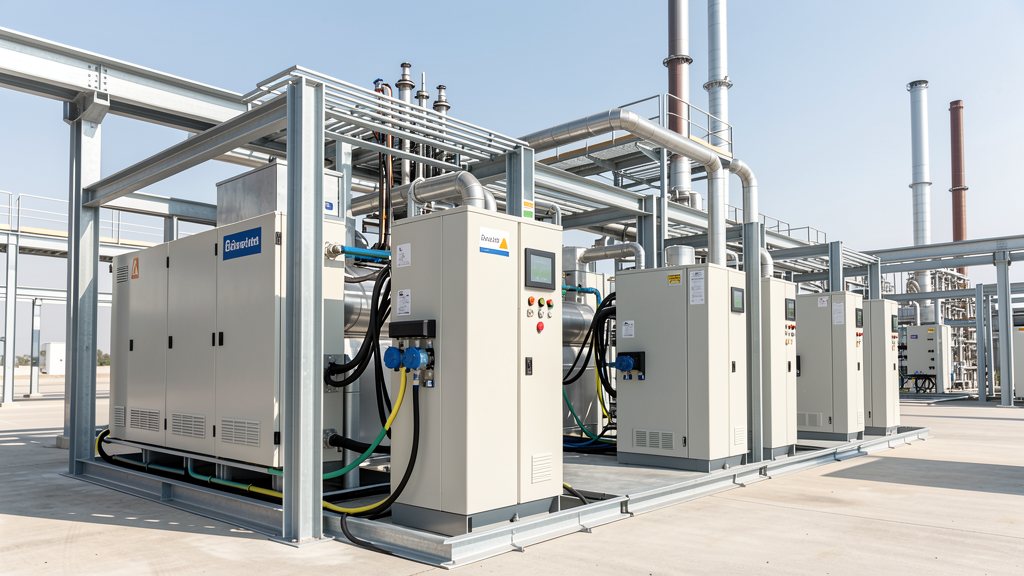
Where the energy goes: the melting furnace dominates
In a glassworks, the process that reaches the highest temperature is almost always the single largest energy consumer. Just as an energy audit of a cooling chain or a commercial kitchen breaks total demand down step by step to find the dominant load, a glass plant should break its consumption down by process stage — batch preparation, melting, forming, annealing and finishing — before deciding where to act. Without that breakdown, optimisation effort is spent guessing.
The melting furnace, which holds the raw batch at working temperature for long periods, typically accounts for the bulk of a plant's energy use, whether that energy is supplied as natural gas, electricity or a combination of both. Downstream steps such as forming and the annealing (cooling) lehr consume less but are not negligible. Measuring each stage separately — rather than reading a single meter at the plant boundary — reveals which stage actually drives the bill.
Efficiency as a ratio: useful energy versus energy input
Energy efficiency is a ratio of useful output to energy input, the same principle used to rate a combined-heat-and-power (CHP) unit: electrical efficiency is electrical output divided by the fuel energy supplied, and thermal efficiency is useful heat divided by that same fuel input. For a glass furnace the analogous question is how much of the fuel or electricity supplied actually ends up as heat in the glass, versus lost through walls, flue gases and radiation.
Framing consumption this way turns a vague 'the furnace uses a lot' into a measurable figure that can be tracked over time. Once you can express input energy and useful output in the same units, you can quantify losses, compare shifts or campaigns, and detect when efficiency drifts — the signal that maintenance or a set-point change is needed.
Waste heat: a large recoverable stream
High-temperature processes reject large amounts of heat in their exhaust. In CHP practice, capturing the heat that would otherwise be lost raises the overall efficiency of a unit from roughly 40% electrical alone to a combined 85–90% when the waste heat is used. The same logic applies to glass melting: flue gases leave the furnace hot, and recovering that heat — for combustion air preheating, for feeding other on-site processes, or via a CHP arrangement — reduces the net energy the plant has to buy.
The prerequisite for recovery is measurement. You cannot size heat-recovery equipment or verify its payback without knowing the temperature and quantity of the waste stream, which is why metering the exhaust side matters as much as metering fuel input.
Peak load and grid quality
Beyond total kilowatt-hours, the timing of demand matters. When several large loads run simultaneously they create a load peak, and in many tariffs a single peak triggers a demand charge that penalises the whole billing period — the same 'peak = penalty' effect seen when a kitchen switches on all its ovens at once. In an electrically boosted or electric glass furnace, coordinating high-power steps to avoid coincident peaks directly lowers cost.
Grid quality is the other half of the picture. Network-quality analysis — monitoring voltage, harmonics and reactive power — protects sensitive control and forming equipment and keeps the site's power draw clean. Stromfee's monitoring covers both the demand profile and the electrical quality behind it.
Legal framing: net energy consumption under the EnEfG
Germany's Energy Efficiency Act (Energieeffizienzgesetz, EnEfG) makes the concept of net energy consumption legally relevant, together with the question of externally supplied energy. For an energy-intensive operation such as glass manufacturing, this means a plant needs a defensible account of how much energy it consumes and how much is provided from outside the boundary.
Meeting that requirement is a measurement task before it is a reporting task. Continuous, stage-level metering produces the auditable record the law expects and, at the same time, the data an operator needs to manage consumption rather than merely declare it.
How Stromfee monitors and optimises glass-plant energy
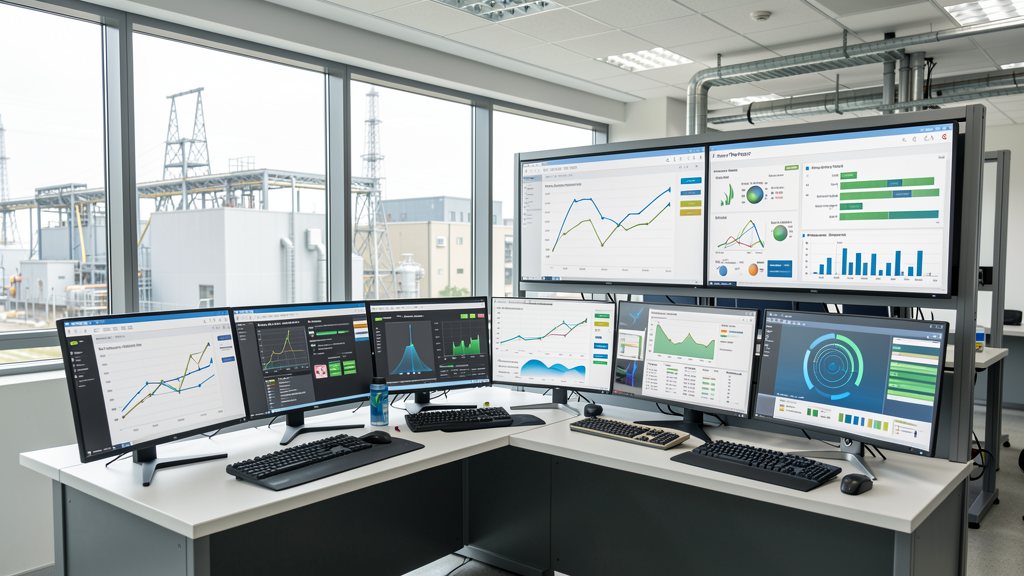
Stromfee combines measurement technology with energy AI to give a glassworks a real-time view of its consumption. Real-time monitoring supplies the data used to optimise the whole system, so that reducing losses is based on measured facts rather than assumptions. Metering each process stage separately turns the plant's energy use into a structure that can be analysed instead of a single opaque number.
On top of the raw measurements, network-quality analysis watches the electrical supply, and the same data supports peak-load management and the net-energy accounting the EnEfG requires. The aim is a documented, continuously updated basis for both compliance and cost reduction — grounded in what the meters actually show.
FAQ
Which part of glass production uses the most energy?
The melting stage, because it holds the raw batch at high temperature for extended periods. The reliable way to confirm this for a specific plant is to meter each process stage separately rather than read only the plant's main meter.
How is furnace energy efficiency actually measured?
As a ratio of useful output to energy input, the same way a CHP unit's efficiency is calculated (output divided by the fuel or electrical energy supplied). Expressing input and useful output in the same units lets you quantify losses and track efficiency over time.
Can waste heat from a glass furnace be reused?
Yes. Hot flue gases carry a large recoverable heat stream. In CHP, using otherwise-lost heat raises overall efficiency to roughly 85–90%. Recovery must be based on measuring the temperature and quantity of the exhaust stream to size equipment and verify payback.
Does the EnEfG affect glass manufacturers?
The Energy Efficiency Act makes net energy consumption and externally supplied energy legally relevant, so an energy-intensive plant needs an auditable account of its consumption. Continuous stage-level metering provides both that record and the data to manage consumption.