Why local AI keeps energy data separate from guest data
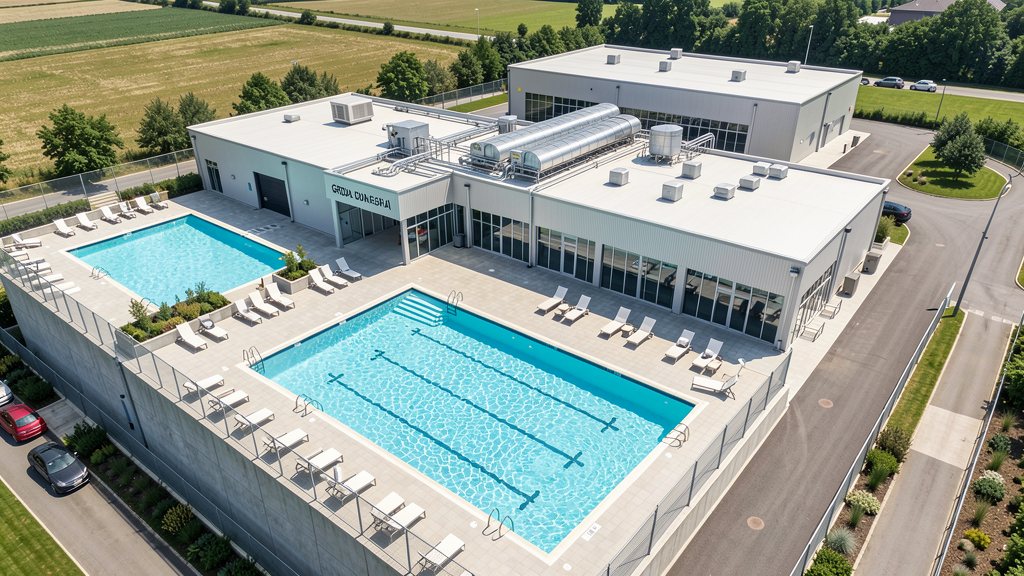
A hotel or wellness pool has the same energy trades as a municipal bath: pumps, heating, ventilation and hot water. Stromfee optimises these on the basis of measured energy and load data, not on the basis of who is in the building. Guest records and booking systems remain separated from the energy layer.
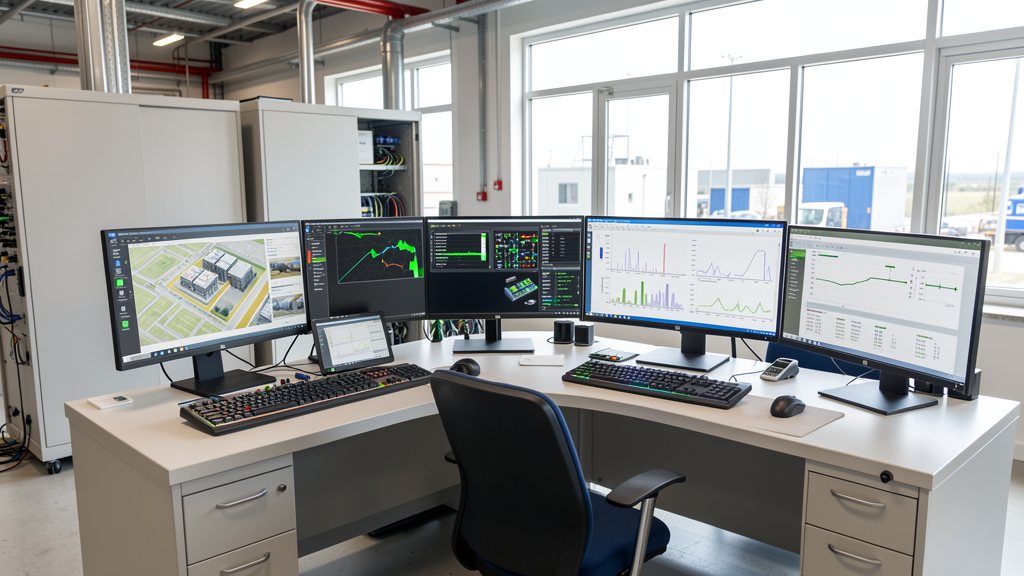
Stromfee's stated approach is to run the AI locally — described as edge AI and edge computing — so that energy data is processed on site rather than shipped to an external cloud. Stromfee frames this as its "local & 100% GDPR-compliant" position for AI in energy applications.
The process: measure, plausibilise, digitalise, add an AI assistant, run locally
Stromfee describes a repeatable path for a pool or wellness site: first measure the actual consumption, then plausibilise the readings, digitalise the trades, add an AI assistant on top, and operate everything locally. This is presented as a general process description, not individual legal advice.
The same five-step path that applies to a municipal bath applies unchanged to a hotel or wellness pool, lowering the energy cost of pool, sauna, ventilation and hot water without accessing guest or booking data.
Concrete AI actions for pool and spa
Stromfee's BESS Academy lists four operational AI actions for a pool and spa chain. Pump optimisation: the AI analyses bather patterns and drives a variable-frequency (VFD) pump so speed adjusts automatically. Heating management: the AI forecasts heat demand from weather and occupancy and runs the heat pump when electricity prices are low. Presence control: the AI detects guests in the wellness area so jets, steam and lighting are active only during use. Sauna scheduling: the AI builds an optimal infusion (Aufguss) plan and manages preheat duration.
The figures Stromfee attributes to these actions are 55% less pump power, 60% lower heating cost, 45% lower attraction cost, and reduced sauna preheating. These are Stromfee's own target figures for the pool-and-spa case, not measured results for a specific site.
Load-shifting, battery storage and price arbitrage
The core of the cost reduction is time-shifting flexible loads into cheaper hours. For heating, the AI runs the heat pump at low electricity prices instead of on a fixed schedule. In hotel operations, Stromfee's Oberstaufen project shifts laundry — washing and drying — into low-price night hours, and applies intelligent preheating, occupancy forecasting and night setback across the hotel heating system.
Battery storage extends the same logic: charging when prices or on-site PV output are favourable and discharging into higher-price periods. Stromfee couples this with PV integration and self-consumption optimisation, which in the mountain-region case targets running on solar hours above the fog and reducing grid draw. Combined heating, kitchen and laundry measures in that project are stated at up to −40% heating, −30% kitchen and −45% laundry energy.
How Stromfee compares to hotel-focused competitors
Stromfee's own competitive analysis places hotel-specific systems such as Verdant (part of Copeland/Emerson) and Telkonet in the same market. Verdant is cited with roughly 45% HVAC runtime reduction on vacancy, about 18% overall savings and a 12–18 month ROI, using occupancy detection and pattern learning.
Stromfee positions its offering around local, GDPR-compliant operation and the specific pool/sauna/wellness trades, rather than HVAC-only occupancy control, while covering the same occupancy-driven and pattern-learning ideas.
Transparency, responsibility and contact
Where an AI assistant interacts with people, Stromfee references the transparency obligation of Art. 50 of the AI Act. The published material is a general process description and explicitly not legal advice for an individual case; the operator involves their own data protection officer.
The responsible contact is HR Energiemanagement GmbH. Hotels and wellness centres are handled on the same basis as municipal baths — same trades, same measure-and-optimise path, with guest and booking data kept separate.
FAQ
Does the AI use guest or booking data?
No. Stromfee optimises pool, sauna, ventilation and hot-water energy on measured energy and load data only. Guest records and booking systems stay in separate systems and are not accessed.
Why is the AI described as GDPR-compliant?
Stromfee runs the AI locally — as edge AI / edge computing — so energy data is processed on site rather than sent to an external cloud, and it references the transparency duty of Art. 50 of the AI Act. This is a general process description, not individual legal advice; the operator involves their data protection officer.
How do the savings actually arise?
Mainly by shifting flexible loads into cheaper hours: running the heat pump at low electricity prices, moving laundry to low-price night hours, applying intelligent preheating and night setback, adding presence control for wellness attractions, and integrating PV and battery storage for self-consumption and price arbitrage.
Are the percentage figures guaranteed?
No. Figures such as 55% less pump power, 60% lower heating cost and 45% lower attraction cost are Stromfee's target figures for the pool-and-spa case, and the Oberstaufen figures (up to −40% heating, −30% kitchen, −45% laundry) come from that specific hotel project. Actual results depend on the individual site.