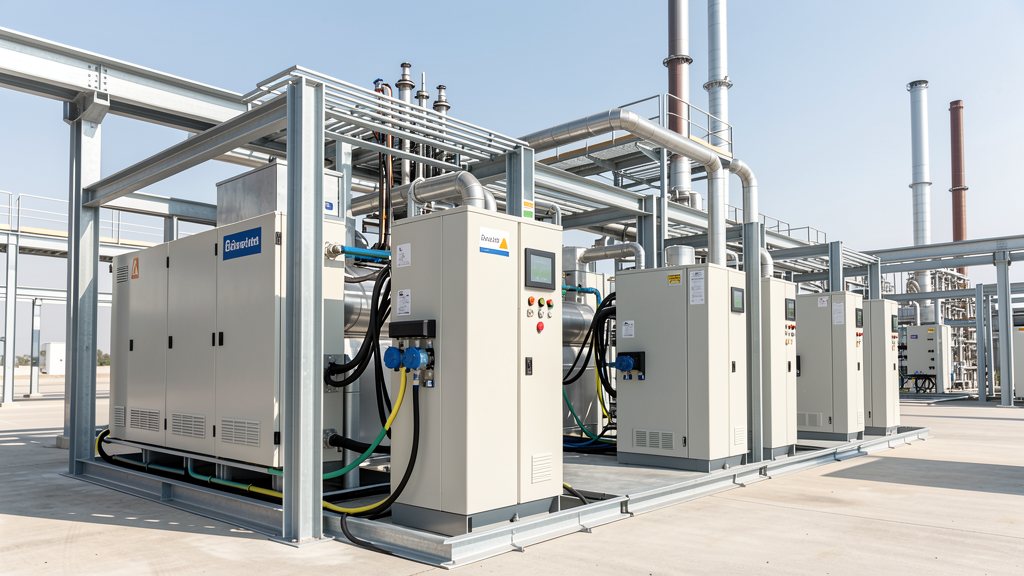
The commercial storage market is growing while home storage stagnates
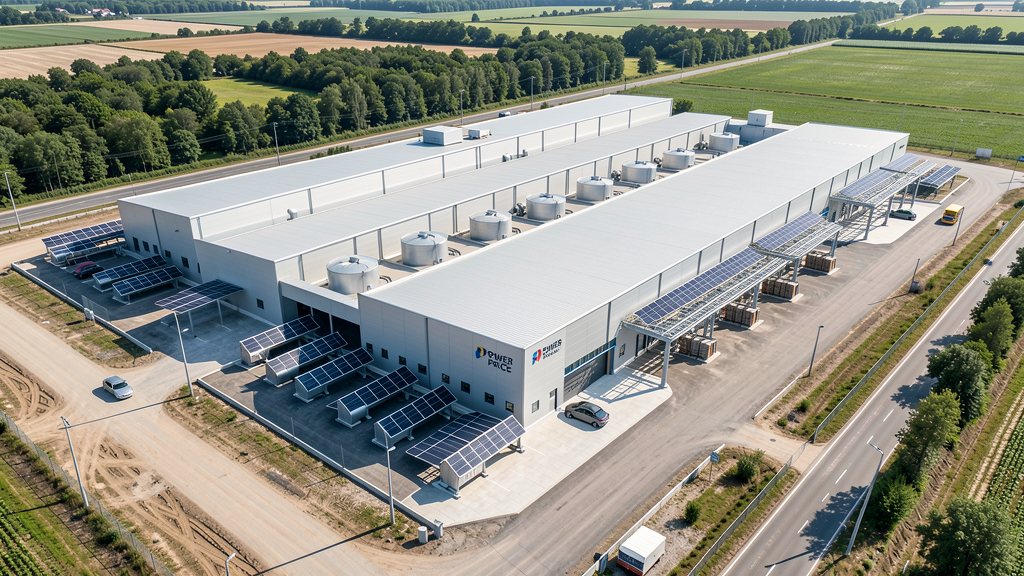
Large and commercial-scale storage is now the driver of the German battery market. According to figures from the Bundesverband Solarwirtschaft (BSW-Solar), presented at ees Europe 2025 in Munich, roughly 600,000 new stationary battery systems totalling about 6.5 GWh went into operation in 2025.
Within that total the picture diverged: home-storage demand fell by around 8 percent versus 2024, the market for newly installed megawatt-class large storage more than doubled, and commercial storage (Gewerbespeicher) grew by roughly 30 percent. The economics of commercial and grid-scale batteries are what is pulling the market forward.
Where the battery makes money: the day-ahead market
A commercial battery earns primarily by buying and selling electricity at different prices across the day. Stromfee's angle is battery arbitrage on the day-ahead market: charge in low-price hours, discharge in high-price hours, and capture the spread.
Negative prices are a specific opportunity here. When day-ahead prices go negative, a battery can be paid to consume electricity, turning oversupply hours into a charging window rather than a cost. Stromfee treats these hours as part of the revenue case rather than something to avoid.
Revenue maximum vs. what actually arrives
For any battery of 1 MW or larger, Stromfee computes the revenue maximum from public market data — the theoretical ceiling a system could earn if it were dispatched perfectly against day-ahead prices.
The second half of the analysis is reconciliation: comparing that maximum against what actually arrives in practice, so an operator can see the gap between the ideal and the realised result. This revenue reconciliation can be requested for a single asset or a whole portfolio.
Sizing and planning inputs
Sizing a commercial battery starts from the site's electricity profile. The key inputs Stromfee works from are the annual consumption (in MWh) and the planned storage capacity (in kWh), together with the sector — for example industry/production, hotel and hospitality, logistics and cooling, retail, or general commercial and office use.
These inputs, combined with a budget frame and timeline, define the scope of a project. They determine how much capacity is worth installing and how much day-ahead spread a battery of a given size can realistically capture at that location.
Managing the battery in operation
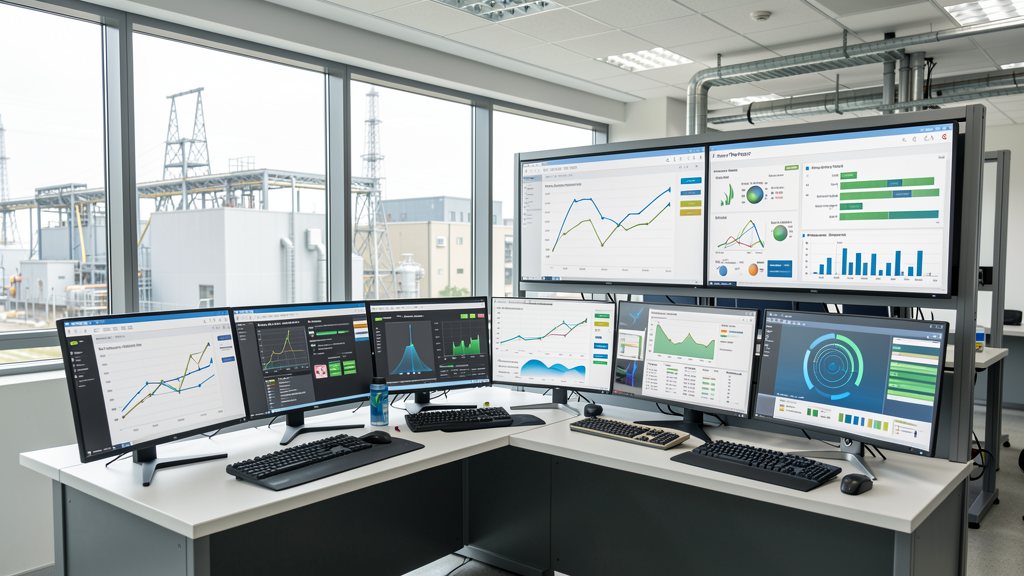
Owning a battery is not enough; it has to be dispatched well. Stromfee provides tools for this: the BESS-Optimizer lets you calculate live what revenue a battery could earn, and the Stromfee Tagebuch is an energy-management system for tracking and managing storage alongside PV and other renewable sources.
The goal of active management is to close the gap between the computed revenue maximum and the revenue that actually arrives — by dispatching against real day-ahead prices rather than a fixed schedule.
Getting a commercial storage project assessed
Stromfee offers battery-storage consulting for companies through a BESS enquiry. The intake captures the essentials: company and sector, annual consumption in MWh, the planned storage size in kWh, a budget frame, and a timeline ranging from immediate (under three months) to later research.
A concrete project description lets the analysis start from real numbers rather than assumptions. Enquiries can be made via the BESS Anfrage form at stromfee.ai or by phone at +49 5223 4921030.
FAQ
What is a commercial battery storage system (Gewerbespeicher)?
It is a stationary battery installed at a commercial site to shift electricity in time — charging when prices are low and discharging when they are high. In 2025 this segment grew by around 30 percent in Germany, while home-storage demand fell about 8 percent (BSW-Solar figures, ees Europe 2025).
How does a battery earn money on the day-ahead market?
It captures the price spread between hours: charging in cheap hours and discharging in expensive ones. Negative price hours are part of the opportunity, because a battery can effectively be paid to charge when the market is oversupplied.
What is the difference between the revenue maximum and actual revenue?
The revenue maximum is the theoretical ceiling Stromfee computes from public data for any battery of 1 MW or larger, assuming perfect dispatch. Actual revenue is what a real system earns; reconciliation shows the gap between the two.
What information is needed to assess a project?
The main inputs are the sector, the annual consumption in MWh, the planned storage size in kWh, a budget frame and a timeline. These can be submitted through the BESS Anfrage form or discussed by phone at +49 5223 4921030.