120,000 Miles of Fiber: Microsoft Fairwater Wisconsin and the AI Network Backbone No One Talks About
Microsoft Fairwater Wisconsin — Mt Pleasant (Racine County), WI, USA
- Over 350 MW, Phase 1 operational early 2026
- 150,000+ NVIDIA GB200 Blackwell GPUs
- 120,000 miles of dedicated fiber on Azure AI Wide Area Network
- $3B Phase 1 + $4B Phase 2 = $7B total investment
- 135 acres of Phase 2 land acquired November 2025
Five Times Around the Earth — in Fiber
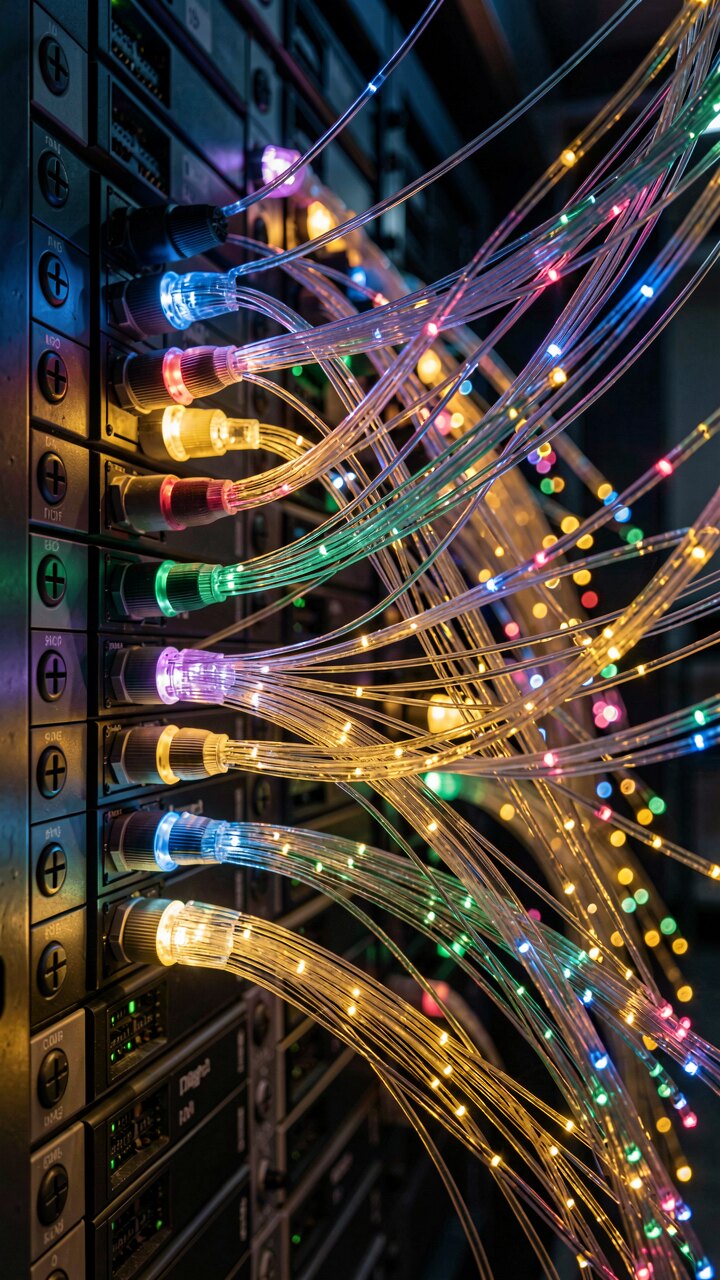
There is a number buried in the Microsoft Fairwater Wisconsin announcement that most technology coverage glossed over entirely: 120,000 miles of dedicated fiber on what Microsoft calls its Azure AI Wide Area Network. To put that in geographic terms, the circumference of the Earth is approximately 24,901 miles. Microsoft has laid enough dedicated fiber — not shared internet transit, not commercial carrier capacity, but private optical transport reserved exclusively for AI traffic — to circle the planet nearly five times. And it all terminates, in part, at a village called Mt Pleasant in Racine County, Wisconsin.
This number is not a curiosity. It is the structural explanation for why Microsoft chose Wisconsin as the second campus in its Fairwater program. Atlanta (rank #8) was the first — selected for its fiber hub status, power infrastructure, and talent access. Wisconsin's selection is about something different: the role this campus plays as a node in a planetary AI compute network, not just as a standalone server farm.
The Twin-Campus Strategy
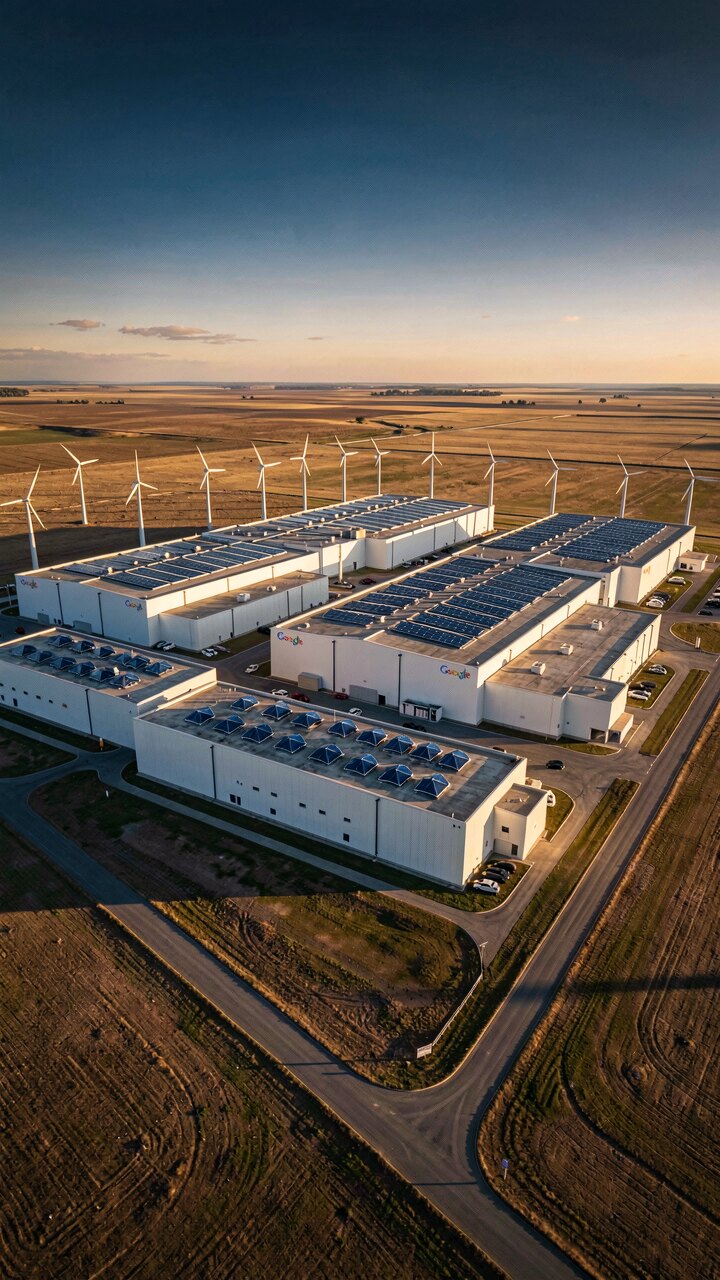
Fairwater is Microsoft's internal program name for its new generation of dedicated AI datacenter campuses. Unlike earlier Azure datacenters designed as general-purpose cloud infrastructure, Fairwater sites are built from the ground up for one purpose: maximum AI training and inference throughput per square meter. Every architectural decision — power distribution topology, cooling system design, silicon choices, building module geometry — is optimized around the demands of large language model workloads running continuously at high utilization.
The "identical twin" description is not marketing language. Fairwater Atlanta and Fairwater Wisconsin share the same building module layouts, the same power distribution architecture, the same closed-loop liquid cooling system, and the same silicon specification: 150,000+ NVIDIA GB200 Blackwell GPUs alongside Azure Maia 100 AI accelerators and Cobalt 100 ARM CPUs. An engineer trained to operate Atlanta can operate Wisconsin without retraining. A firmware update that deploys in Atlanta can deploy in Wisconsin in the same maintenance window. A cooling algorithm that reduces chiller load in Atlanta during overnight grid price troughs does the same in Wisconsin.
The operational implication is profound: a training job distributed across both campuses sees no architectural seam. The GPU scheduler does not need to account for different compute environments or different cooling behaviors. Atlanta GPUs and Wisconsin GPUs are functionally identical — and they are connected by the 120,000-mile fiber network that makes the latency between them negligible for AI workloads.
Why 120,000 Miles of Fiber Matters for AI Training
Distributed AI training — running a single model training job across GPUs in multiple datacenters simultaneously — is the only way to train the next generation of frontier models. The GPU counts required exceed what any single physical location can host. But distributed training has a fundamental constraint: the speed at which gradient updates can be synchronized between GPU clusters across locations determines how efficiently the training job runs. Latency and bandwidth between sites are not mere performance metrics — they translate directly into training cost.
Public internet routing, which is the default path for data moving between datacenters, introduces variable latency, shared congestion, and routing decisions optimized for general traffic rather than the low-jitter, high-bandwidth flows that AI synchronization requires. Microsoft's Azure AI Wide Area Network bypasses this entirely. It is a private, managed optical transport network with dedicated wavelengths reserved for AI traffic — optimized for the specific traffic patterns of distributed model training. The 120,000-mile figure encompasses the full span of this network, from Wisconsin through Atlanta and across Microsoft's global Azure infrastructure.
For the Wisconsin campus, this means a training job can span GPUs in both Fairwater campuses simultaneously, with synchronization latency low enough not to degrade the communication-to-compute ratio that governs distributed training efficiency. Industry estimates — not verified by Microsoft — suggest private AI WAN architectures of this type can reduce inter-site synchronization overhead by 40 to 60 percent versus public internet routing for large-model training workloads.
$7 Billion in Racine County
The investment figures for Fairwater Wisconsin are unusual even by hyperscaler standards. Microsoft committed $3 billion to Phase 1 — the campus that came online in early 2026 — and an additional $4 billion for Phase 2, for which it acquired 135 acres in Racine County in November 2025. The $7 billion total is a meaningful economic event for a county with an annual GDP well below that threshold. It is also a signal about the expected useful life of the campus: you do not commit $4 billion to a Phase 2 expansion unless you intend to operate the Phase 1 campus for at least a decade.
Mt Pleasant, the specific village where the campus is located, sits on the western shore of Lake Michigan south of Milwaukee. Wisconsin's climate offers a cooling advantage that Georgia does not: below approximately 10 degrees Celsius — a condition that applies to Racine County for roughly five months per year — free cooling using outdoor air or water-side economizers can supplement or replace chiller operation entirely. This reduces cooling energy consumption materially during winter and shoulder seasons, with direct impact on annual PUE (power usage effectiveness) and energy cost. At Phase 2 scale, that seasonal efficiency difference is worth tens of millions of dollars annually.
Wisconsin on the MISO Grid
The Wisconsin campus draws power from the MISO (Midcontinent Independent System Operator) grid — one of the most diverse electricity mixes in the United States, with substantial wind generation from Wisconsin, Iowa, and Minnesota, significant nuclear baseload, and coal capacity that is being steadily retired. For a 350 MW AI campus with essentially flat load, MISO's generation mix offers both sustainability credentials and price complexity: wind generation in the region creates predictable but volatile day-ahead price patterns.
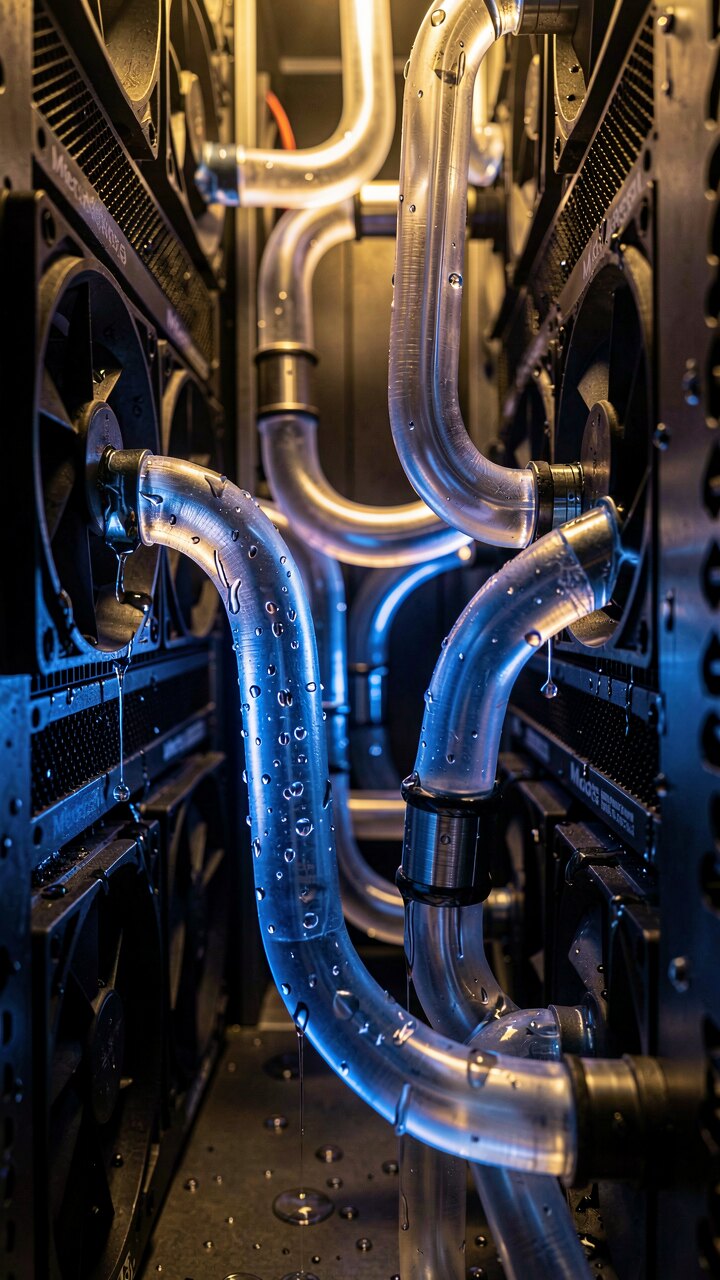
Prices on the MISO Wisconsin zone frequently go negative during overnight wind peaks in winter and spring — when wind generation exceeds demand and generators pay to dispatch. They spike sharply during summer afternoon peaks and during cold snaps that compress generation headroom. For the Wisconsin campus's cooling infrastructure — closed-loop liquid cooling pumps, chillers, dry coolers — this price volatility creates a material opportunity for price-aware dispatch. Pre-cooling server halls during negative-price wind hours, reducing chiller load during price peaks, and coordinating with battery storage assets during congestion events: these are not theoretical optimizations at 350 MW. They compound to significant savings across a full year of MISO market exposure.
The Stromfee Connection
A 350 MW campus on the MISO grid sits at exactly the intersection where Stromfee's tools are most valuable: large continuous loads, volatile day-ahead price signals, and a cooling system with genuine thermal flexibility. The ability to see MISO day-ahead prices in real time, model the pre-cooling benefit against the energy cost of running chillers earlier, and dispatch battery storage assets against peak pricing windows — this is the operational layer that separates a well-optimized AI campus from one that leaves significant margin on the table.
For commercial and industrial customers on the MISO grid in Wisconsin, Illinois, Indiana, and neighboring states, the arrival of 350 MW of near-constant AI load in Racine County is already shaping local transmission capacity planning and affecting regional price patterns during peak periods. Understanding those dynamics — and what they mean for your own energy costs and BESS dispatch strategy — is exactly what Stromfee was built to provide.
BESS dispatch, HVAC pre-cooling schedules, day-ahead market visibility — all optimized against real grid price signals. Free to try for commercial and industrial energy managers.