4.5 GW More Capacity – What Oracle and OpenAI Are Building in Wisconsin
A number that puts everything in perspective
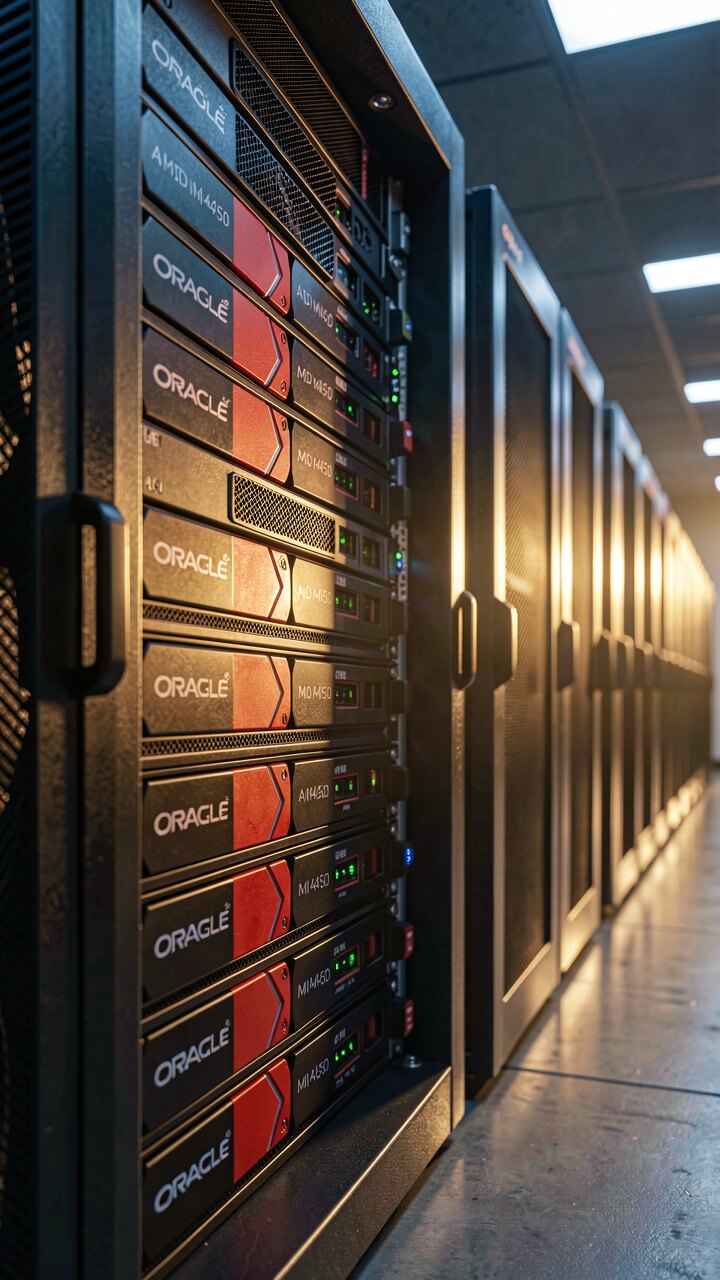
4.5 gigawatts. Not megawatts – gigawatts. That is the capacity Oracle has committed to deploying, together with OpenAI, across new US Stargate sites. For context: Germany's entire installed wind power capacity stands at roughly 67 gigawatts – the result of decades of expansion. Oracle and OpenAI plan to build 4.5 gigawatts of AI computing capacity in a matter of years. Wisconsin is one of five new sites that extend beyond the already existing flagship campus in Abilene, Texas.
Phase 1 of the Wisconsin campus is estimated at around 500 megawatts (industry estimate) – more than the output of a medium-sized coal-fired power plant. For a single AI datacenter campus, that is enormous. And it is being built because demand for AI compute is real and continues to grow: OpenAI, Microsoft, thousands of enterprise customers building on GPT APIs.
Why Wisconsin?
Wisconsin does not have the same AI glamour as Texas or California. No Silicon Valley energy, no deregulated power markets like ERCOT. Yet for datacenters, Wisconsin is attractive for several reasons: the climate is cooler than Texas – a real advantage for cooling costs. Industrial infrastructure is solid. The power base is relatively stable and diversified. And the state has actively courted AI infrastructure investment.
For Oracle, Wisconsin is also a strategic step toward geographic diversification. An AI infrastructure program spread across five different US states is more resilient against regional power outages, natural disasters, and political risks. The Stargate project explicitly takes a cluster approach – multiple sites that back each other up and collectively provide compute capacity.
Stargate: what it is and why it matters
The Stargate joint venture between OpenAI, Oracle, SoftBank, and other partners is the most ambitious private AI infrastructure project in history. The stated goal: to provide the computing capacity OpenAI needs to train the next generation of its models – while also offering cloud capacity to enterprise customers. Oracle takes on the infrastructure operator role: construction, power, HVAC, networking.
What this means for energy consumption can be read directly from the announced power numbers. Phase 1 capacity of the Wisconsin campus alone at around 500 MW (industry estimate), if operated continuously, would draw more power than several medium-sized cities combined. Across all Stargate sites, we are talking about a level of energy demand that requires new power plants, new grid connections, and new energy management systems.

HVAC at gigawatt scale
A campus with 500 MW produces a thermal waste heat load that begins to approach the scale of a small district heating network. HVAC systems must remove this heat reliably – 24 hours a day, 365 days a year, at maximum reliability. This is not an engineering problem you solve with more cooling towers. It is a system optimization problem: how do you distribute cooling capacity across times of day when electricity is cheap? How do you buffer thermal energy in BESS or thermal storage to smooth grid load peaks? How do you detect early when a chiller group begins to operate inefficiently?
These are exactly the questions Stromfee's HVAC Optimizer answers – for AI datacenters just as for industrial plants, production halls, and commercial properties. The platform at apps.stromfee.ai makes the cooling system transparent: every unit visible, every consumption measurable, every deviation immediately detectable. The coupled BESS Optimizer enables peak shaving and energy arbitrage – creating real economic value from every kilowatt that flows into cooling.
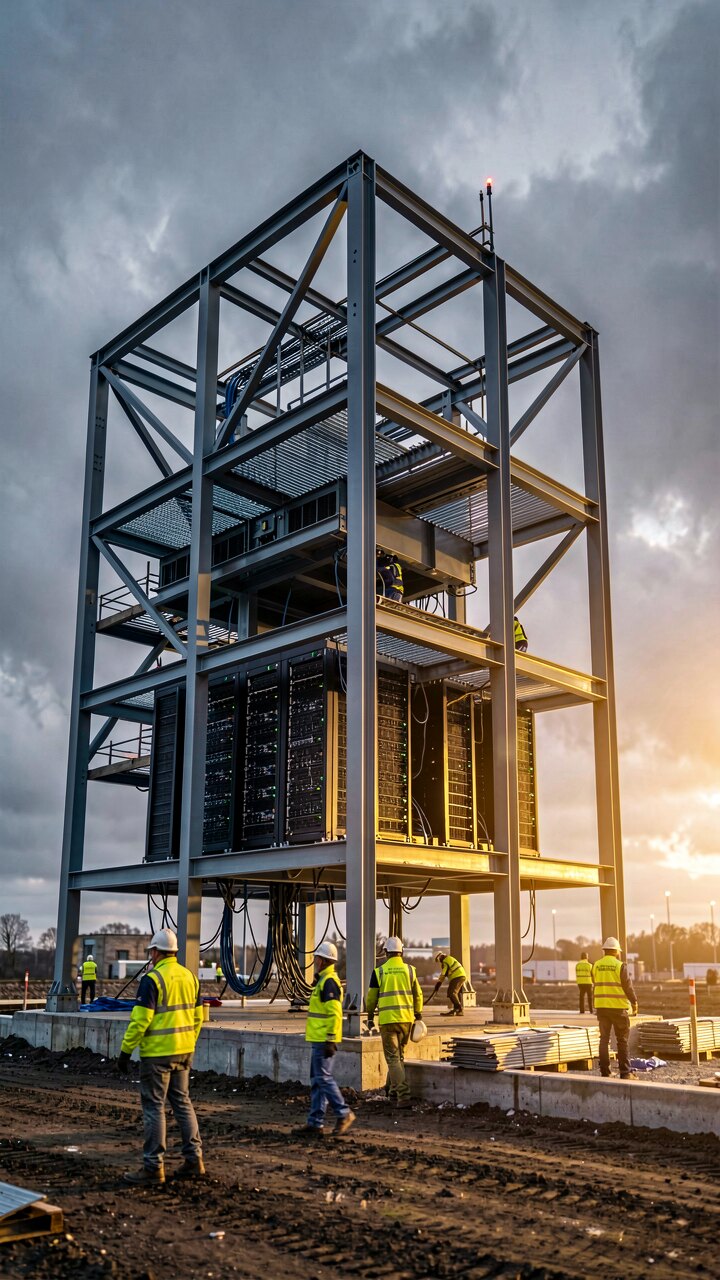
The Stargate Wisconsin project is a signal: the era of gigawatt-class AI infrastructure has begun. Understanding the physics of these facilities – and in particular the HVAC challenge – means understanding why intelligent energy management is not a footnote but a central competitive factor for every operator of energy-intensive installations.