Nuclear Meets AI: Meta Prometheus Ohio Runs a 1 GW Supercluster on Atomic Power
Meta Prometheus Ohio — Columbus, OH, USA
- 1 GW target, 500+ MW already active (Terakraft 2026)
- Powered in part by nuclear energy — one of first gigawatt AI sites on nuclear
- GPU count not disclosed (mix of legacy and high-density AI racks)
- Separate from Meta Hyperion Louisiana (also Meta, gas-powered)
- Part of Meta's global AI infrastructure expansion 2024–2026
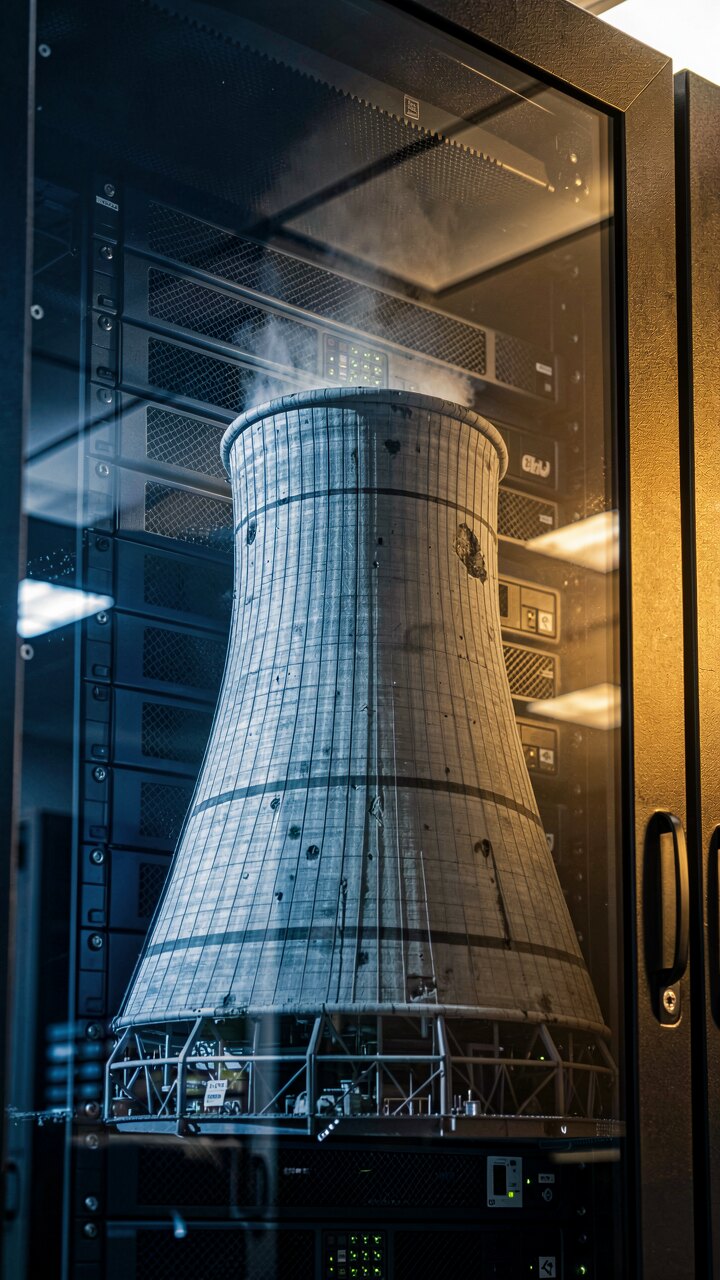
Why Nuclear and AI Are a Natural Pair
AI training has an energy problem that most power sources struggle to solve: the load never stops. A large model training run — the kind that trains a frontier Llama or multimodal model — runs for weeks or months at sustained high GPU utilization. There is no off-peak period, no opportunity to defer load to overnight hours, no flexibility in when the computation must happen. The cluster runs at 80 to 95 percent capacity, continuously, until the training job completes. What that workload needs is not cheap renewable energy averaged over a year. It needs reliable, dispatchable, always-on generation — power that is available at the same capacity factor at 3 a.m. on a January Tuesday as it is at 2 p.m. on a July Friday.
Nuclear generation fits that profile almost uniquely. Commercial nuclear reactors in the United States run at capacity factors above 90 percent — meaning they produce more than 90 percent of their maximum possible output on average across the full year, in all weather, across all seasons. No fossil fuel plant matches this consistency without fuel security risk. No renewable source comes close without storage. Nuclear's combination of continuous availability, zero carbon emissions, and — in the PJM grid region where Ohio sits — relative price competitiveness makes it the closest thing to a purpose-built AI training power source that exists today.
Meta chose Ohio. And Ohio has nuclear.
What Is Meta Prometheus Ohio?
Prometheus Ohio is Meta's dedicated AI supercluster in the Columbus metropolitan area, distinct from Meta's Louisiana Hyperion campus (rank 4 globally) in DeRidder. The Columbus site began operational phases in 2024 and has been expanding continuously. According to DataCenter Knowledge's 2026 hyperscaler outlook, Prometheus Ohio carries a 1 GW operational target by end 2026. The Terakraft 2026 industry report places current active capacity at 500+ MW — an industry estimate, not an official Meta disclosure, and one that should be interpreted accordingly.
Meta does not publish granular specifications for its AI infrastructure. The GPU configuration is not disclosed. Industry analysts describe the mix as a combination of earlier-generation high-performance AI racks — including H100-class hardware brought online in 2024's initial phases — alongside newer high-density deployments that likely include Blackwell-generation hardware in later construction phases. This heterogeneous mix is normal for a campus that has expanded continuously over multiple years: early phases use the best available silicon at build time, and later phases are upgraded to newer generations as they become available.

Ohio's Nuclear Advantage
Ohio is one of the most nuclear-heavy electricity states in the country. The Perry Nuclear Power Plant on Lake Erie generates approximately 1,247 MW. Davis-Besse Nuclear Power Station near Toledo adds another 908 MW. Together these two facilities — plus capacity imported from Pennsylvania and Illinois plants via the PJM interconnect — give Ohio access to reliable nuclear baseload that few other states can match at comparable cost.
Why does this matter operationally? Three reasons. First, nuclear generation is dispatchable baseload: it runs at high capacity factors regardless of weather, season, or time of day. AI training jobs do not tolerate interruption without cost — checkpointing a multi-month training run wastes significant compute time. Continuous, reliable power eliminates one class of operational risk entirely. Second, nuclear is carbon-free — a category increasingly important to hyperscalers' sustainability commitments and the ESG disclosures that institutional investors scrutinize. Third, nuclear capacity in the PJM region is in relative surplus compared to current demand growth in many other grid regions, making long-term power purchase agreements at competitive prices more accessible than in undersupplied markets like ERCOT Texas.
Meta has not disclosed the specific nuclear PPA terms, the plants covered, or the exact percentage of Prometheus load supplied by nuclear generation. The characterization of the campus as nuclear-powered reflects reporting from DataCenter Knowledge and IEEE Spectrum. Industry practice for "nuclear-powered" datacenter claims typically means a combination of a nuclear PPA and Renewable Energy Certificates matched to nuclear generation — not a direct wire connection from a reactor to the server building. The distinction matters for precision: the campus draws from the PJM grid, which is a mix of generation sources, with nuclear PPAs providing the legal attribution of nuclear electrons to the datacenter's load.
Prometheus vs. Hyperion: Two Meta Superclusters, Two Strategies
The existence of two separate Meta AI superclusters — Prometheus Ohio and Hyperion Louisiana — is regularly confused in media coverage. They are distinct in every meaningful way:
- Hyperion Louisiana (DeRidder, LA) — rank #4 globally, on the MISO South grid, powered by a mix of renewable PPAs and grid power, further along in construction. Announced earlier, first to reach very large scale.
- Prometheus Ohio (Columbus, OH) — rank #10 globally, on the PJM grid, nuclear-powered in part, expanding in phases since 2024. Targeting 1 GW by end 2026 with a heterogeneous GPU mix.
Together, the two campuses give Meta roughly 2 GW of dedicated AI supercluster capacity — comparable in aggregate to Microsoft's Fairwater program. The strategic rationale for two separate large facilities rather than one giant campus mirrors Microsoft's Fairwater twin approach: geographic redundancy, grid diversity (PJM versus MISO South), and the ability to route training jobs to whichever facility has the most favorable power pricing at any given hour.
At 1 GW, Prometheus Ohio would equal the approximate power consumption of 800,000 US homes — a rough industry comparison for scale. That load, sustained continuously, is a material event in any regional electricity market. For Ohio and the surrounding PJM region, the arrival of gigawatt-scale AI loads is already affecting transmission planning horizons and local price patterns.
Ohio's Strategic Position in US AI Infrastructure
Columbus has emerged over the past three years as one of the most important AI datacenter hubs in the country — and Prometheus is the headline facility in that story. The PJM interconnection offers some of the most reliable baseload power in North America. Columbus sits at the intersection of major fiber routes connecting Chicago, Pittsburgh, and Washington DC. Land and construction costs in central Ohio are substantially lower than in Northern Virginia, the historic US datacenter capital. Ohio has also invested politically in attracting this infrastructure, with favorable tax treatment for large-scale server builds and simplified permitting above certain investment thresholds.
The combination of power stability, fiber connectivity, cost, and policy environment has attracted not just Meta but AWS, Google, and Microsoft to significant Ohio infrastructure investments in the same period. Prometheus is the largest single facility among them, and its nuclear power strategy differentiates it from every competitor in the region.
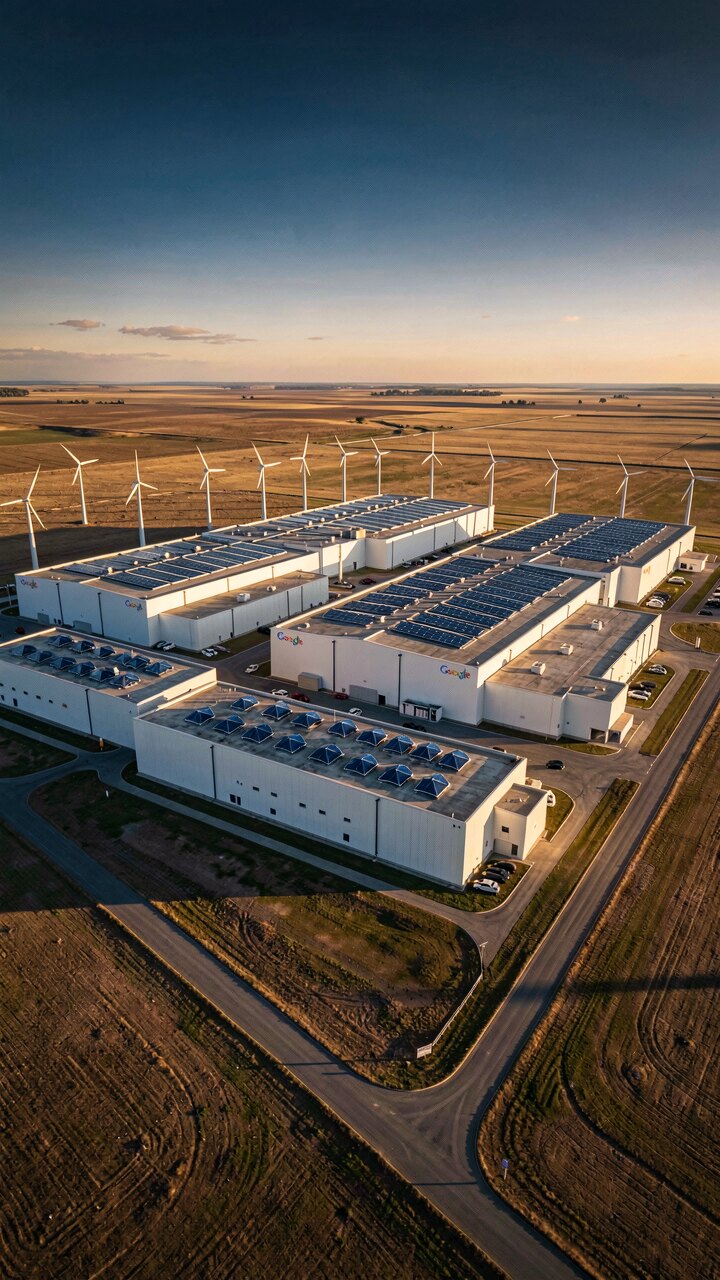
The Stromfee Connection
A 1 GW supercluster on the PJM grid creates a very specific energy management challenge — and opportunity. PJM is the most liquid electricity market in North America: well-developed day-ahead and real-time markets, robust capacity market, and hour-by-hour price signals that swing significantly based on demand, weather, and transmission constraints. For a facility this size, intelligent dispatch of flexible loads — cooling infrastructure, HVAC pre-conditioning, battery storage — against PJM price signals is not a marginal optimization. It is a core operating discipline that compounds to hundreds of millions of dollars in cost difference across a decade.
The nuclear baseload supply provides price stability that fully grid-dependent facilities lack. But 1 GW is more than any single nuclear PPA typically covers — marginal power still comes from PJM's real-time market. And for commercial and industrial energy users in Ohio, Indiana, Pennsylvania, and neighboring PJM states, the arrival of gigawatt-scale AI loads in Columbus is already reshaping local grid dynamics. Transmission lines that had spare capacity now face new congestion. Price patterns that were predictable are becoming more volatile as new loads compete with existing industrial customers.
Stromfee's energy analytics provide the transparency to navigate this: day-ahead price forecasting, BESS dispatch optimization for large-scale facilities, and the §51 EEG risk analysis for European solar operators watching what baseload-vs-variable energy pricing dynamics look like when AI datacenters scale to gigawatt levels. What Ohio is experiencing now is a preview of what European grids will face as AI infrastructure buildout accelerates across the continent.
Day-ahead price visibility, BESS dispatch optimization, HVAC pre-cooling scheduling — built for commercial and industrial energy managers facing volatile grid pricing from large AI loads and renewable intermittency.