Halted Mid-Build, Completely Redesigned – How Meta Trains LLaMA in Temple
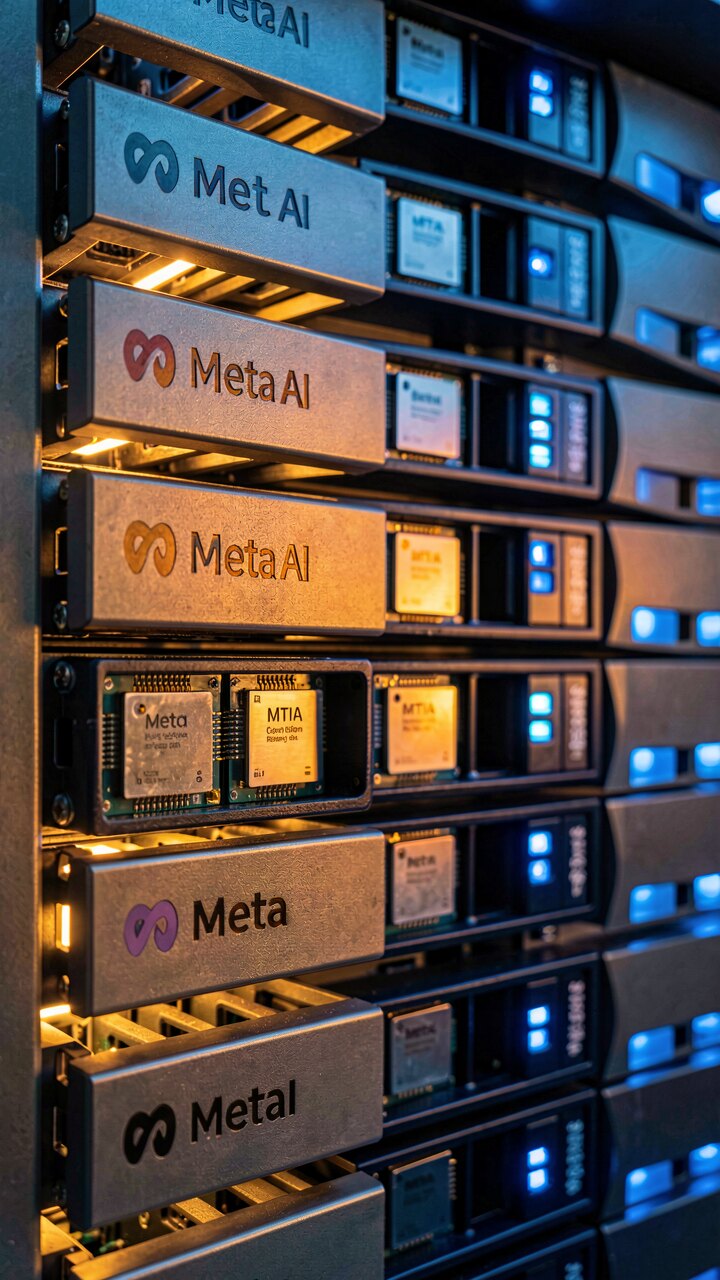
A construction halt that made history
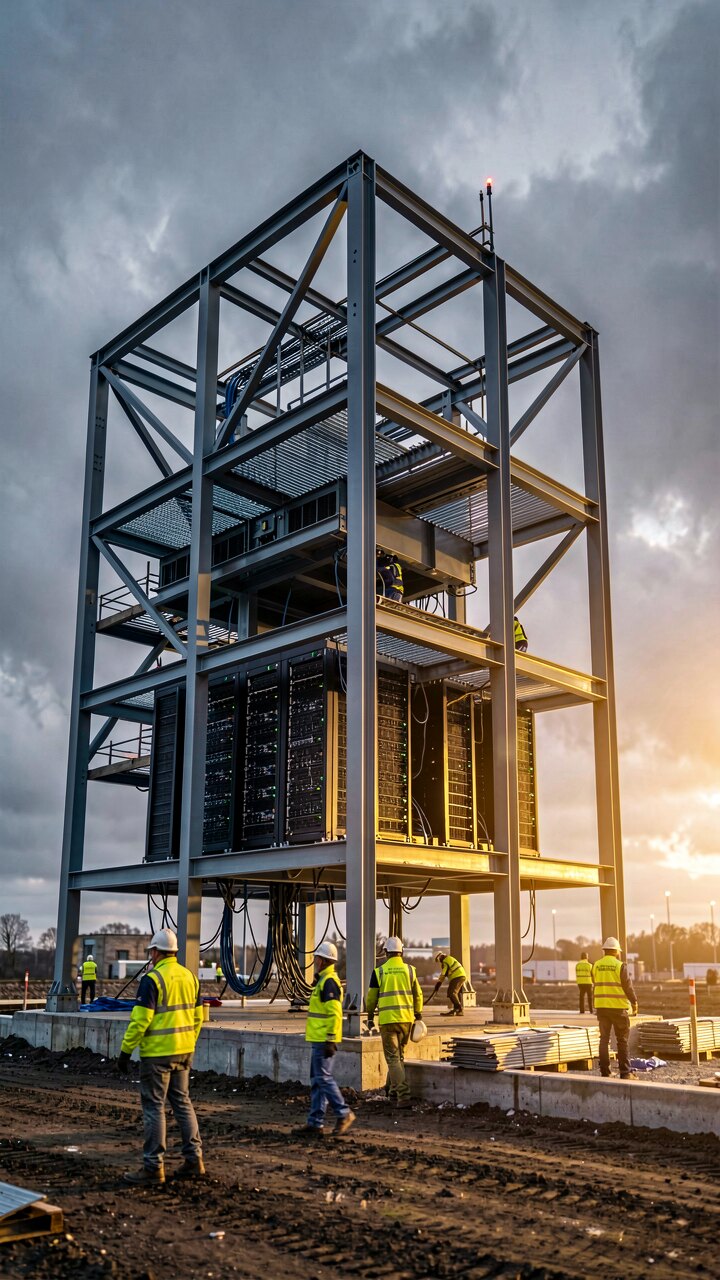
Mid-2022, the tech industry is in turmoil. The post-pandemic rally has reversed into a sharp downturn. Meta CEO Mark Zuckerberg announces the company is cutting costs, reducing headcount – and pausing several datacenter construction projects. One of them: the campus in Temple, Texas. The shell work is already underway. But further construction is frozen.
What follows is not an ordinary pause. What follows is a fundamental redesign. Because between 2022 and the project's restart, the requirements for a datacenter changed in a fundamental way. The reason: the AI wave. While the original plan was designed for social networks and video streaming – with moderate rack power densities of 5 to 10 kW – an AI training cluster for LLaMA models needs rack densities of 40 kW and above. That changes everything: power supply, cooling infrastructure, building geometry.
Why building geometry matters
The redesign in Temple was not a cosmetic intervention. Meta opted for a rectangular building configuration optimized for high-performance AI racks. The difference from older datacenter floor plans lies in the efficiency of airflow routing and cooling loop layout. Rectangular, elongated buildings allow wider server rows, shorter cooling paths, and more uniform distribution of thermal load – all critical when individual racks generate 40 to 80 kW.
In a conventional enterprise datacenter, this would be a non-issue. But a LLaMA training cluster is not a conventional enterprise datacenter. It is a high-performance machine that runs at maximum utilization for days at a stretch, generating constant heat and mercilessly exposing every weakness in the cooling system. Thermal hotspots lead to GPU throttling, throttling costs training time, and training time costs millions of dollars for models of this scale.
Temple as a symptom of a technological fracture
The history of the Meta campus in Temple is symptomatic of a fracture that has gripped the entire datacenter industry. Datacenters planned in 2020 or 2021 were designed for a world without mass GPU clusters. The HVAC systems of those buildings are sized for air cooling at moderate rack densities. Today, AI workloads are running in exactly those buildings – workloads they were never designed to handle.
This creates enormous modernization pressure. Operators must decide: retrofit with liquid cooling at existing racks? Partially demolish and rebuild as Meta did in Temple? Or simply try to maximize utilization of the existing stock and accept the efficiency losses? Each of these decisions has direct energetic consequences – and financial ones.
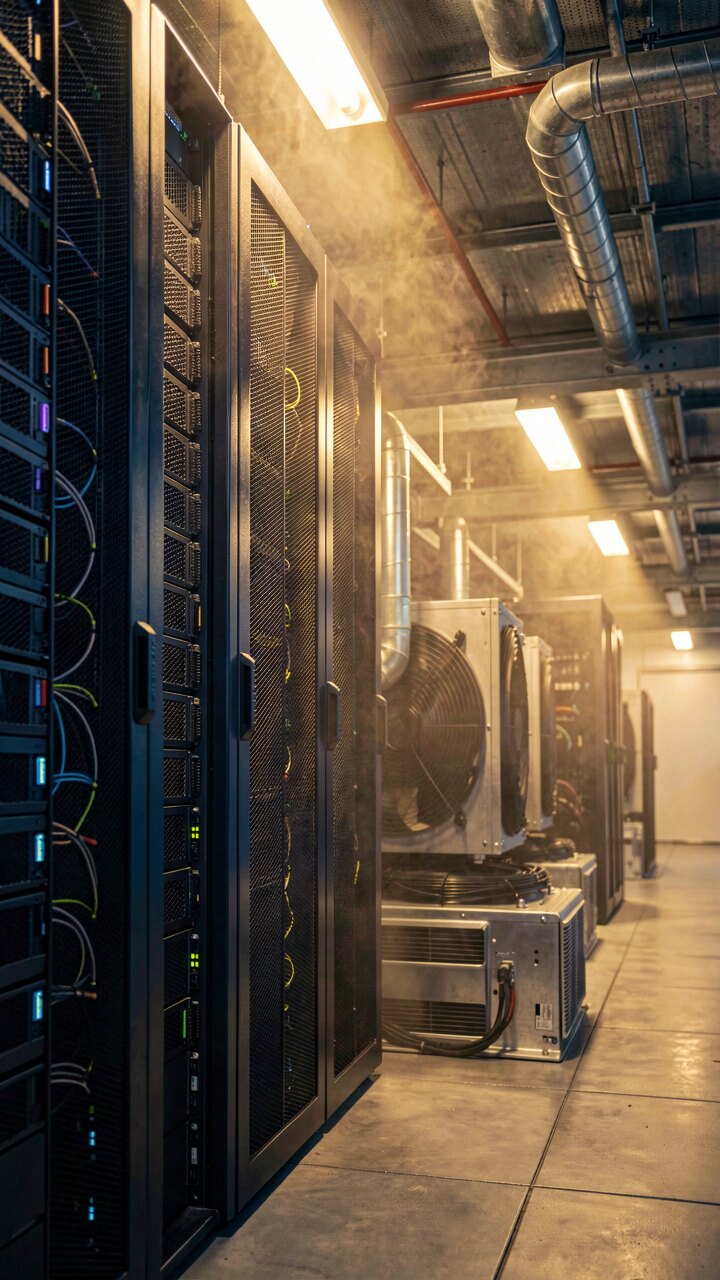
The HVAC consequence: visibility decides
Whether in a new build like AirTrunk or a redesigned campus like Temple, the core problem remains the same: operators who cannot see what their HVAC units are doing cannot manage them efficiently. For high-performance AI clusters, the margin for error is nearly zero. A chiller that consumes 15 percent more power than necessary due to an undetected inefficiency costs millions of dollars per year when running against a 200 MW total load.
This is where Stromfee's Transparent HVAC steps in. The platform at apps.stromfee.ai captures per-unit cooling consumption in real time, automatically detects anomalies and drift, and couples HVAC control with the BESS Optimizer. Pre-loading cold thermal mass when electricity is cheap – and throttling mechanical cooling during peak price hours – creates a measurable economic advantage.
Meta Temple stands as a reminder of what happens when technology leaps outpace construction plans. For energy managers and facility operators, the lesson is clear: the better your visibility into your own cooling system, the better your ability to respond to technological change – without energy costs running out of control.
Sources
- IEEE Spectrum: The 5 GW Data Center