$50 Billion and Counting: How Anthropic Is Building Its Own AI Factory in Texas
What happens when an AI lab gets tired of waiting for cloud capacity from hyperscalers? It builds its own. That's exactly what Anthropic – the company behind the Claude AI assistant – did in November 2025, signing a landmark deal worth $50 billion USD with UK-based neocloud provider Fluidstack. The result will be one of the world's largest private AI training infrastructures, with facilities targeting Texas and New York.
The Deal: What $50 Billion Means
On November 12, 2025, media reports confirmed the contract between Anthropic and Fluidstack. At $50 billion, it is among the largest datacenter agreements ever signed between an AI company and an infrastructure provider. For context: Microsoft's total investment in OpenAI across multiple rounds was approximately $13 billion. This single contract dwarfs it.
Fluidstack is not a traditional hyperscaler. It's a UK-based startup that aggregates computing capacity and resells it under its own brand to AI companies – a so-called neocloud operator. The company has grown rapidly and is considered one of the fastest-growing GPU cluster infrastructure providers outside the major hyperscalers.
Why Texas? Three Key Reasons
Texas is no accident as a location. The state offers a combination of factors that are decisive for energy-intensive AI infrastructure: relatively low electricity prices, a deregulated energy market (ERCOT), available industrial land, and a business-friendly regulatory environment. Crucially, Texas is the largest producer of wind and solar energy in the United States – a factor that matters for AI companies with decarbonization commitments.
The precise location of the Anthropic/Fluidstack campus within Texas has not been publicly disclosed. What is known: facilities in Texas and New York are expected to come online throughout 2026. The estimated power draw of approximately 300 MW is an industry estimate based on the deal scope – no official capacity figures have been released.
Hardware: NVIDIA Grace Blackwell as the Target
Reports cite NVIDIA Grace Blackwell architecture as the target hardware platform. Grace Blackwell combines NVIDIA GPUs with ARM-based Grace CPUs on a unified platform and is widely regarded as the most capable available training hardware for large language models. For Anthropic, this means: when next-generation Claude models are trained, at least some of that training will happen on proprietary infrastructure – a strategically significant move away from reliance on Amazon Web Services, where Anthropic sources most of its cloud capacity today.
No public information is available on exact unit counts or delivery timelines, which are commercially sensitive.
Energy Profile and HVAC Requirements
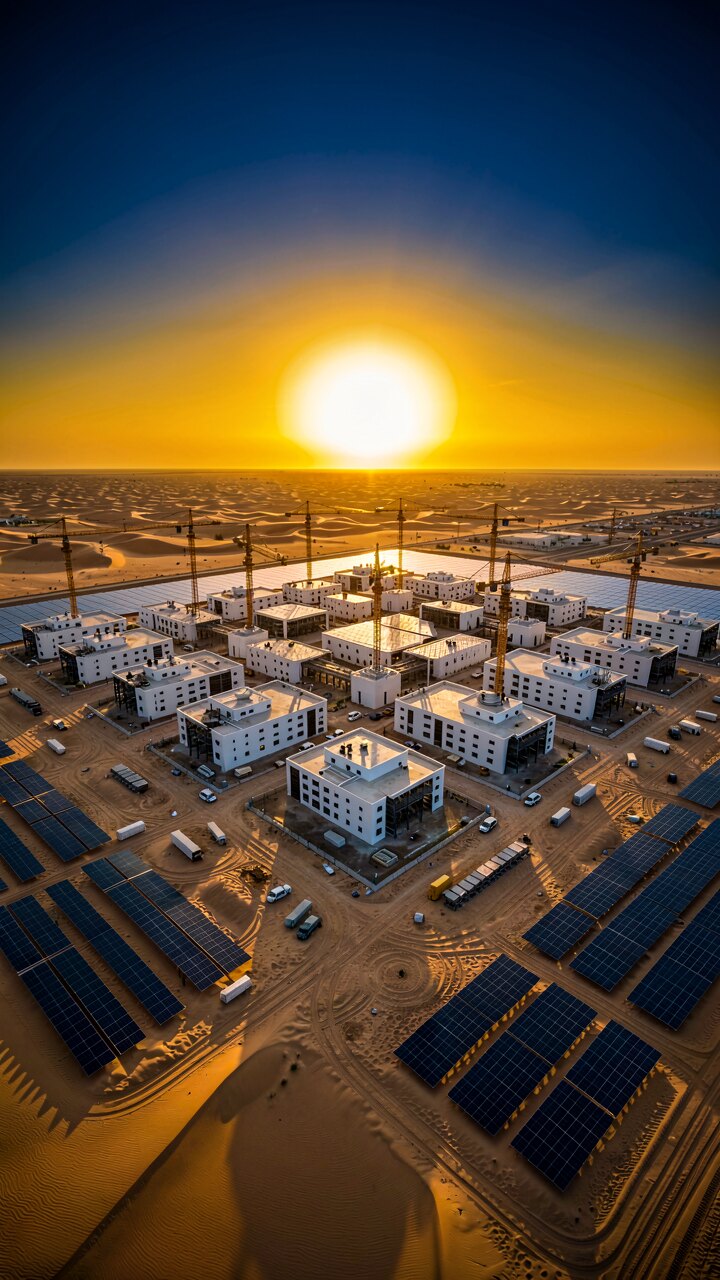
A training campus of approximately 300 MW (industry estimate) places enormous demands on energy and cooling infrastructure. That figure is comparable to the power consumption of a mid-sized industrial city. The bulk of this power goes directly into GPU compute; a significant share goes into cooling.
Modern GPU clusters of this class typically use direct liquid cooling at the chip level to efficiently remove the massive heat output (Grace Blackwell systems can produce several kilowatts per unit). Texas poses a particular challenge: summer months with temperatures exceeding 40°C significantly increase cooling requirements. Data center efficiency is typically measured as PUE (Power Usage Effectiveness) – leading hyperscalers achieve values near 1.1–1.2; older facilities can be 1.5 or above.
Battery Energy Storage Systems (BESS) are increasingly standard for infrastructure at this scale: they buffer load spikes, ensure uninterrupted power supply, and enable flexible integration of variable renewable energy. Whether the Anthropic/Fluidstack campus will include BESS systems has not been publicly confirmed.
Strategic Significance: Anthropic's Independence Drive
This deal is more than a real estate or infrastructure transaction. It marks Anthropic's attempt to gain control over its own training infrastructure – similar to Google with its TPU datacenters or Meta with its own GPU clusters. Whoever controls the hardware controls training costs, availability, and ultimately the pace of model development.
For the AI industry as a whole, the deal signals that the era of AI companies relying exclusively on public cloud hyperscalers is ending. Simultaneously, a new class of providers – neoclouds like Fluidstack – is emerging to serve this demand.
In the energy context, this is directly relevant: datacenters of this scale are major buyers in electricity markets, influence load profiles across entire regions, and drive demand for flexible energy products. What happens at national scale reflects in spot market prices and grid fees globally. Use stromfee.app, our multi-country hub for AI-powered energy analysis, to optimize your own PV plant or battery storage and benefit from the same market mechanisms at a smaller scale.
Optimize your energy costs with Stromfee AI
AI datacenters shape global electricity markets. Stromfee brings the same intelligence to your PV plant, BESS, or grid connection – across multiple countries.
Try Stromfee →Conclusion
The Anthropic/Fluidstack deal is a turning point in the history of AI infrastructure. With $50 billion and a plan to build independent training capacity in Texas and New York, Anthropic is following in the footsteps of the big tech giants before it. What this means for global electricity markets, energy prices, and the energy transition will become clear over the coming years.
Sources: Introl.com – Anthropic $50B Data Center Plan (Dec. 2025). Power figures (~300 MW) are industry estimates based on deal scope – no official figures released. All illustrations: AI-generated (FLUX·2), not photos of actual buildings.