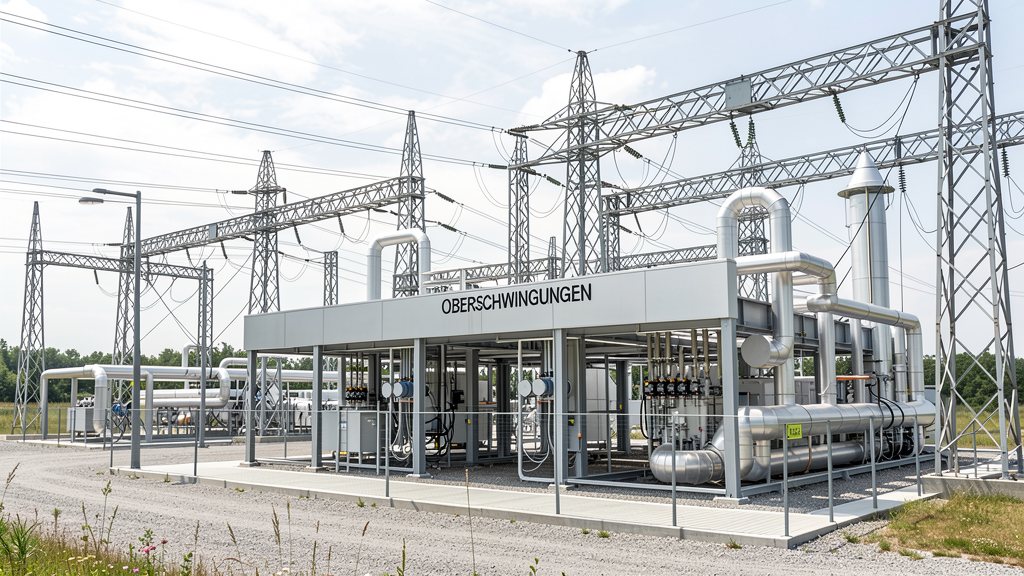
What is an Oberwelle?
The supply voltage in Germany is intended to be a clean 50 Hz sine wave. An Oberwelle, or harmonic, is a superimposed component at an integer multiple of that fundamental frequency. When many such components are present, the current and voltage waveforms are distorted away from the ideal sine shape.
In German the topic appears under two closely related terms: Oberwellen and Oberschwingungen. Both describe the same physical effect — non-sinusoidal current and voltage components circulating in the operating network alongside the 50 Hz fundamental.
How frequency converters create harmonics
Frequency converters (Frequenzumrichter, FU) are a primary source of harmonics. When a converter switches, it draws non-sinusoidal currents, and these harmonic currents then circulate through the plant network.
Because so many industrial drives and pumps run on frequency converters, harmonic currents from switching electronics are a common and recurring load on an operating network rather than an exceptional event.
Why harmonics matter: heat, malfunctions and wear
Without targeted measures, harmonics have concrete consequences. Circulating harmonic currents produce additional heat, they can cause equipment to malfunction, and they contribute to increased wear over time.
These effects are cumulative and often go unnoticed until a component fails or a process becomes unstable, which is why harmonics are treated as a power-quality issue that deserves active management rather than being ignored.
Harmonics from photovoltaic plants
Frequency converters are not the only source. Large photovoltaic plants also emit harmonics, a topic Stromfee has examined using measurement results from PV plants in the USA, China, Australia and Spain.
For operators of solar parks this means that harmonic emissions are a measurable, real-world characteristic of PV generation — something to be checked with data rather than assumed away. As inverter-based generation grows in a network, understanding each plant's harmonic behaviour becomes part of responsible operation.
Measuring power quality and harmonics
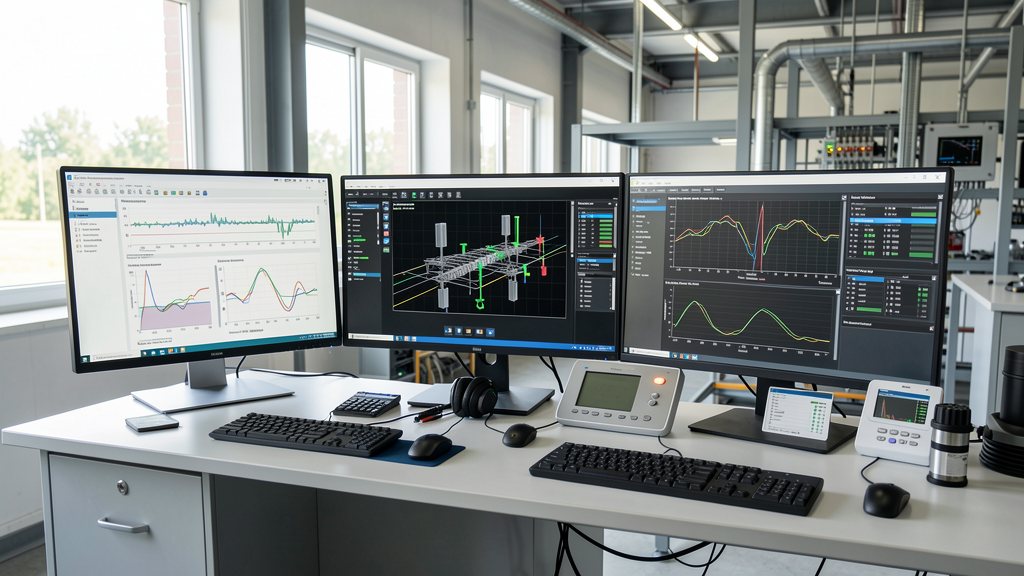
The starting point for any solution is measurement. A network analysis captures voltage quality and harmonics directly in the operating network, so that the actual harmonic content is known rather than estimated.
Stromfee performs network-analysis measurements at switchgear and in operating networks. Working from real measured data — the same principle it applies to ORC plants and load-peak analysis — allows the specific harmonic sources and their severity to be identified before any countermeasure is chosen.
Stromfee's approach: independent, data-based energy consulting
Stromfee is operated by HR Energiemanagement GmbH, an independent energy consultancy based in Bünde in Ostwestfalen-Lippe (OWL). It advises industry, commerce and agriculture on load peaks, PV, storage and regulatory topics — manufacturer-independent and based on real data.
For plants combining PV, storage and drive technology, this means harmonics are assessed within the wider energy picture. The first analysis is offered free of charge; operators can request it directly or reach the team by phone on 05223 4921030.
FAQ
What is the difference between Oberwelle and Oberschwingung?
In practice the two German terms are used for the same effect: current and voltage components that oscillate at multiples of the 50 Hz fundamental and distort the sine wave. Stromfee's material covers both under the heading of harmonics in the operating network.
Which equipment causes harmonics?
Frequency converters are a leading source: when they switch, they draw non-sinusoidal currents that circulate as harmonics through the network. Large photovoltaic plants also emit harmonics, as shown by international measurement data analysed by Stromfee.
What damage do harmonics cause?
Without countermeasures, harmonics generate additional heat, can cause malfunctions, and lead to increased wear of equipment in the operating network. These effects accumulate over time, which is why they are treated as a power-quality problem to be managed actively.
How can I find out if my plant has a harmonics problem?
Through a network analysis. Stromfee measures voltage quality and harmonics directly at switchgear and in the operating network, so the actual harmonic content is known from real data. HR Energiemanagement GmbH in Bünde offers a free initial analysis; reach the team on 05223 4921030.