1,200 MW. OpenAI Stargate Abilene — 875 Acres of AI Infrastructure
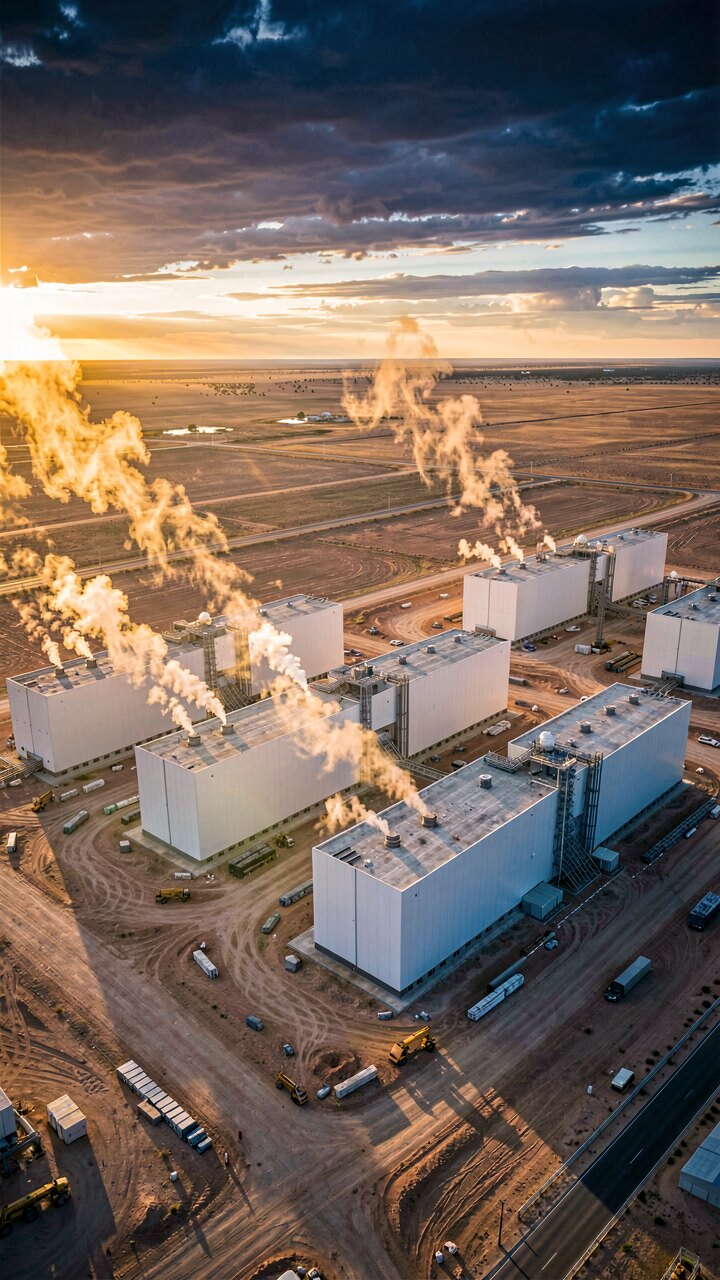
When the first server racks powered up at the Stargate campus in Abilene, Texas in September 2025, it marked the physical arrival of a $500 billion national ambition. The Stargate Joint Venture — OpenAI, Oracle, and SoftBank — chose a flat stretch of West Texas farmland to host what will become one of the largest contiguous AI computing campuses on earth: 875 acres, 8 buildings, and a final power draw of 1.2 gigawatts. That is more electricity than all the homes in a mid-sized American city.
What is Stargate Abilene?
Stargate is OpenAI's primary owned-infrastructure play — a break from its previous dependence on Microsoft Azure cloud. The Abilene site is the flagship of the Stargate program, jointly funded and operated by OpenAI, Oracle (which provides the cloud infrastructure layer), and SoftBank (which anchors financing). The campus is built on an 875-acre site outside Abilene, a city of roughly 125,000 people in Taylor County, Texas.
By late 2025, four of the eight planned buildings were operational, drawing approximately 300 MW of combined compute power. The remaining four buildings are in various stages of construction, with the full 1.2 GW target expected as the campus reaches completion.
The Numbers
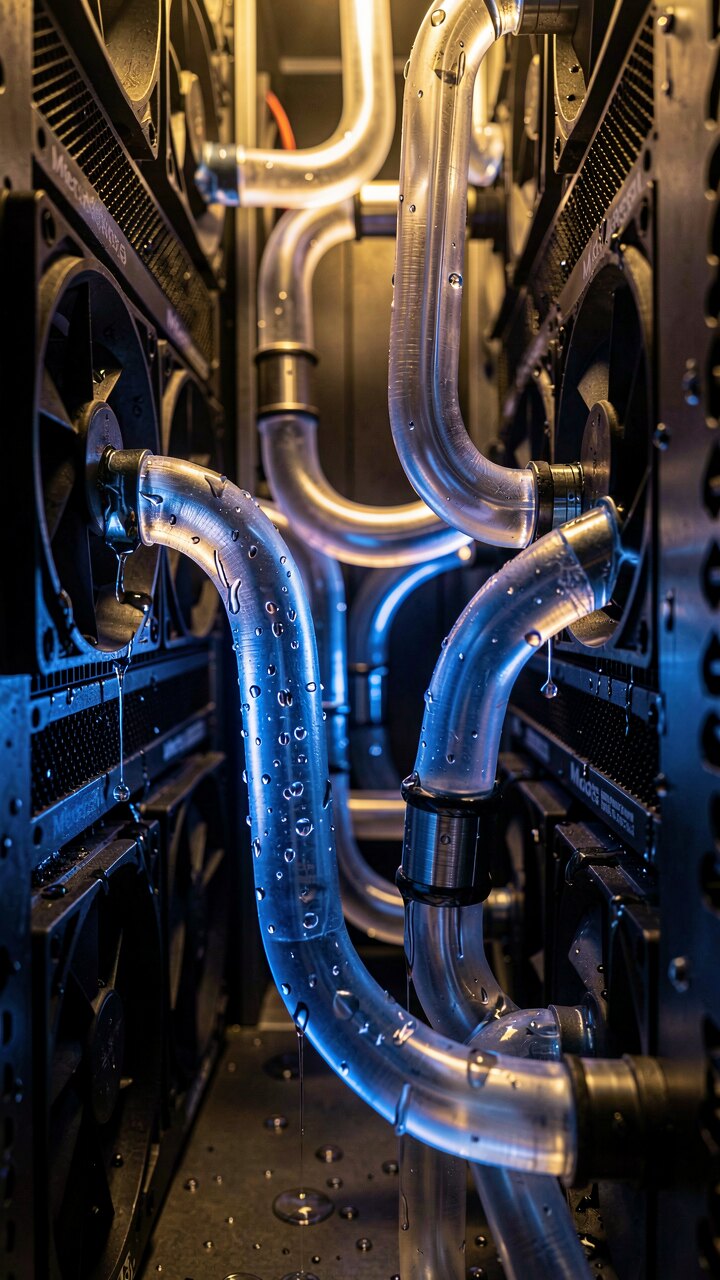
The GPU choice is telling: 450,000 NVIDIA GB200 Blackwell chips represent the cutting edge of AI accelerator hardware in 2025–2026. Each GB200 NVL72 rack unit packs 72 Blackwell GPUs and 36 Grace CPUs into a liquid-cooled chassis the size of a wardrobe. At 450,000 GPUs, Stargate Abilene would require around 6,250 of these rack units — a number that requires its own logistics chain and dedicated power distribution infrastructure for each building.
How It's Powered and Cooled
Stargate Abilene addresses Texas's grid constraints directly: approximately 300 MW of on-site natural gas turbines provide baseload power independent of the ERCOT grid's well-documented reliability challenges. The rest of the 1.2 GW draw comes from grid interconnect, with the campus designed for grid stability participation.
West Texas offers one natural cooling advantage: dry air. Evaporative cooling ("swamp cooling") is highly effective when humidity is low, and Abilene averages some of the lowest humidity readings in the continental US. The Stargate campus is reported to use hybrid cooling — evaporative towers for ambient air units, plus direct liquid cooling for the dense GB200 racks where chip-level heat flux exceeds what air alone can handle. Even so, 1.2 GW of compute produces 1.2 GW of waste heat that must be rejected continuously, a mechanical engineering challenge of the first order.
The Stromfee Connection
The Stargate campus operates in the ERCOT market — North America's most price-volatile wholesale electricity environment, where spot prices swing from negative territory to thousands of dollars per megawatt-hour within a single day. For a campus drawing 300–1,200 MW, intelligent energy dispatch is not a nice-to-have; it is an operational necessity.
Stromfee's BESS-Optimizer provides exactly this kind of price-aware energy management: forecasting day-ahead prices, scheduling pre-cooling of server halls and ancillary spaces during low-price windows, and coordinating battery storage charge/discharge cycles against ERCOT's real-time price signal. For a campus of this scale, a 10% reduction in effective energy cost through intelligent dispatch could represent hundreds of millions of dollars annually.
Sources: AI Datacenter Index — OpenAI Stargate Texas · Epoch AI — OpenAI Stargate: Where the US Sites Stand