More Power Than an Entire City: Google's Iowa/Nebraska Cluster and the 2.7 GW Mega-Campus That Follows
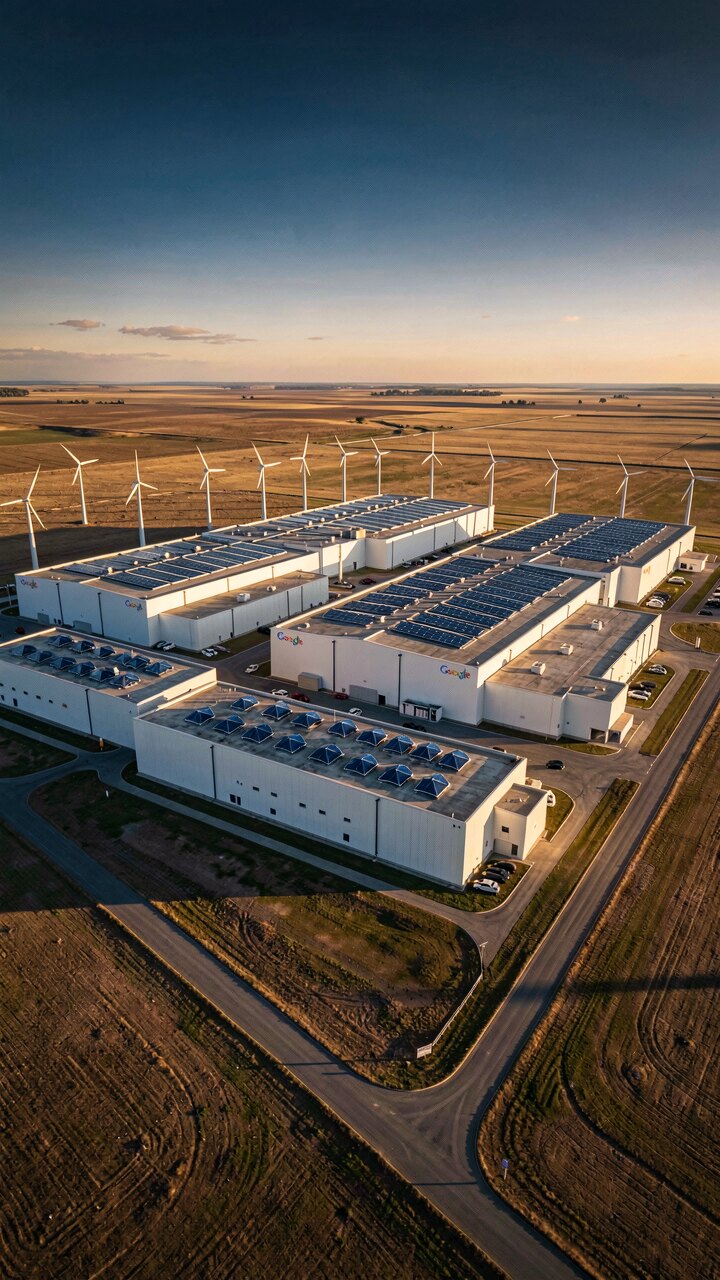
Lincoln, Nebraska is a city of roughly 300,000 people. Its entire electrical grid — hospitals, factories, homes, traffic lights — peaks at something in the range of 700 to 800 MW on the hottest summer days. Google's AI compute cluster in nearby Council Bluffs and the Omaha metro is already in that territory. And the number that follows is harder still to absorb: Project Tenaska, a separate Google campus proposed for Nebraska, would draw 2.7 gigawatts — enough to power more than three Lincolns — running on a private natural gas plant that Google would own and operate itself.
Two States, One Logical Training Cluster
Google's Council Bluffs story begins in 2007, when the company broke ground on its first Iowa datacenter just across the Missouri River from Omaha. What started as a general-purpose cloud infrastructure node grew, through nearly two decades of successive building phases, into one of the most significant AI compute clusters in North America. Multiple buildings constructed between 2019 and 2025 house the latest-generation TPU infrastructure; high-bandwidth fiber links the Iowa and Nebraska sites into a single logical training environment where the state border is operationally irrelevant.
The cluster is scaling toward full operational capacity through mid-2026. In 2023 alone, Google invested $600 million in the Council Bluffs facility — a figure that exceeds the annual technology capital expenditure of most large industrial companies. Total campus power has crossed the 1 GW mark; industry analysts estimate 500+ MW is allocated to AI training and inference workloads specifically, though Google does not publish this breakdown.

The Numbers
Like the Ohio cluster (Rank #6), this campus runs Google's proprietary TPU accelerators — v4, v5, and v6 generations — rather than commercially available Nvidia hardware. The exact chip count is not disclosed; analyst estimates put the installed base at hundreds of thousands of TPU cores. These chips are not available to any other customer. Google designs them, manufactures them via TSMC, and deploys them exclusively in its own facilities. The result is a training cost advantage that is architecturally difficult to replicate from outside.
The Ohio and Council Bluffs/Omaha clusters together represent roughly 2 GW of Google-controlled AI training capacity in the American heartland — the largest concentration of proprietary AI compute in the world outside of classified government infrastructure.
Project Tenaska: The 2.7 GW Bombshell
The detail that separates the Council Bluffs/Omaha story from the Ohio story is what comes next. In planning documents filed with Nebraska state regulators, Google proposed a separate mega-campus under the codename "Project Tenaska" — a 2.7 GW AI compute facility planned for after 2029, to be powered in part by a dedicated private natural gas generation plant that Google would own and operate itself.
The scale is worth sitting with. Nebraska's total installed electricity generation capacity is approximately 14,000 MW. Project Tenaska, at full operation, would consume roughly 19% of that — from a single private campus, for a single company, running a single category of workload. Flatwater Free Press, which first reported the Nebraska filing in detail, noted that the proposed campus would require more power than all of Lincoln. That is not a rounding error or an estimate. It is the stated demand figure in the planning documents.
No groundbreaking date has been set. The proposal is a planning intent, not a construction commitment. But its existence signals something unambiguous about where Google's AI infrastructure team believes compute demand is heading: not incremental scaling, but an order-of-magnitude expansion, built on the Council Bluffs/Omaha foundation already in place.
Why Iowa and Nebraska? Why a Private Gas Plant?
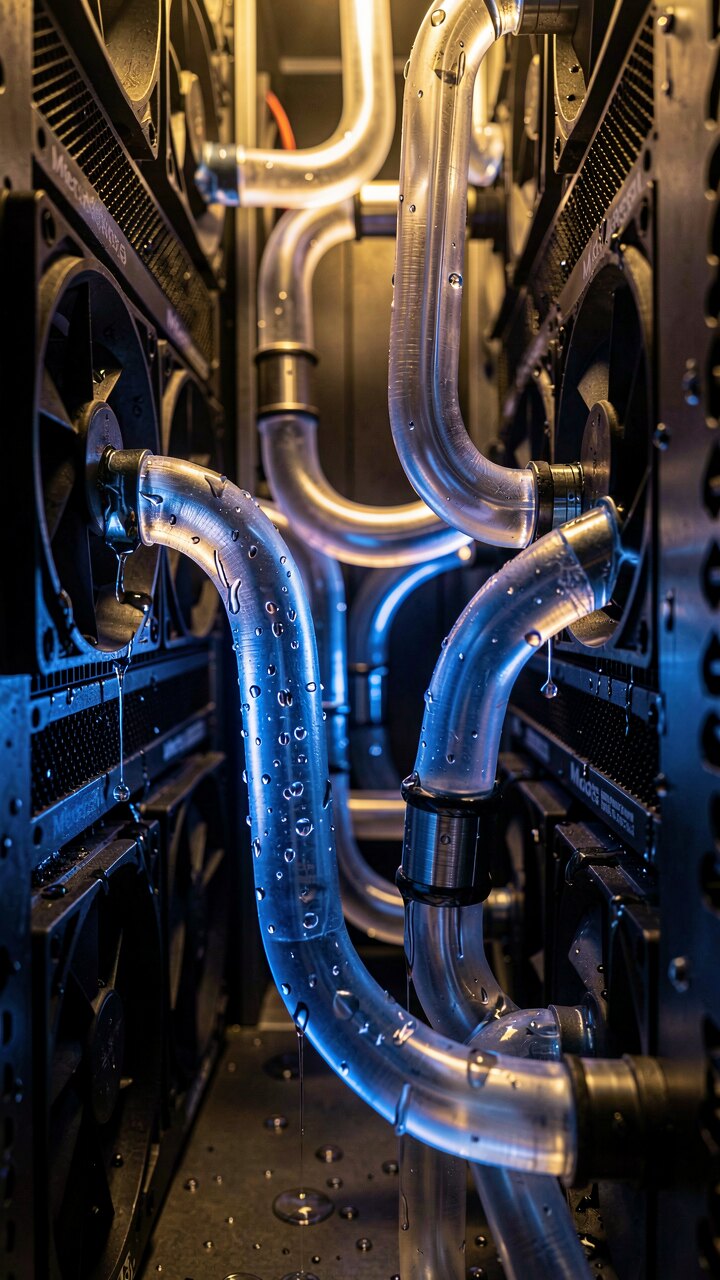
The Midwest corridor has emerged as Google's preferred geography for its largest AI training clusters for reasons that any industrial energy manager will recognize immediately. Land is cheap and abundant. The Midcontinent Independent System Operator (MISO) grid that serves both Iowa and Nebraska has substantial generation capacity with better large-load interconnection timelines than coastal markets. Iowa generates more wind energy per capita than almost any other US state, giving Google access to renewable PPAs at scale. Cold winters enable months of free-air economization in cooling systems, reducing chiller energy by 30 to 50 percent compared to warmer-climate facilities — at 1 GW, that is hundreds of megawatts of avoided load annually.
The private gas plant proposal is a direct response to grid interconnection timelines. For a company planning a 2.7 GW campus in the late 2020s, waiting five to seven years for a utility to build the necessary transmission infrastructure is not a viable option. Building private generation eliminates that dependency entirely — at the cost of becoming a gas-plant operator, a trade-off that is straightforward when the alternative is watching competitors gain years of compute advantage while waiting for a utility queue to clear.
The Stromfee Connection
Google's Council Bluffs/Omaha cluster — and the Project Tenaska mega-campus behind it — presents the energy management challenge at its most extreme: continuous gigawatt-scale draw, cooling loads that shift with weather and workload, and a planning horizon measured in decades. The optimization opportunities at that scale are enormous. A 1% improvement in PUE at 1 GW saves 10 MW continuously. That is the output of a small wind farm, avoided entirely through software and operational discipline.
The underlying logic — manage HVAC loads intelligently, use storage to shift demand away from peak-price windows, model energy cost across every hour of the day — is identical whether the facility draws 1 GW or 500 kW. Stromfee's BESS-Optimizer and transparent HVAC monitoring bring that decision intelligence to industrial facilities from 50 kW upward. Try the free tools at en.stromfee.app and see what the same optimization logic looks like at your scale.