When the State Builds Its Own: The US AI Supercomputer That NVIDIA and Oracle Are Building for the Energy Department
For decades, high-performance computing at the US Department of Energy (DOE) was the domain of physics: nuclear weapons, fusion reactors, climate models. Now a new discipline enters the stage – Artificial Intelligence. The DOE has announced a partnership with NVIDIA and Oracle to build the "largest DOE AI supercomputer ever". The system will serve a broad range of governmental missions: from energy grid optimization and medical research to national security.
Why the DOE Needs Its Own AI Supercomputer
The US Department of Energy operates 17 National Laboratories – including Oak Ridge, Argonne, Lawrence Berkeley, Los Alamos, and Sandia. These institutions have decades of experience running the world's largest supercomputers: Frontier (Oak Ridge) was the world's first exaflop computer in 2022.
But modern AI compute requirements are fundamentally different from classical high-performance computing: they require massive parallel matrix multiplication throughput at the chip level – exactly what NVIDIA's GPU accelerators deliver. Previous DOE supercomputers were optimized for MPI-based parallel simulations. The new AI supercomputer is designed to close that gap.
Three Partners: Who Brings What?
NVIDIA supplies the accelerator hardware. Which specific generation will be used is not publicly known – the next NVIDIA architecture after Blackwell is in development. NVIDIA has established itself as the de facto standard for AI training, and no comparable system operates without NVIDIA chips.
Oracle contributes cloud infrastructure and management software. Oracle has aggressively invested in the AI infrastructure market over the past two years and is one of the fastest-growing cloud providers for specialized GPU clusters. The combination of a government site (DOE National Laboratory) and Oracle Cloud Infrastructure is unusual for a public sector contract and signals how seriously Oracle takes its AI cloud ambitions.
The DOE provides the site, operations, and – critically – the use requirements. The department has access to some of the best scientists in the US and manages data that is particularly valuable for AI: grid sensor data, climate model outputs, physical simulation results.
Use Cases: Energy Grid, Science, Defense
The DOE has outlined three primary use areas for the new supercomputer:
Energy grid optimization: The US electricity grid is a complex, aging system under stress from the renewables boom and electric vehicle adoption. AI models can improve load forecasting, detect instabilities earlier, and optimize the deployment of flexibility reserves. This is precisely the core competency Stromfee brings to the German market – demonstrating that AI-powered grid optimization is not a niche topic but a national strategic priority globally.
Scientific research: From protein structure analysis to materials science and climate modeling, DOE funds basic research that requires enormous amounts of compute. AI accelerators can help test hypotheses faster and find patterns in large datasets.
National security: Defense-relevant applications – from autonomous systems to signal analysis – benefit from rapidly available, government-controlled AI compute capacity.
Energy Profile and DOE Site
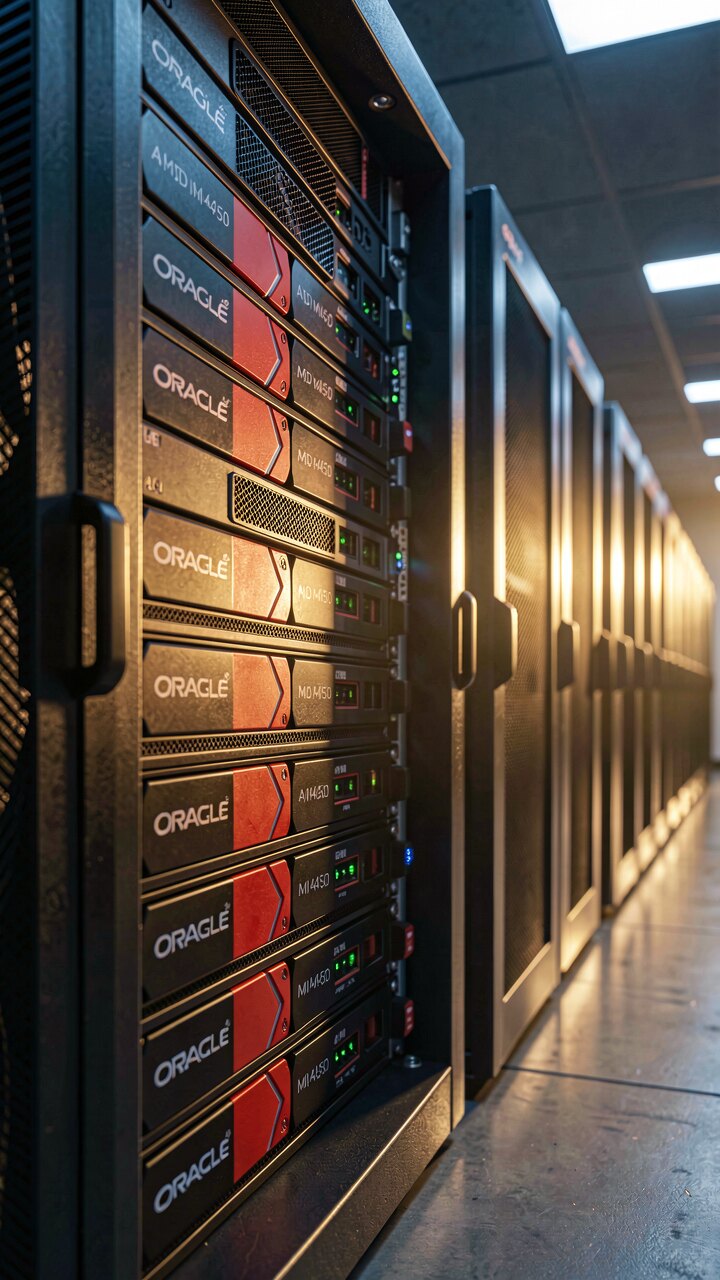
The precise location at one of the 17 DOE National Laboratories is not yet publicly known. National Labs are often in remote areas with direct access to power generation capacity. The estimated power draw of approximately 200 MW (industry estimate based on comparable GPU cluster precedents – the DOE has not published an official MW figure) would place this system in the class of the world's largest public supercomputers.
Energy storage and intelligent load management are not optional for such facilities – especially when a national laboratory must guarantee uninterrupted operation. For operators of BESS and PV systems, this trend underscores a key point: AI-powered energy management – as Stromfee offers via stromfee.app as a multi-country hub – is not a niche product but a matter of national strategic importance.
Optimize your energy costs with Stromfee AI
What supercomputers do for national energy grids, Stromfee does for your plant. Check load peaks, energy flexibility value, and storage ROI with our AI platform.
Try Stromfee →Conclusion
The DOE/NVIDIA/Oracle project is more than a procurement exercise – it is a signal that the US government views AI as strategic national infrastructure. In Germany and Europe, comparable initiatives exist at significantly smaller scale. What remains clear: AI infrastructure is energy infrastructure – and whoever builds one must think carefully about the other.
Sources: US Department of Energy – DOE/NVIDIA/Oracle AI Supercomputer Announcement. Power estimate ~200 MW: industry estimate based on comparable GPU cluster projects; DOE has not published an MW figure. All illustrations: AI-generated (FLUX·2).