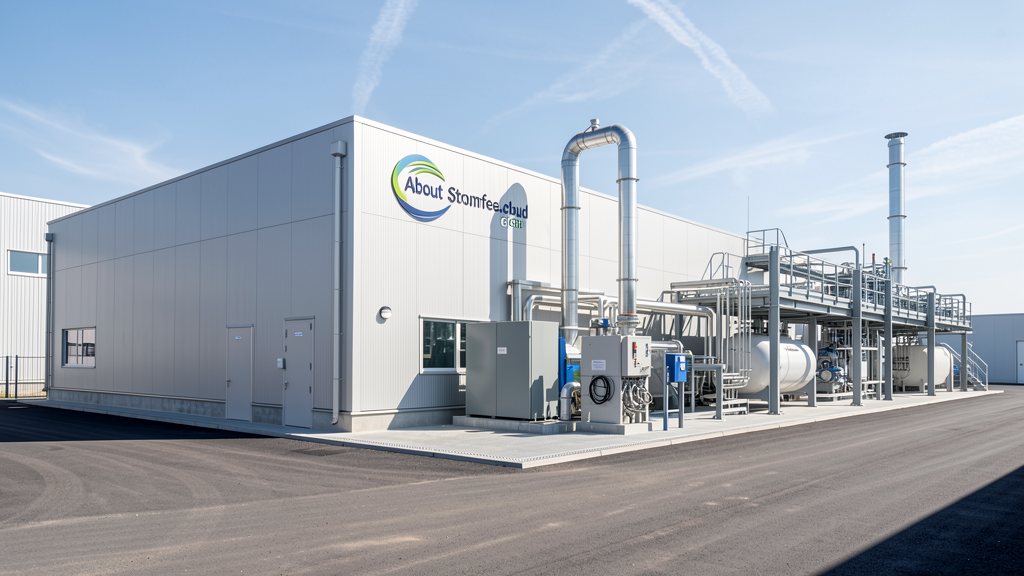
From industrial energy auditing to independent market intelligence for Great Britain
Stromfee.cloud is the European market intelligence layer developed by HR Energiemanagement GmbH, an energy engineering firm headquartered in Bünde, North Rhine-Westphalia, Germany, whose work in the energy sector dates to 1984. The platform ingests hourly day-ahead price data directly from the ENTSO-E Transparency Platform ENTSO-E Transparency Platform — GB day-ahead prices and European electricity system data, cross-references it with regulatory information published by Ofgem and the newly independent National Energy System Operator (NESO) Ofgem — LDES Cap and Floor Scheme Launch, April 2025 (8h/100MW eligibility, 171 applications in Window 1), and makes the resulting analysis available to solar PV asset owners, battery energy storage system (BESS) operators and energy market engineers who need a source of independent analysis — one with no commercial relationship to any equipment manufacturer or energy retail model. The data architecture is open and traceable: prices are drawn directly from ENTSO-E and from the N2EX and EPEX SPOT wholesale trading platforms that serve the GB market Modo Energy — GB Wholesale Trading Markets: N2EX and EPEX SPOT Day-Ahead and Intraday Explained. No figure published on this platform is a proprietary forecast without empirical grounding; any predictive content is built on historical series that users can verify independently. This page describes our background, methodology and the principles guiding platform development for the Great Britain market.
Four decades of energy engineering: from the field meter to the market intelligence platform
HR Energiemanagement GmbH did not begin as a technology company. Its foundations lie in field engineering: measuring heat flows and energy consumption, diagnosing combined heat-and-power (CHP) systems, biogas plants and industrial process installations. Holger Roswandowicz, the company's founder and managing director, holds a Diplom-Ingenieur qualification from Technische Universität Magdeburg (energy systems and automation) and is a certified energy auditor under DIN EN 16247-1, accredited by the Bundesamt für Wirtschaft und Ausfuhrkontrolle (BAFA). That technical background of more than three decades defines the character of the Stromfee platform: a preference for measurement over estimation, and for primary sources over market consensus.
From field consultancy to digital platform
The company began its activity in industrial energy consultancy, conducting certified energy audits under DIN EN 16247-1 for manufacturing, food processing and utilities across northern Germany. Over time, the volume of data gathered in those audits — real-world consumption measurements, load profiles, inverter performance logs and supply contract analyses — made it clear that the largest portion of losses in solar PV and cogeneration installations did not arise from major technical failures but from accumulated inefficiencies in data management and market interpretation. That field observation was the starting point for Stromfee as an analysis platform. The lessons learned from thousands of hours of on-site engineering apply directly to the challenge of monitoring solar PV assets in markets where negative-price events are becoming structurally more frequent, including Great Britain.
The origin of the Stromfee brand
The name Stromfee — literally 'electricity fairy' in German — reflects the intent to make comprehensible what the electricity system conceals behind regulatory complexity. The platform began as an internal analysis tool for audit clients and progressively evolved into a web environment accessible to third parties. Stromfee.ai is the central platform; Stromfee.cloud is its extension into European market analysis, with country-specific modules that integrate local regulatory frameworks. The GB module of the platform, stromfee.cloud/gb/, covers ENTSO-E day-ahead prices for the Great Britain bidding zone, regulatory guidance on CfD negative-price rules, Balancing Mechanism dynamics and guidance on battery storage market access under the Energy Act 2023 Energy Act 2023, Part 7, Section 213 — Statutory definition of electricity storage in GB (Royal Assent November 2023).
Independence as an operating principle
HR Energiemanagement GmbH does not sell equipment, does not operate its own generation or storage portfolio, and has no commercial arrangement with battery manufacturers or solar park developers. This independence is deliberate: an analyst who also sells hardware carries a structural conflict of interest when evaluating an installation's economics. Stromfee.cloud does not recommend specific brands; it provides data analysis to enable operators and investors to make their own decisions based on verifiable information. Direct contact with the engineering team is always via HR Energiemanagement GmbH: Werfener Heide 14, 32257 Bünde, Germany. Telephone: +49 5223 4921030.
Market intelligence built on ENTSO-E day-ahead data and GB regulatory research
Stromfee.cloud is not an energy news portal or a domestic tariff comparison site. It is an analysis tool for sector professionals — project engineers, solar PV asset managers, BESS operators and energy finance advisers — who need precise hourly data, regulatory context and optimisation tools without having to build their own data infrastructure. The platform architecture combines automated ingestion of day-ahead prices for the GB bidding zone, historical analysis of negative- and positive-price episodes, and a regulatory interpretation layer updated to reflect current legislation and ongoing reform. For Great Britain, the regulatory module covers CfD negative-price rules (AR2/AR3 six-consecutive-period threshold versus AR4 instant suspension), the Renewables Obligation legacy scheme, the Energy Act 2023 storage provisions, NESO Balancing Mechanism access, and the Cap and Floor scheme for long-duration storage launched by Ofgem in April 2025 Ofgem — LDES Cap and Floor Scheme Launch, April 2025 (8h/100MW eligibility, 171 applications in Window 1).
ENTSO-E day-ahead data for GB: what it is and why it matters
The GB day-ahead price is determined each day by auctions on two exchanges: N2EX (Nord Pool's GB platform), whose Day-Ahead Hourly auction closes at 09:50, and EPEX SPOT, which runs a 60-Minute Day-Ahead auction at 09:20 and a 30-Minute Day-Ahead auction at 15:30 Modo Energy — GB Wholesale Trading Markets: N2EX and EPEX SPOT Day-Ahead and Intraday Explained. Results are published on the ENTSO-E Transparency Platform shortly after auction closure ENTSO-E Transparency Platform — GB day-ahead prices and European electricity system data. Stromfee.cloud downloads and stores these half-hourly and hourly series to build practically useful indicators: frequency and duration of negative-price settlement periods (directly relevant to CfD difference-payment suspension under AR4 contracts), charge-discharge arbitrage windows for battery storage, and comparisons between the GB bidding zone and other European price areas. The GB market recorded approximately 139–149 hours of zero-or-negative wholesale prices in 2024 — a roughly six-fold increase compared with 2022 — driven by growing wind and solar capacity ahead of network and storage infrastructure Energy Storage News — GB negative-price hours 2024: six-fold increase vs 2022 (139–149 hours), RO legacy structure analysis. These figures are not Stromfee projections; they are data from published market and research sources that the platform aggregates and contextualises.
GB regulatory module: CfD negative-price rules and the Energy Act 2023
The treatment of negative prices under GB renewable energy support schemes is one of the most economically significant regulatory issues facing solar PV and wind asset owners in Great Britain. Under Contract for Difference (CfD) Allocation Round 2 and AR3 contracts, difference payments are suspended only when the Intermittent Market Reference Price remains negative for six or more consecutive half-hourly settlement periods — the equivalent of three hours. Under AR4 contracts (from the 2022 auction round onward) and all subsequent rounds, difference payments are suspended for any single settlement period in which the reference price is negative, regardless of duration Energy Storage News — GB negative-price hours 2024: six-fold increase vs 2022 (139–149 hours), RO legacy structure analysis. This represents a significant tightening that operators of newer assets must account for in their revenue modelling. The legacy Renewables Obligation (RO) scheme — covering assets accredited before March 2017 and running until 2037 — contains no equivalent negative-price provision, meaning RO-era generators continue to receive ROCs per MWh at any market price, an incentive structure that contributes directly to the growth of negative-price hours. The regulatory module of Stromfee.cloud for GB — accessible at /gb/rules/ — covers this framework in full technical detail with primary source citations.
BESS analysis for GB: technical standards and market framework
Battery energy storage systems in Great Britain operate within a dual framework: a technical-normative layer and a market-regulatory layer. On the technical side, the principal international safety standard for stationary lithium batteries is IEC 62619 (second edition 2022), widely adopted as the reference for industrial battery applications in GB. The Energy Act 2023 Energy Act 2023, Part 7, Section 213 — Statutory definition of electricity storage in GB (Royal Assent November 2023), with Royal Assent in November 2023, formally resolved years of regulatory ambiguity by inserting a statutory definition of 'stored energy' into the Electricity Act 1989 under Section 213, explicitly classifying storage as a subset of electricity generation for licensing purposes. This opened battery storage to technology-neutral market access across all GB revenue streams — wholesale arbitrage on N2EX and EPEX SPOT, NESO Dynamic Containment and Frequency Response services, the Capacity Market, and the Balancing Mechanism. The Ofgem Cap and Floor scheme for long-duration storage, launched in April 2025, provides a minimum revenue floor for assets with at least 8 hours duration and 100 MW capacity, receiving 171 applications in its first window Ofgem — LDES Cap and Floor Scheme Launch, April 2025 (8h/100MW eligibility, 171 applications in Window 1).
What Stromfee.cloud asserts and what it does not: standards for honest editorial content
A market analysis platform faces a persistent temptation to inflate apparent credibility with claims it cannot substantiate: guaranteed return percentages, long-range price forecasts, or comparisons with competitors the author has not independently verified. Stromfee.cloud adopts a different standard: every quantitative claim appearing on the platform must be traceable to a cited primary source. Anything we cannot verify is labelled as an estimate or flagged as pending confirmation. This section outlines the principles governing all content on the platform.
No figures without sources
Every numerical figure appearing on Stromfee.cloud — negative-price hours, annual average wholesale prices, installed PV or storage capacity — is linked to a verifiable primary source: the ENTSO-E Transparency Platform ENTSO-E Transparency Platform — GB day-ahead prices and European electricity system data, Ofgem or NESO publications Ofgem — LDES Cap and Floor Scheme Launch, April 2025 (8h/100MW eligibility, 171 applications in Window 1), GB market exchange data Modo Energy — GB Wholesale Trading Markets: N2EX and EPEX SPOT Day-Ahead and Intraday Explained, or parliamentary and statutory instruments such as the Energy Act 2023 Energy Act 2023, Part 7, Section 213 — Statutory definition of electricity storage in GB (Royal Assent November 2023). We do not publish platform-generated long-range market price projections, because the inherent forecast error of electricity prices over multi-year horizons would make such figures more misleading than useful. What we do offer are complete historical data series and tools that allow users to build their own models from real data.
No investment advice
The content of Stromfee.cloud — including the regulatory guides accessible at /gb/rules/ — is technical and editorial information, not legal, financial or investment advice. The GB electricity regulatory framework is in active transformation: the Review of Electricity Market Arrangements (REMA), which concluded its primary decision phase in July 2025 by retaining national pricing and rejecting zonal pricing, the ongoing TNUoS network charging reform (target completion: 2029), and the LDES Cap and Floor final awards (expected summer 2026) all represent material changes that may have been further amended after the update date of each section of this platform. We recommend always verifying the current state of any rule directly with Ofgem (ofgem.gov.uk), NESO (neso.energy) and DESNZ (gov.uk) before making investment decisions Ofgem — LDES Cap and Floor Scheme Launch, April 2025 (8h/100MW eligibility, 171 applications in Window 1). For analysis of specific installations, the engineering team at HR Energiemanagement GmbH offers technical consulting and audit services.
Transparency about data limitations
ENTSO-E day-ahead data reflects the wholesale market clearing price — not the final economics of a generator or consumer in the real GB market. Between the N2EX or EPEX SPOT clearing price and the profit-and-loss account of a solar PV installation or a battery lie several layers: Balancing Services Use of System (BSUoS) charges (abolished from April 2023 but replaced by other balancing cost allocations), Transmission Network Use of System (TNUoS) charges, Distribution Use of System (DUoS) charges, imbalance settlement costs in the Balancing Mechanism, the structure of any Power Purchase Agreement (PPA) or merchant trading arrangement, and operational costs of the installation. None of these elements is included in the published day-ahead price. Stromfee.cloud explicitly identifies these layers of difference in each analysis tool so that users do not confuse the wholesale clearing price with the net return of their project.
Why an independent analysis platform makes sense in the GB electricity market of 2026
The British electricity system is navigating a structural transformation at a pace unmatched in a generation. The government's Clean Power 2030 Action Plan, published in December 2024, targets 45–47 GW of solar PV and 23–27 GW of battery storage by the end of the decade, against an installed base of approximately 17 GW of solar and 5 GW of BESS in 2024 Ofgem — LDES Cap and Floor Scheme Launch, April 2025 (8h/100MW eligibility, 171 applications in Window 1). Achieving those targets requires the electricity market, the planning system and network infrastructure to evolve in parallel — a process in which the commercial and regulatory risks for individual asset owners are substantial and not always transparent. Stromfee.cloud provides the data substrate and regulatory context that makes informed analysis possible, for the GB market and, progressively, across the European bidding zones covered by ENTSO-E ENTSO-E Transparency Platform — GB day-ahead prices and European electricity system data.
The negative-price challenge in GB: scale and consequences
GB negative-price hours reached approximately 139–149 in 2024, a roughly six-fold increase compared with 2022, and analysts project further growth as solar and wind capacity continues to expand ahead of network and storage build-out Energy Storage News — GB negative-price hours 2024: six-fold increase vs 2022 (139–149 hours), RO legacy structure analysis. For an asset operating under a CfD AR4 contract (any negative settlement period triggers suspension of the difference payment) the commercial exposure is direct and immediate: every half-hour in which the reference price is negative is a half-hour of foregone top-up revenue. For legacy RO assets, the ROC structure insulates generators from market price but simultaneously incentivises continued generation at negative prices — contributing to the problem rather than responding to it. For merchant BESS operators, negative-price episodes represent the core arbitrage opportunity: buying cheaply (or being paid to consume) during negative periods, then discharging into a higher-price environment. The platform's historical negative-price database allows operators to model both the risk exposure for subsidised generators and the opportunity value for storage assets.
The role of battery storage as the systemic response
The most direct technical and commercial response to the growth of negative prices is battery storage: absorbing surplus energy in low-price or negative-price periods and returning it to the system when demand and prices recover. In GB, a one-cycle-per-day battery can capture the price spread between midday solar-dominated hours and evening peak periods. In 2024, batteries earned estimated revenues of approximately £51,000 per MW per year; across 2025, estimates range between £59,000 and £88,000 per MW per year, driven by wholesale arbitrage and Balancing Mechanism dispatch Modo Energy — GB Wholesale Trading Markets: N2EX and EPEX SPOT Day-Ahead and Intraday Explained. Viability depends on revenue stacking: the combination of wholesale arbitrage, Dynamic Containment or Frequency Response fees from NESO, Capacity Market payments, and Balancing Mechanism revenues. Stromfee.cloud models these revenue streams against GB historical price data to support project feasibility assessments. The regulatory and technical framework for BESS in GB — including IEC 62619, Grid Code requirements and the Energy Act 2023 storage provisions — is covered in detail at /gb/bess-engineer/.
- ENTSO-E Transparency Platform — GB day-ahead prices and European electricity system data
- Ofgem — LDES Cap and Floor Scheme Launch, April 2025 (8h/100MW eligibility, 171 applications in Window 1)
- Modo Energy — GB Wholesale Trading Markets: N2EX and EPEX SPOT Day-Ahead and Intraday Explained
- Energy Act 2023, Part 7, Section 213 — Statutory definition of electricity storage in GB (Royal Assent November 2023)
- Energy Storage News — GB negative-price hours 2024: six-fold increase vs 2022 (139–149 hours), RO legacy structure analysis
- PV Magazine — UK Clean Power 2030 Action Plan: 45 GW solar, 23–27 GW BESS capacity targets
Want to analyse the impact of negative prices on your GB installation?
The engineering team at HR Energiemanagement GmbH is available for technical consultations on energy audits, solar PV profitability analysis and BESS project modelling for the GB market. Contact: +49 5223 4921030 · hr-energiemanagement.de · You can also explore the full GB regulatory framework at <a href="/gb/rules/">/gb/rules/</a>, or access the global analysis platform at <a href="https://stromfee.ai">stromfee.ai</a>.